
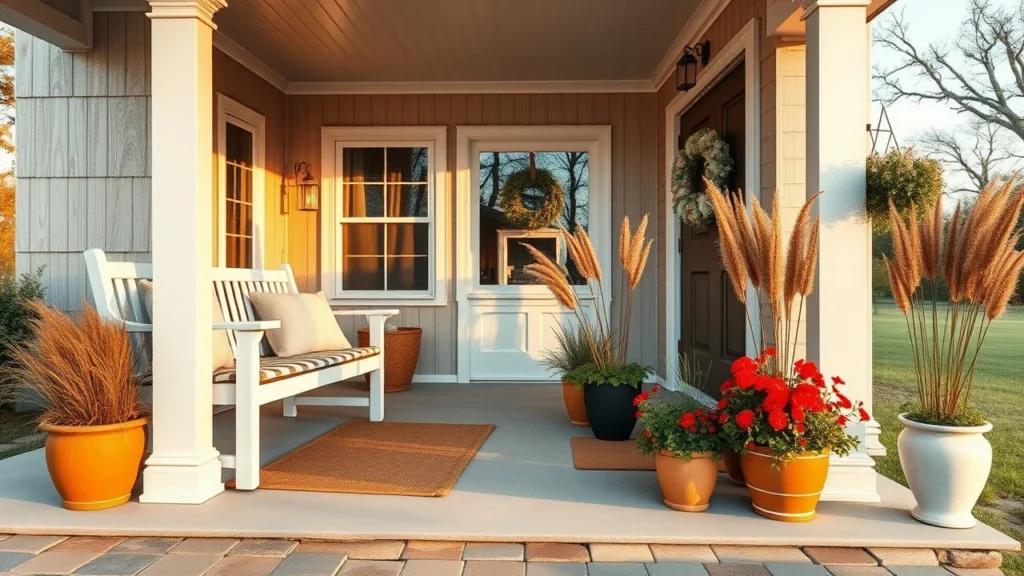
The first time you open your front door after a long day, you want your porch to feel like a breath of fresh air, not a forgotten storage zone. Maybe your porch gets harsh afternoon sun, or maybe it’s covered and dim, which makes “cute” decor look flat by evening.
Good farmhouse style is less about buying everything new and more about getting the details right: welcoming textures, porch-safe lighting, and arrangement that doesn’t block foot traffic. In the ideas below, you’ll find practical, do-it-on-weekend upgrades that work for different porch sizes, budgets, and seasonal moods, from small rentals to wraparound verandas.
Start With an Outdoor Rug That Can Take Real Weather
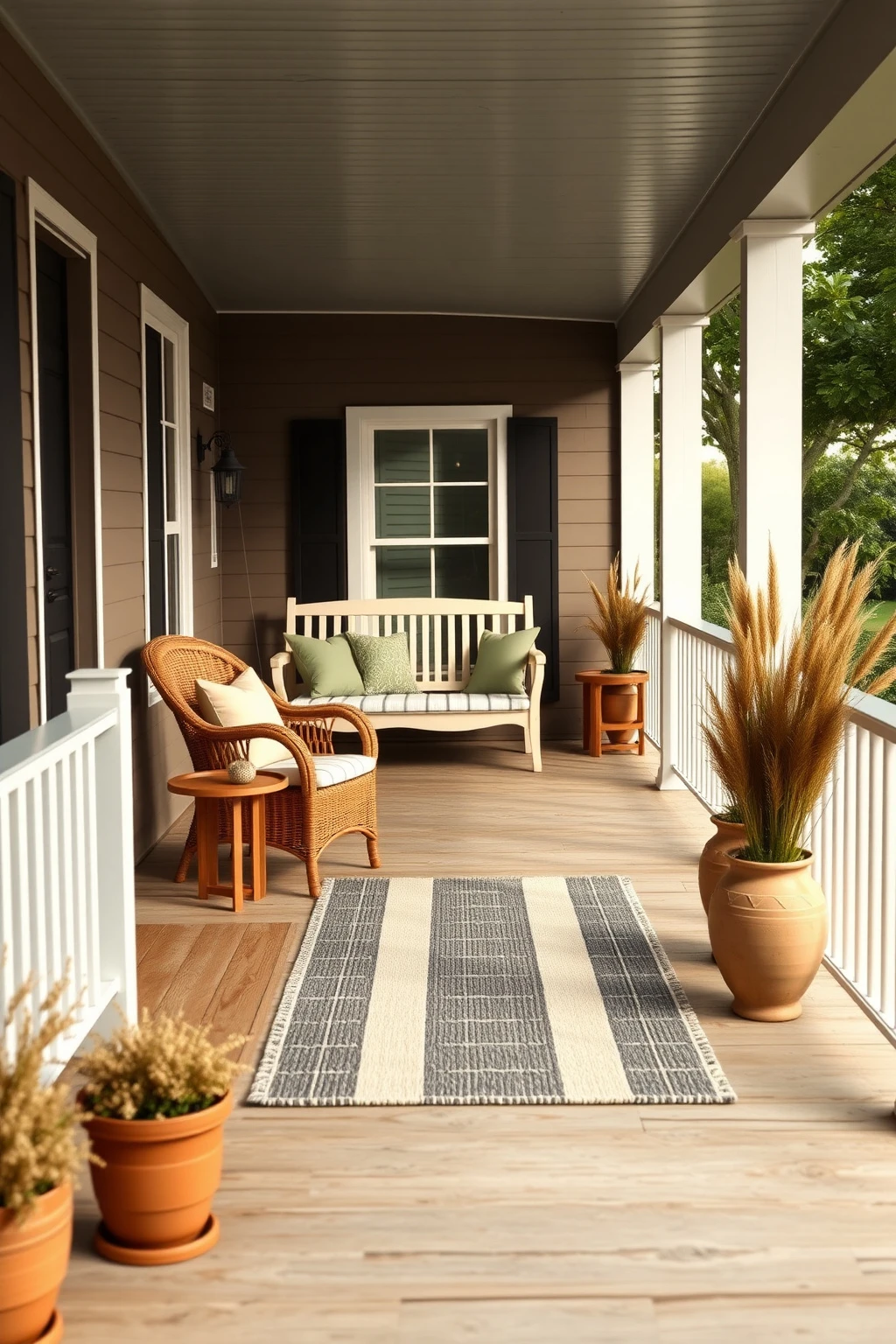
A farmhouse porch always looks warmer when there’s an intentional “landing zone” underfoot. The common mistake is choosing a pretty indoor rug that stays damp, so it curls, fades, or smells musty by the first rainy week. For a welcoming feel that still survives real life, pick an outdoor rug with a low pile and a tight weave, then treat it like furniture, not decoration.
Choose a size that leaves about 6, 12 inches of rug border beyond your doormat or porch chairs so it frames the entry without tripping. For example, if your main seating is two chairs plus a small table, aim for a 5×8 or 6×9. Colors that read farmhouse and forgiving include warm ivory with charcoal lines, or a tan-and-cream stripe. Rotate the rug seasonally and rinse it with a garden hose on dry days so dirt doesn’t grind into the fibers.
Hang Wreaths at the Right Height (So They Look Custom, Not Random)
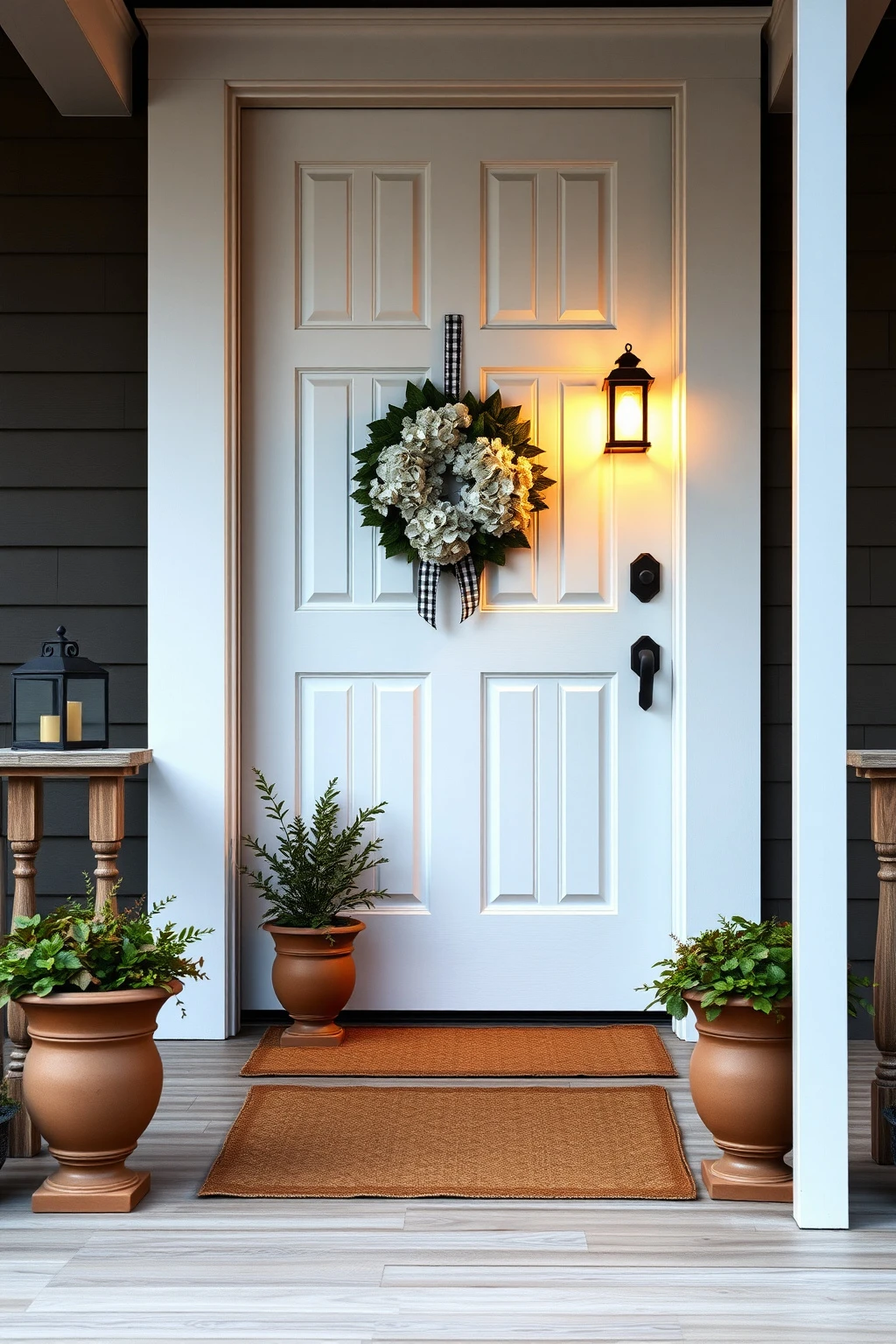
If your porch wreath looks too low or oddly cramped, it’s usually a height issue, not a wreath style issue. Farmhouse doors often have big vertical panels or sidelights, so a wreath hung at the wrong eye line can feel like it’s “stuck on” instead of integrated. When you get the placement right, your entry instantly reads polished.
Measure from the floor and use an easy rule: hang the wreath so its center sits about 60 inches from the ground. If you have a glass storm door, make sure the wreath doesn’t clash with the glass pattern by keeping it slightly inset from the door edge. For a classic farmhouse look, build your wreath with a mix of boxwood-like greens and texture, then tuck in a thin check ribbon at the back for movement. Avoid oversized wreaths that reach past the door trim, especially on narrower doors.
Use a Pair of Porch Lanterns for Symmetry Without Feeling Matchy
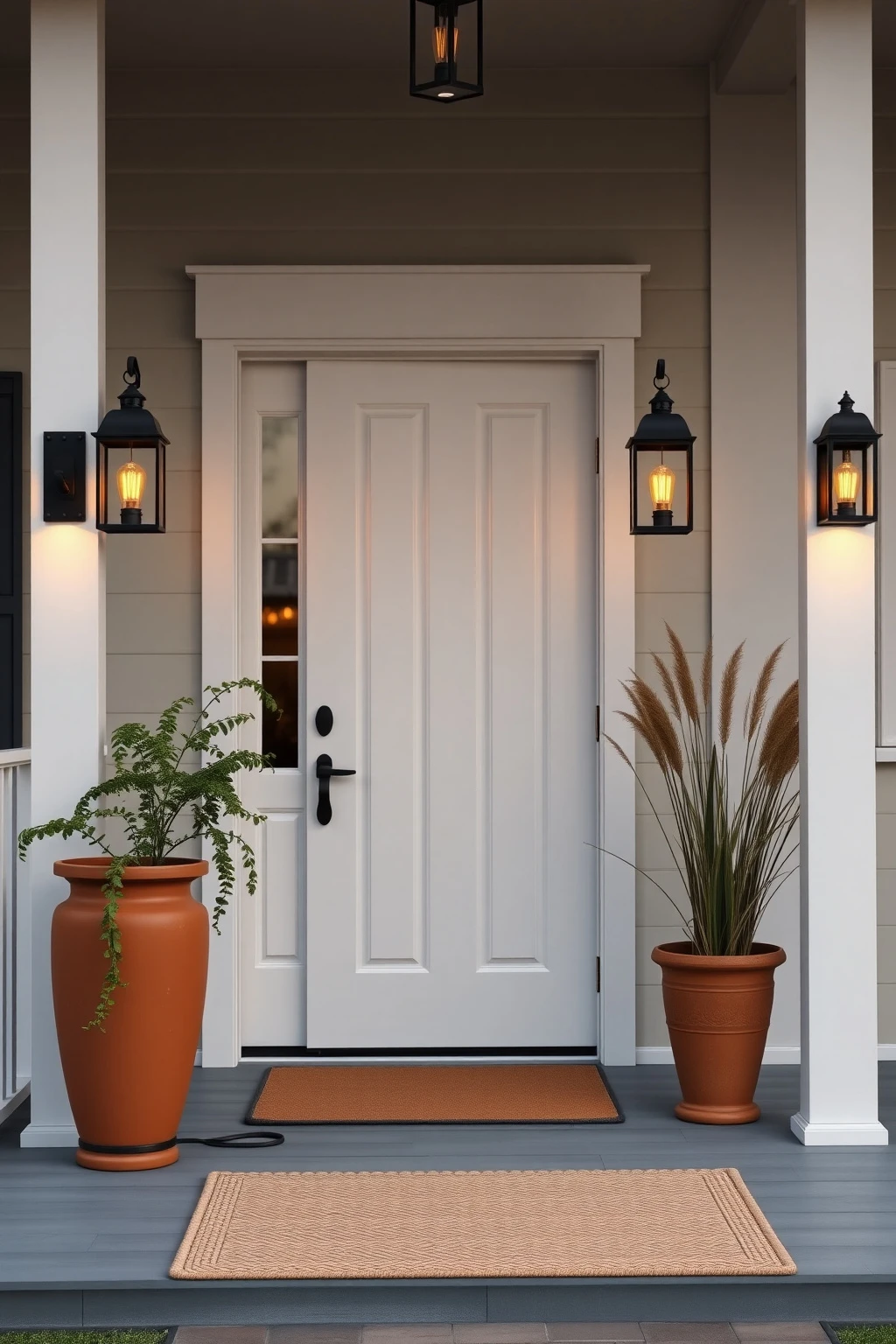
Porch lighting is where farmhouse warmth starts, because light creates the “hello” feeling even when you’re not home. A single fixture can look incomplete, especially on wide entries, but perfectly identical lanterns can feel stiff. The sweet spot is matching shapes with slightly varied finishes so the porch looks curated, not factory-made.
Install two lanterns or sconces so their bottom edges are consistent at about 72, 80 inches from the porch floor, then set them to frame the door. If you’re swapping bulbs, choose a warm 2700K LED so wood and greenery don’t look gray. Finishes that nod to farmhouse without shouting include blackened iron with clear glass, or oil-rubbed bronze paired with a warmer brass accent indoors. Keep cords hidden by running them along the porch ceiling or using outdoor-rated hardwiring where possible.
Swap One Big Planter for a Grouping of Three for a Fuller Look
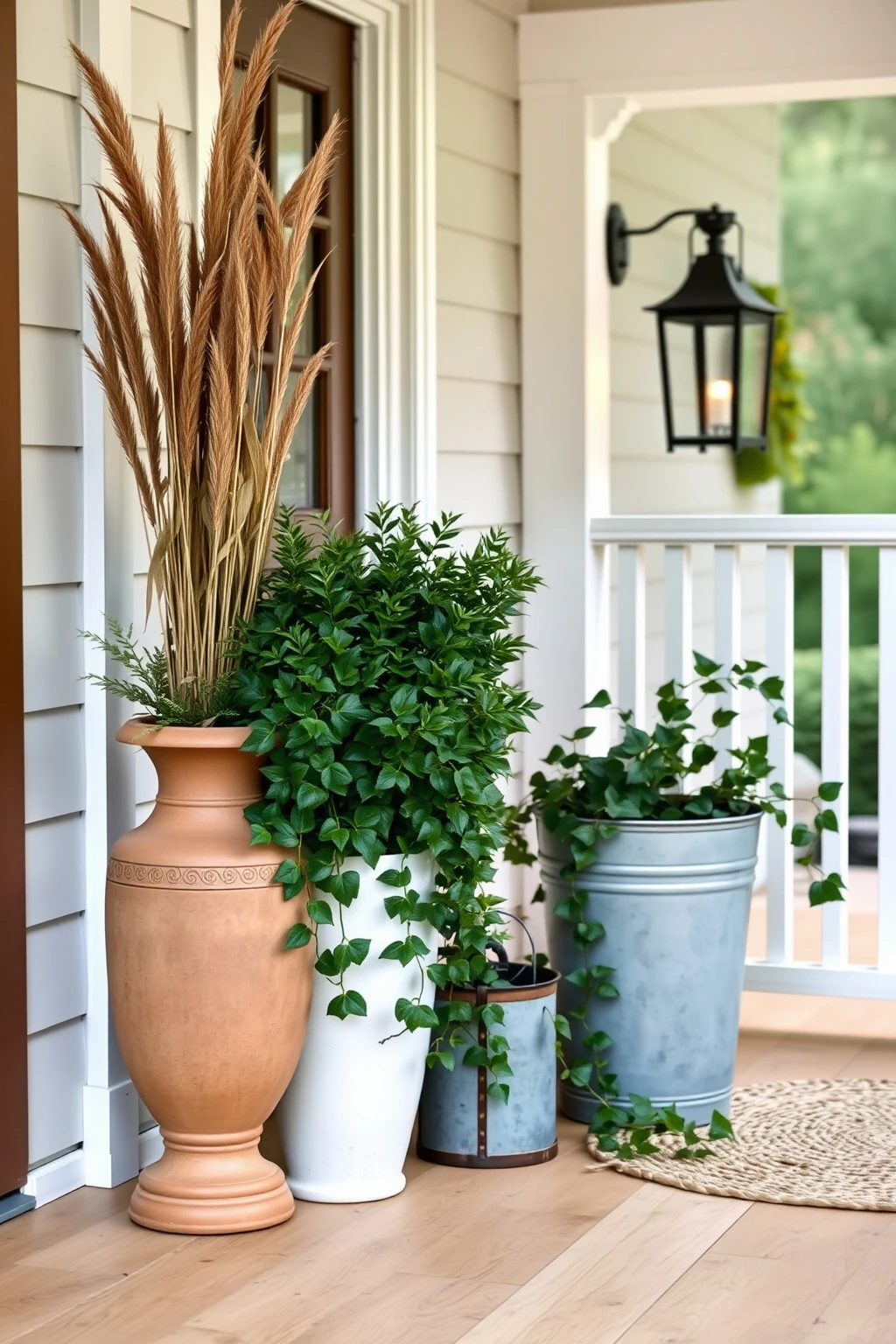
Farmhouse porches often feel empty when everything is one oversized item, because the eye has nowhere to rest. A single large planter can also look top-heavy if it’s not balanced with smaller textures around it. Instead, create a grouping that mimics how plants grow in nature, with height, filler, and trailing pieces.
Use the “three heights” method: one tall planter plant at 24, 36 inches, one medium at about 18, 24 inches, and one trailing component that spills 8, 12 inches over the rim. You can do this with one large urn plus two smaller galvanized metal pots, or with three equal pots if you vary plant types. Stick to a tight palette like sage and deep green, then add one warm accent like terracotta blooms. Common mistake: planting too sparsely, so fill the top with moss or decorative mulch to hide bare soil lines.
Pick a Console Table With Open Shelving So It Doesn’t Feel Heavy
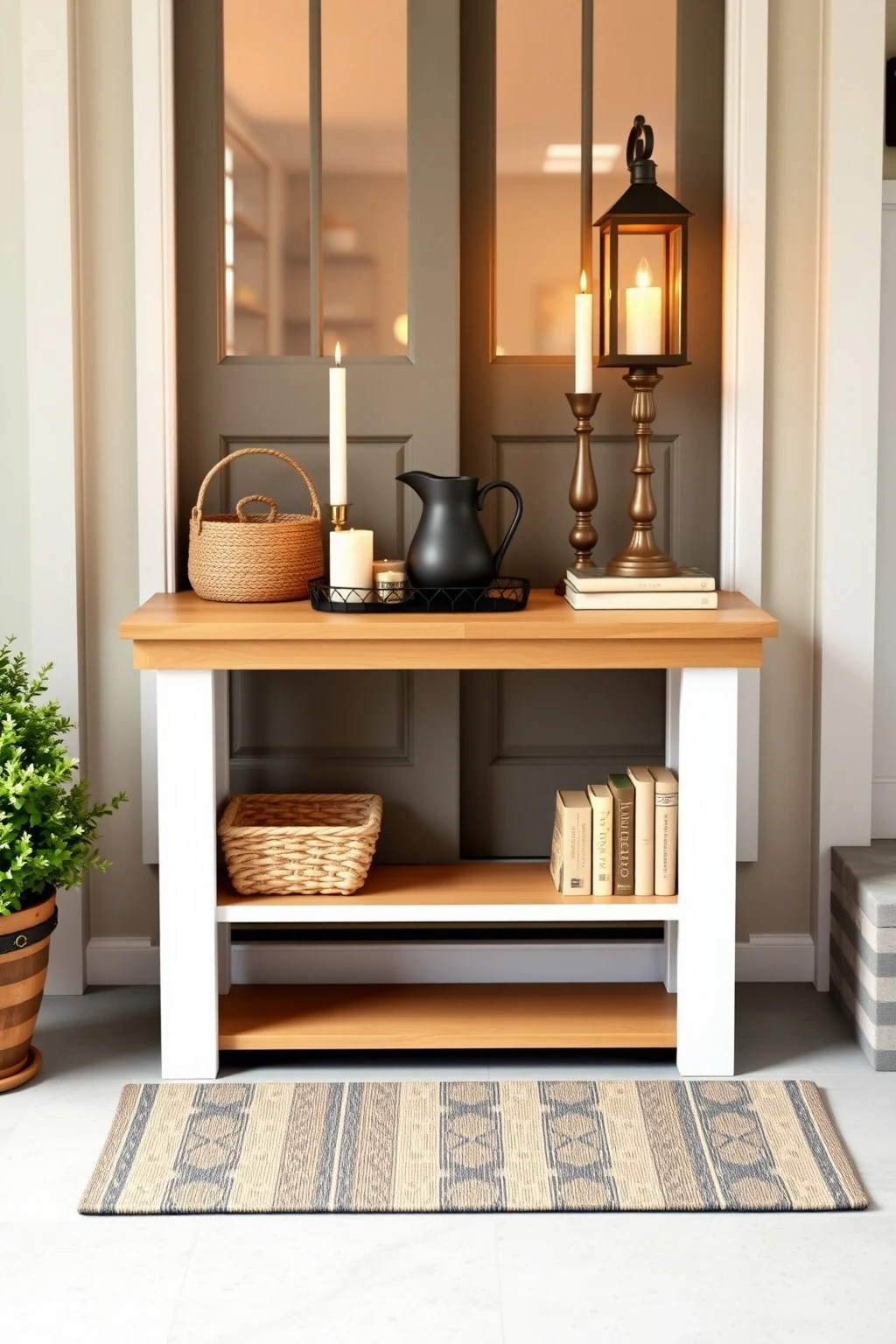
A solid, bulky console can make a porch feel cramped, especially on narrow front steps or small rentals. Open shelving gives you farmhouse function without blocking light and movement. This is design principle stuff: you want visual “breathing room” so the porch reads welcoming rather than crowded.
Choose a console that’s about 36, 42 inches wide for smaller porches, and keep the height around 30, 34 inches so it works under wall decor or lights. Style the top with one larger item (a ceramic pitcher or iron tray), one medium (a small lamp or jar arrangement), and a pair of matching candlesticks, leaving at least 4 inches of negative space between objects. If you need storage, tuck baskets into the open shelves in linen or jute. Avoid stacking too many items in the center, because that blocks sightlines when you walk up.
Make Your Doormat Work Hard With Contrast
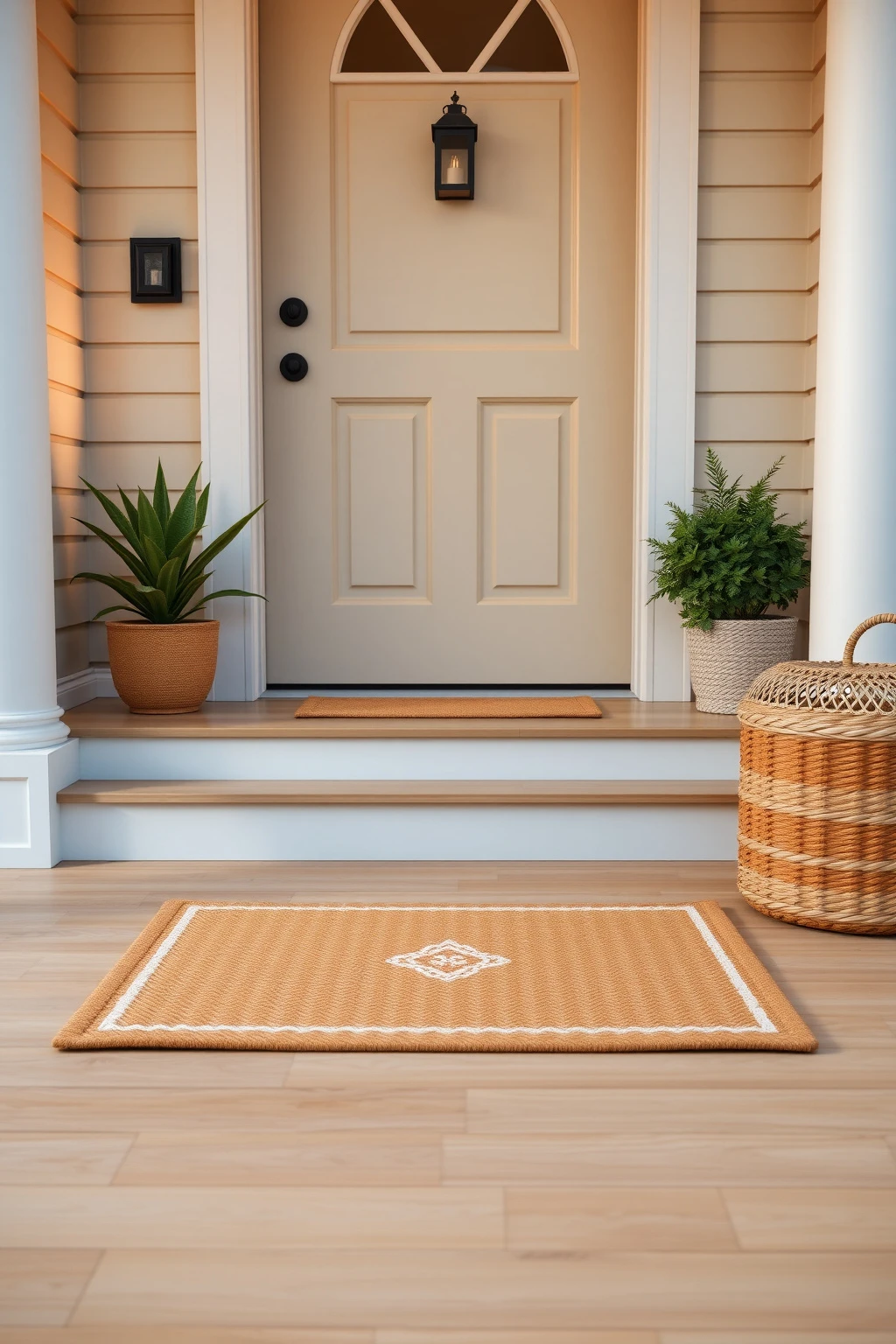
Your doormat is basically the porch’s punctuation mark. If it blends too closely with the floor or door color, the entry feels unfinished. Farmhouse looks best when your mat provides contrast, then everything around it looks intentional.
Aim for a doormat thickness of about 0.5, 1 inch so it sits flat and doesn’t trip. Choose colors like charcoal with a light border, natural coir with a cream edge, or a warm cream mat with a muted red pattern. If your porch floor is light oak, coir in a medium brown reads grounded. Place the mat centered under the door, with 1, 2 inches of clearance around it, and keep the rest of the styling lighter so the mat stays the focal point.
Frame the Steps With a Runner That Handles Foot Traffic
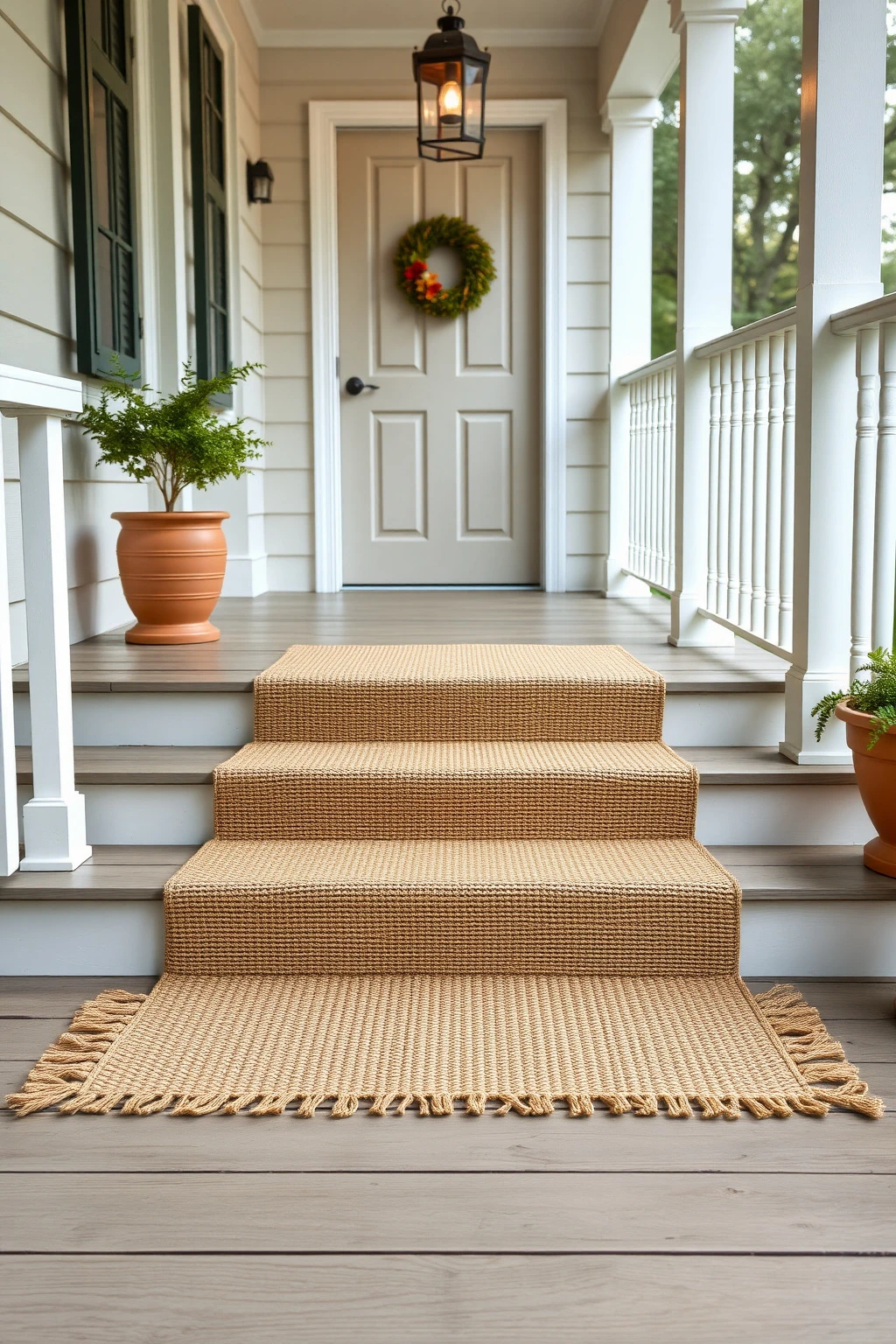
A porch step is high-traffic by default, so styling can fail fast if you choose the wrong fabric. Indoorsy shag rugs look gorgeous on Pinterest, but they shred, snag shoes, and shed into the corners of your porch. A step runner gives you texture while still being practical, which is the farmhouse way.
Choose a tightly woven runner in jute or a flat cotton blend, sized so it tucks slightly at the edges, about 1, 2 inches of overlap beyond each step edge. Secure it with outdoor rug tape on dry days so it doesn’t slide, then vacuum with a brush attachment weekly to keep it clean. Warm tones like natural jute, oatmeal, or faded sage keep the look cozy. Avoid heavy fringes where you step, unless you’re willing to trim them after a few seasons.
Layer Throw Blankets Like You Mean It (Size Matters)
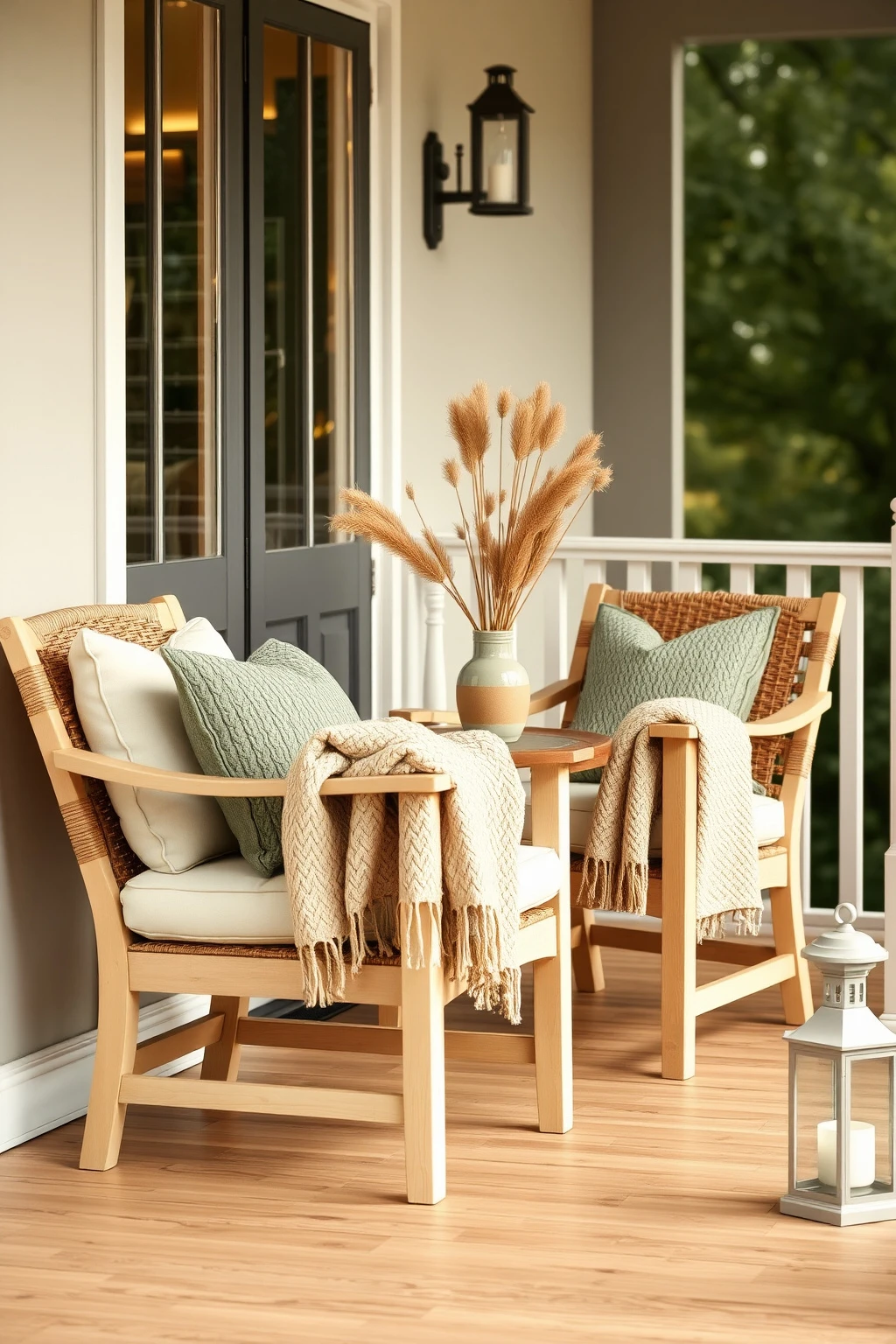
Farmhouse seating looks warm when it’s styled with textiles that look touchable, not just draped. The mistake is hanging a throw so it bunches or touches the porch floor, which reads messy instead of cozy. When you fold with intention, your porch looks like a lived-in retreat.
For a standard porch chair, use a throw blanket folded in thirds, draped over the outer arm so about 10, 14 inches hangs down. If you’re using two cushions and one throw, keep colors in the same family, like warm ivory plus dusty rose plus a hint of sage. Choose outdoor-friendly fabrics like acrylic knit in a cable pattern or a Sunbrella-style weave. Skip delicate linen on open porches unless it’s covered, because it will spot from damp air.
Lean an Oversized Mirror to Catch Evening Light
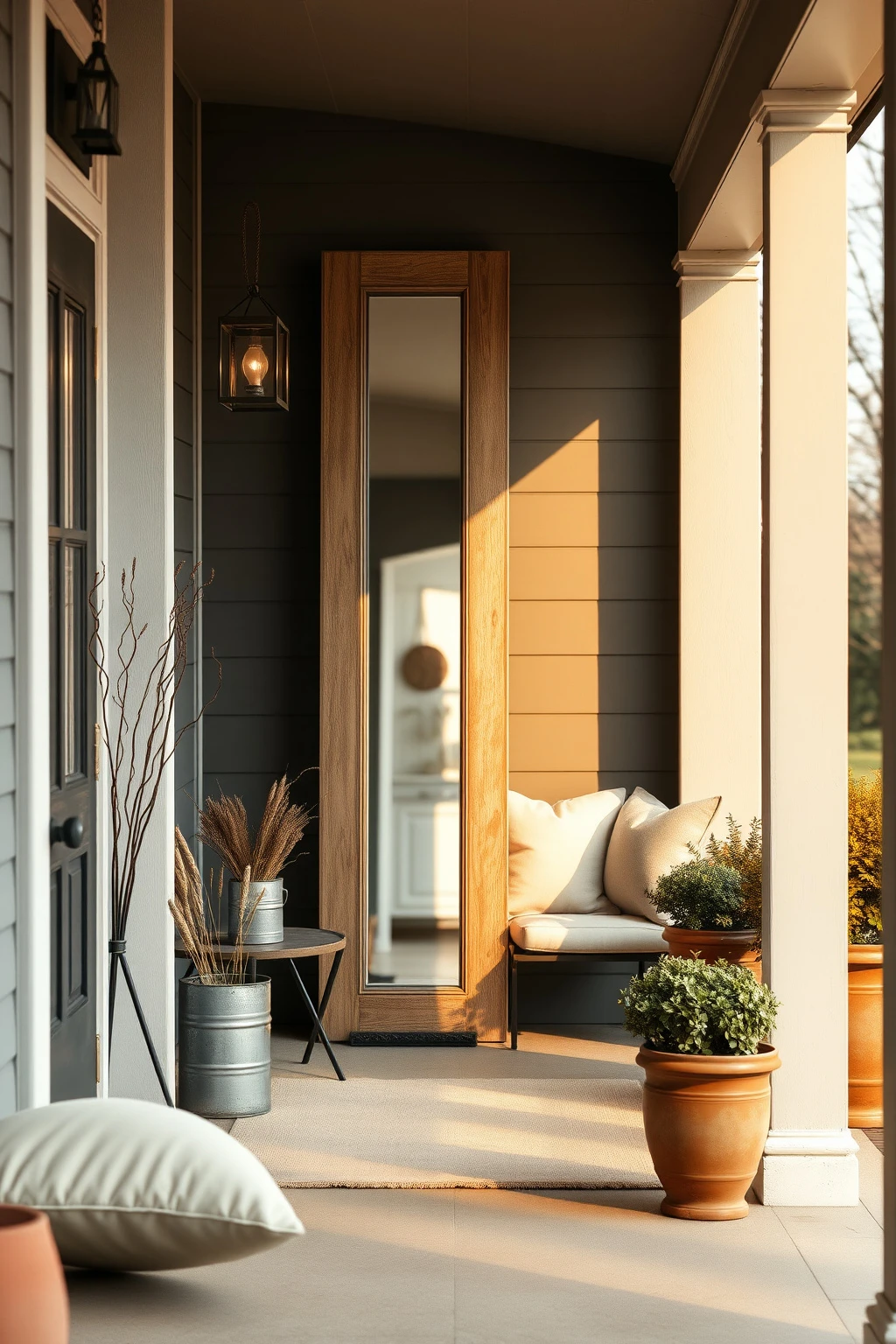
If your porch is covered and dim, you need something reflective, but not shiny and sterile. A leaned mirror brings brightness and makes the entry feel larger, which is exactly what you want on narrow porches. The design principle is simple: mirrors bounce light and create depth, so the space feels inviting instead of shadowy.
Choose an outdoor-safe mirror with a weatherproof frame in black iron, distressed white, or reclaimed wood. Lean it at a slight angle against a wall or porch post so it reflects the lantern glow, and keep it at least a couple of feet from the door so it doesn’t block daily traffic. Style the area behind it with one vertical element like a narrow floral arrangement or a tall plant so it doesn’t look like a floating decoration. Avoid placing a mirror directly in strong sunlight for long hours, because some backing materials can warp.
Create a Seasonal Switchboard With Removable Porch Signs
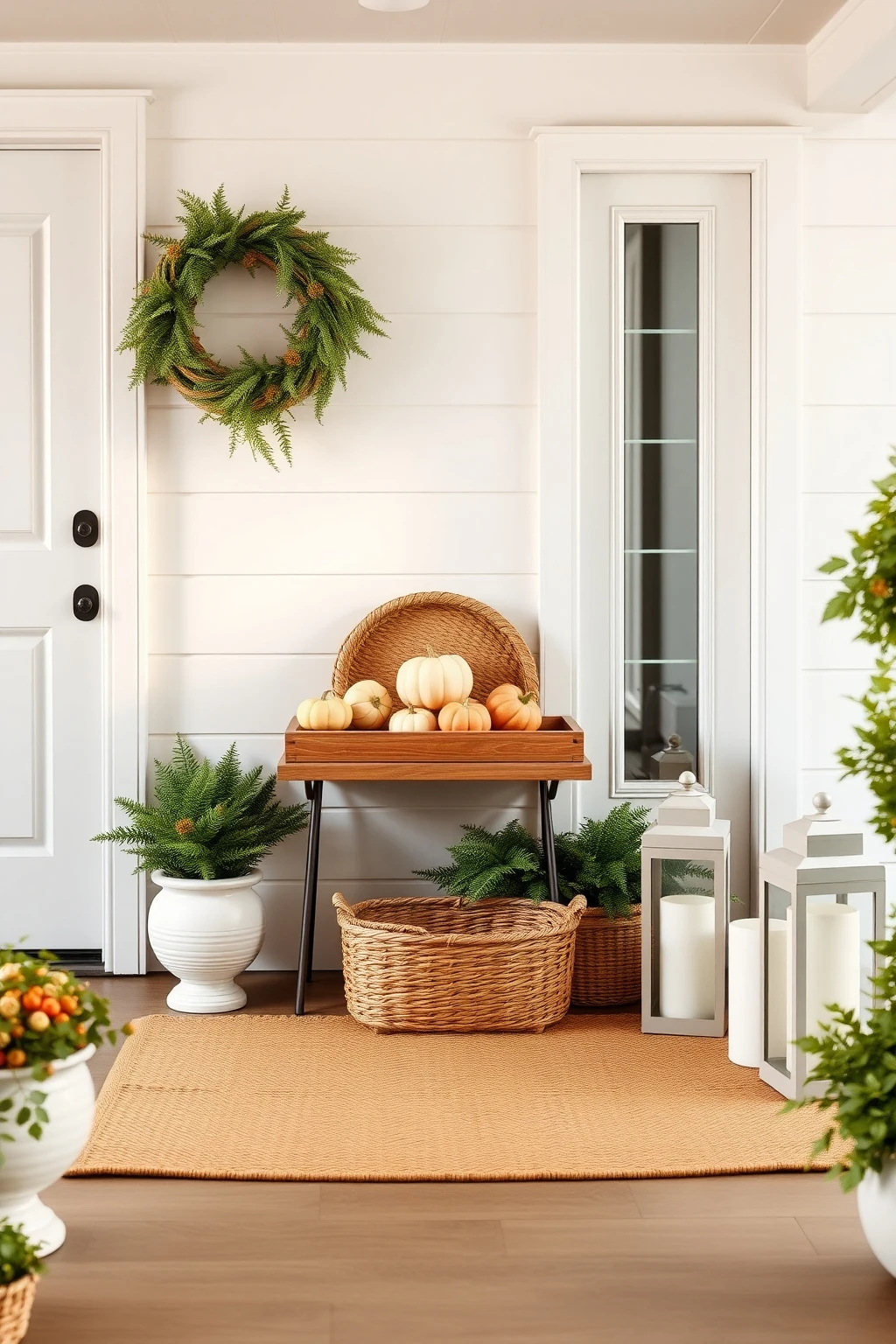
Seasonal decor doesn’t have to mean buying a whole new porch each year. The trick is to keep your base look neutral and swap one or two “front-facing” elements that change with the calendar. Farmhouse style loves authenticity, so removable pieces feel intentional rather than cluttered.
Pick a weather-resistant porch hook or a display stand near eye level, then use interchangeable seasonal items like a carved wood letter, a neutral wreath, or a small wooden tray insert. Keep your base palette steady: warm ivory, natural wood, charcoal, and sage. For fall, add amber-toned pumpkins in a shallow tray, and for winter, use dried eucalyptus and pinecones. Avoid using paper goods or fabric that bleaches quickly in sunlight; use wood, metal, or faux-fiber that’s rated for outdoor use.
Hang a Basket Chandelier of Lanterns for Soft Farmhouse Glow
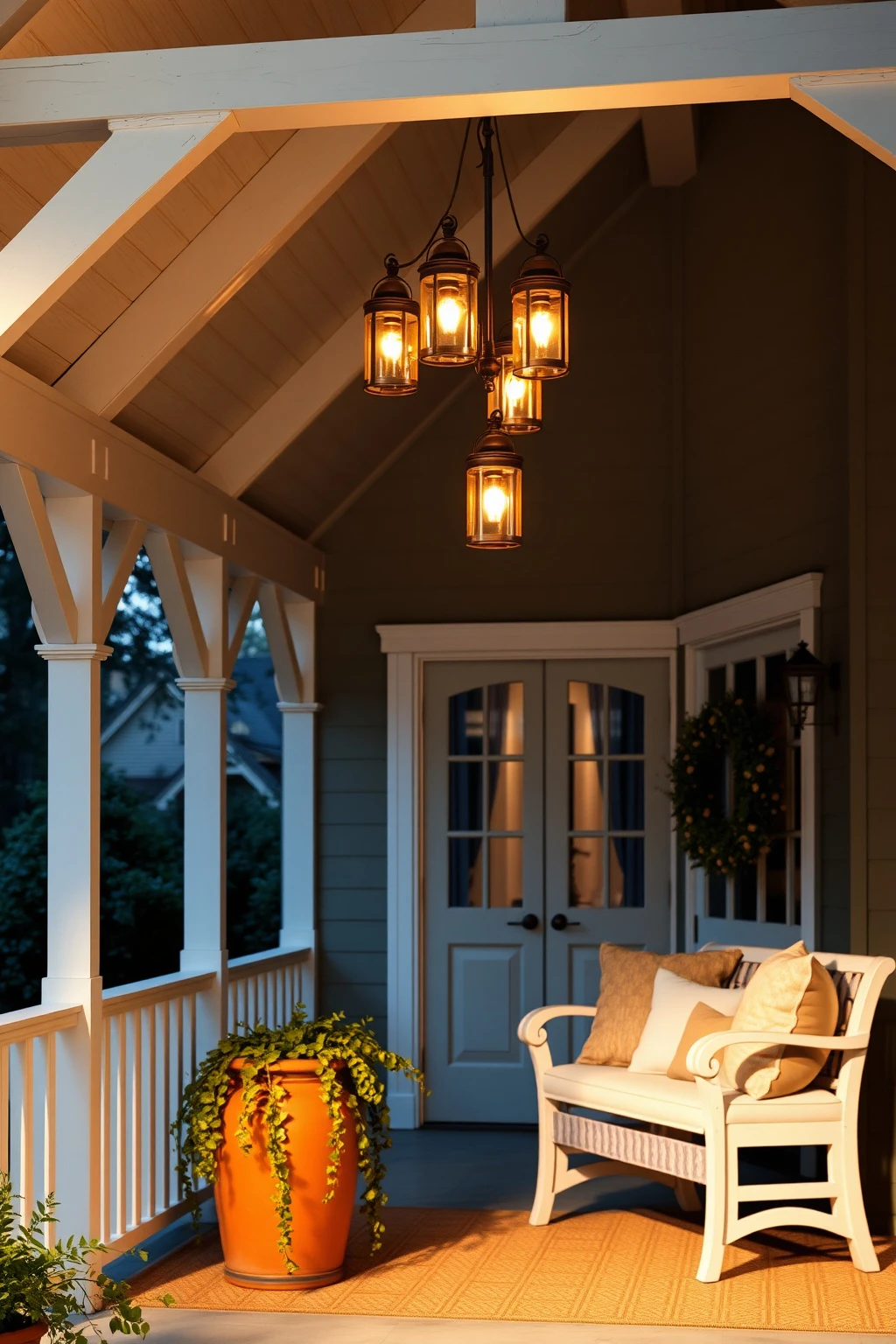
Instead of relying only on wall lights, add a layered glow overhead so the porch feels like an outdoor room. A cluster of lanterns creates warm highlights on wood rails and plants, which reads incredibly farmhouse and cozy. The most common mistake is choosing lights that are too cool-toned, so everything looks gray at night.
Use a weather-rated basket lantern chandelier or a small candelabra-style cluster suspended from an existing porch fixture. Aim for warm white bulbs around 2700K, and keep the cluster low enough to be cozy, roughly 7, 8 feet from the ground when possible. Style the surrounding area with one grounded element like a thick wooden bench and a rug so the overhead glow doesn’t feel floating. If you’re in an area with wind, choose lanterns with tight glass panes and secure hanging cords with outdoor-rated clips.
Use a Bench With Storage so Guests Don’t Clutter Your Entry
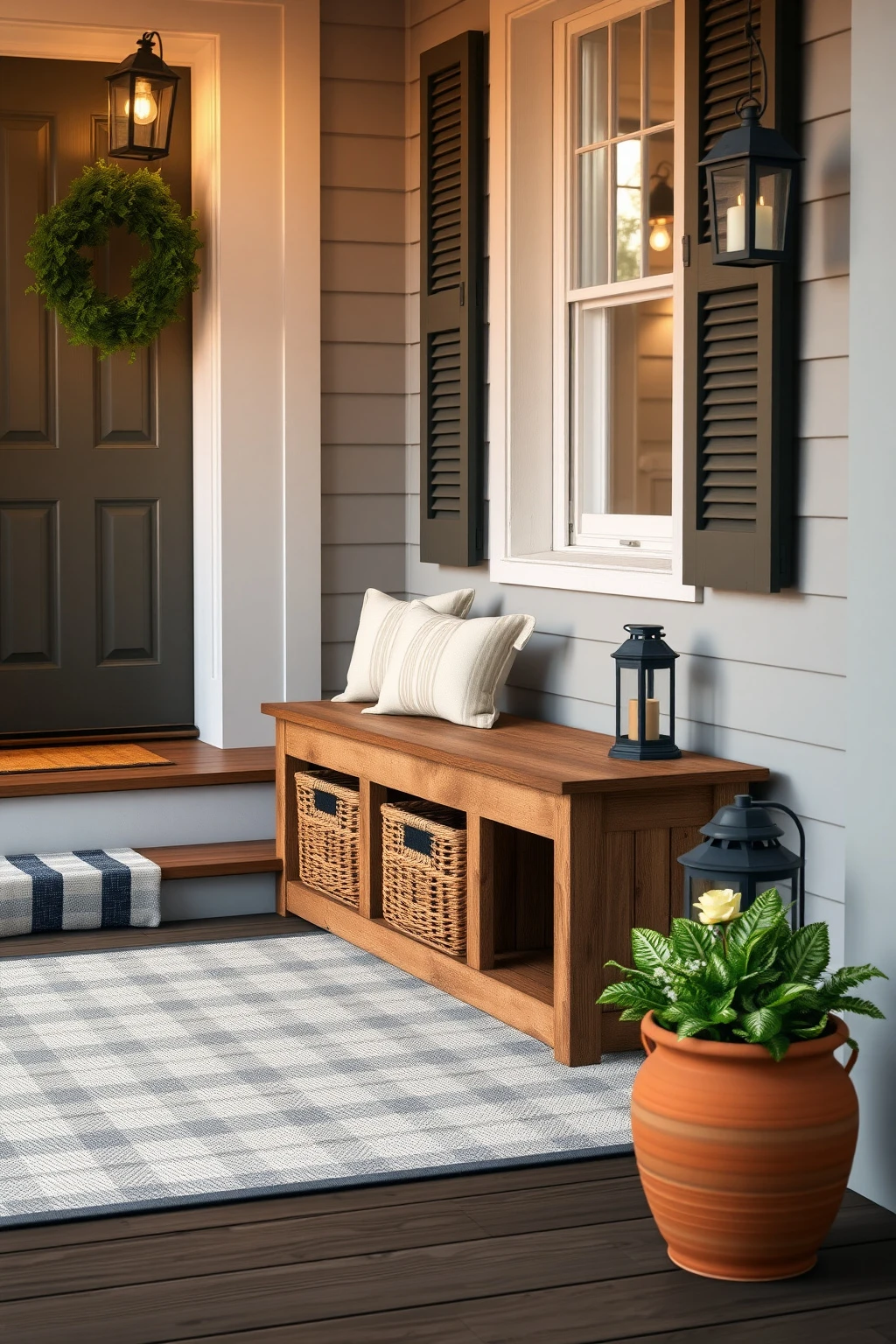
Nothing makes a porch feel less welcoming than random bags and coats parked wherever they land. A farmhouse storage bench solves that while adding long, grounded lines that visually stretch a porch. It’s a practical win: guests feel taken care of because there’s a place to sit and set things down.
Choose a bench height around 18 inches so it’s easy to use, and aim for a depth of about 14, 16 inches to avoid blocking door swing or walkway clearance. Add a cushion in a durable outdoor fabric like acrylic or Sunbrella-style weave in warm ivory with subtle stripes. For storage, keep one size of basket inside for gloves, one for seasonal items, and leave the top clear for guests. Avoid benches that are too wide for the porch, because you want at least 36 inches of walking space between furniture and the door.
Add a Tall Outdoor Vase for a Clean Vertical Moment
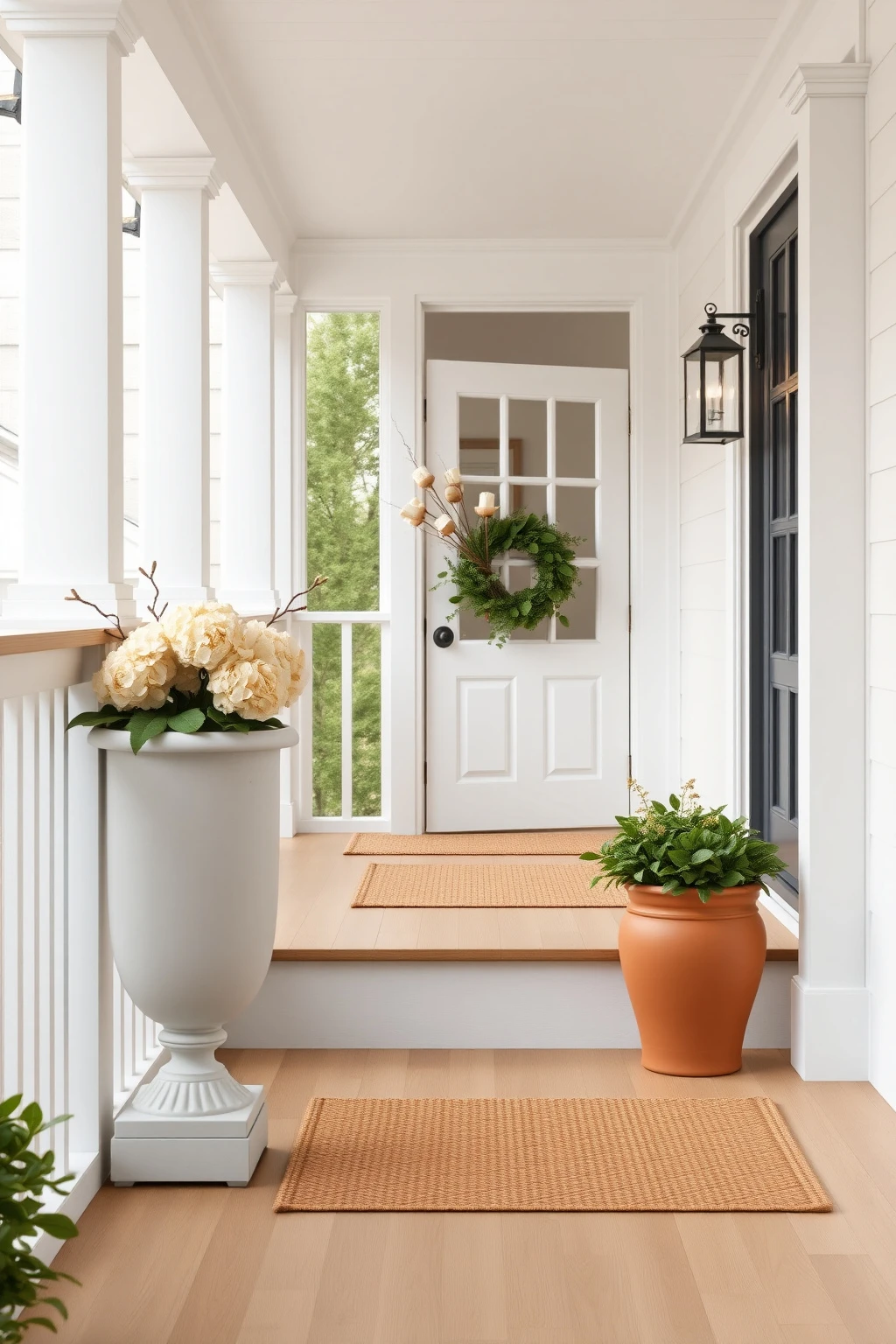
Farmhouse style loves rhythm, and you can create it fast with vertical decor. Low porches or wide landings can feel visually “flat,” so a tall vase or urn pulls the eye up and balances your doorway. The key is choosing a container that looks right even when plants aren’t blooming.
For a porch entry, use a white ceramic or concrete urn about 18, 30 inches tall. Place it on the opposite side of your main furniture or planter so it doesn’t fight for attention. Fill it with sturdy greens or dried stems like magnolia leaves (real or faux), then add one seasonal pop like dried wheat or dried hydrangea. Replace just the stems, not the container, so you’re reusing what already works. Common mistake: using a vase that’s too short, which makes it feel like a leftover object instead of an anchor.
Dress Up Your Door With a Fabric Runner at the Threshold
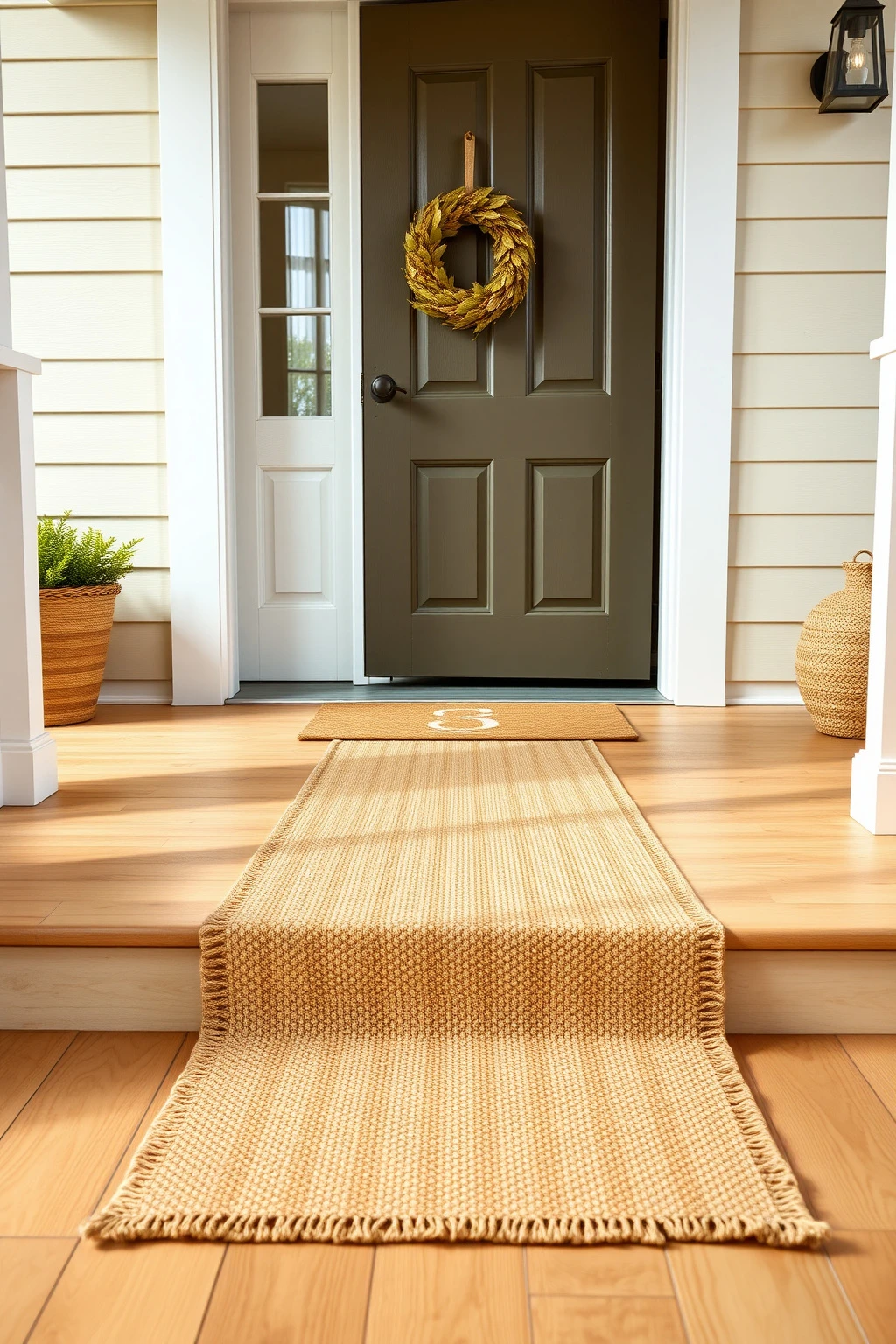
If your front door sits on a slightly raised porch floor, the area at the threshold can look bare. A fabric runner that’s only used where you step in creates a tailored, farmhouse finish. It also helps define where “the entry begins,” especially on porches with lots of wood texture.
Use a narrow runner, about 18, 24 inches wide and 36, 48 inches long, in a flatweave like cotton or a durable indoor-outdoor blend in warm cream and oatmeal. Keep the pile low so it doesn’t catch on shoes. If you can, use an outdoor rug pad or non-slip backing so it stays put. Skip fringed styles here, because the fibers tangle and fray with repeated foot traffic. Pair it with a simple wreath so the door area stays cohesive.
Create Contrast With Black Hardware, Not Over-the-Top Wallpaper
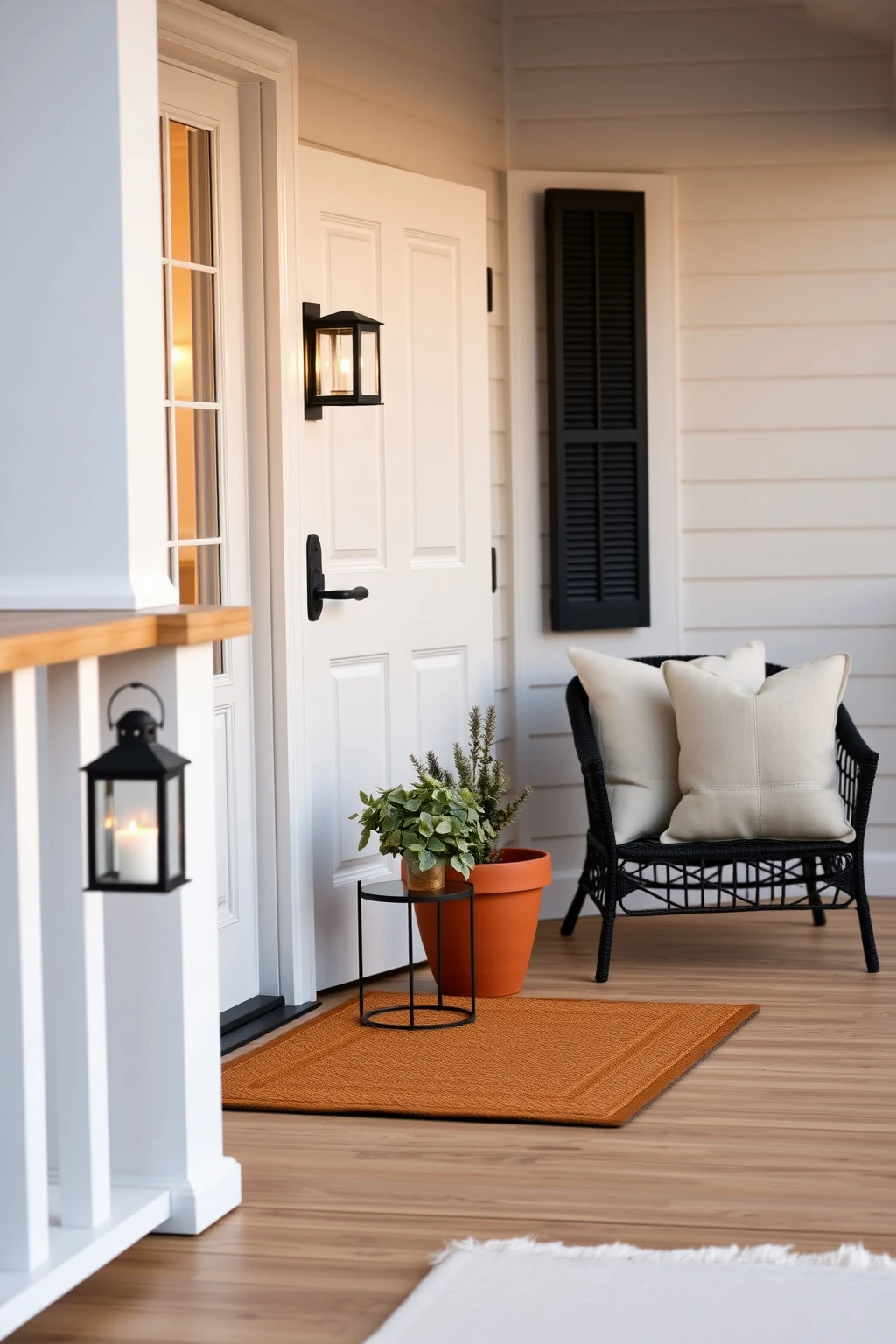
Farmhouse porches can drift into “all white, nothing to anchor it” if every element is painted the same. Contrast is what keeps the look from feeling flat, and it doesn’t require dramatic patterns. Use black hardware moments to ground the palette and make warm wood and greenery pop.
Swap in black hooks for wreaths, black lanterns, and a black-framed small table or plant stand. If your porch railing is white, add one black element per side, like a black planter pot or a tall black metal plant ladder. Stick to warm neutrals for softness, like warm ivory cushions and sage greens, and keep the contrast controlled so it still feels cozy. Avoid pairing multiple different “black” finishes at once, such as glossy black plus matte gunmetal, unless you repeat them deliberately.
Turn a Decorative Ladder Into a Plant and Blanket Display
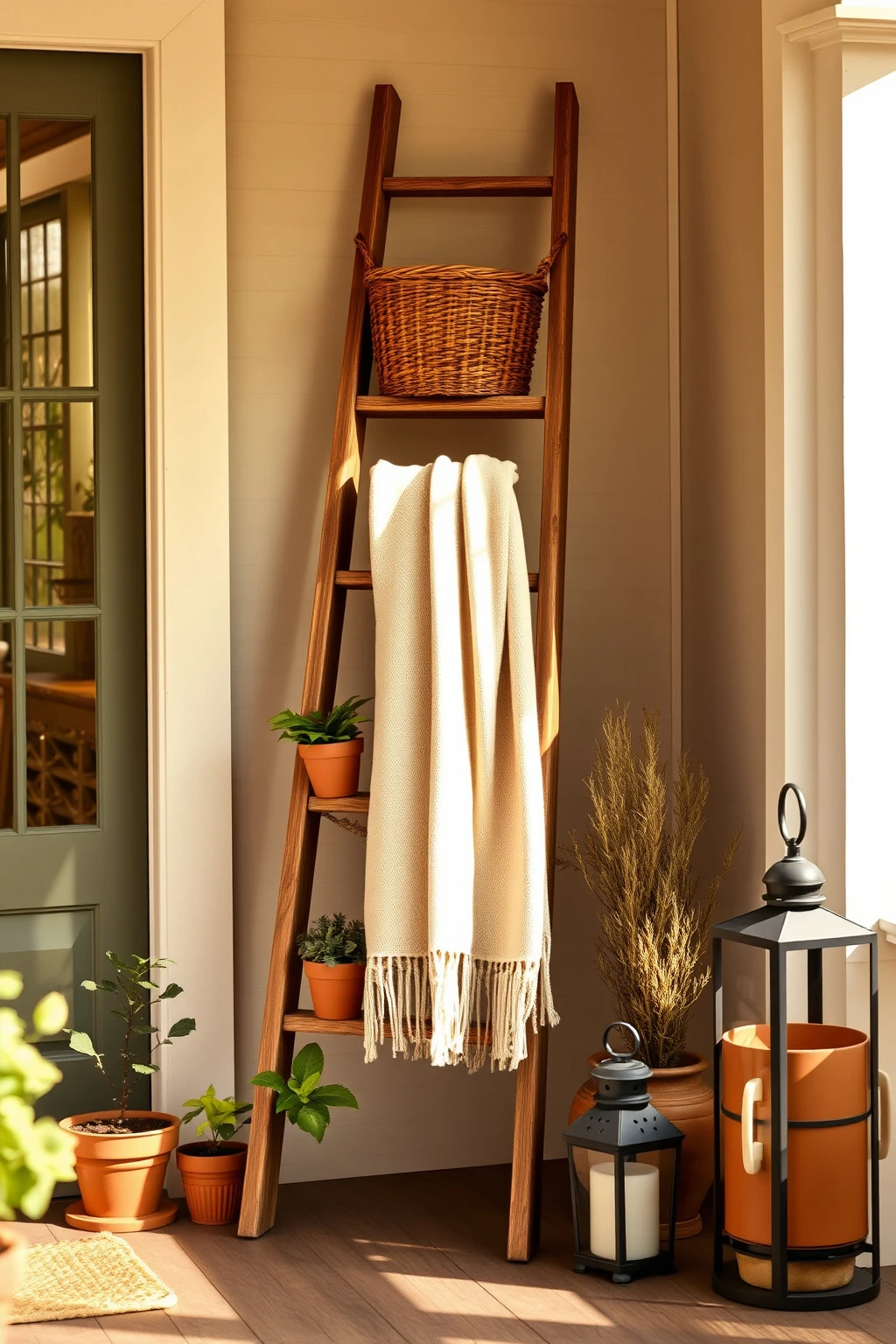
A ladder is farmhouse by nature, but it can easily become a dust collector if you treat it like a generic prop. The win is using it for functional vertical storage: plants on the rungs and a throw folded on the top. This keeps your porch organized while still feeling artsy.
Use a leaning reclaimed pine ladder and secure it with a strap so it cannot shift in wind. Place tall potted herbs or trailing plants on the lower rungs and use a small basket on a middle rung for seasonal gloves or a fire starter kit. Fold a single thick throw, about 50, 60 inches wide, and drape it over the top rung so it hangs evenly. Common mistake: loading the ladder too high, which blocks door sightlines and makes it harder to move through the entry.
Pair a Porcheswing With Two Different Cushions for Visual Depth
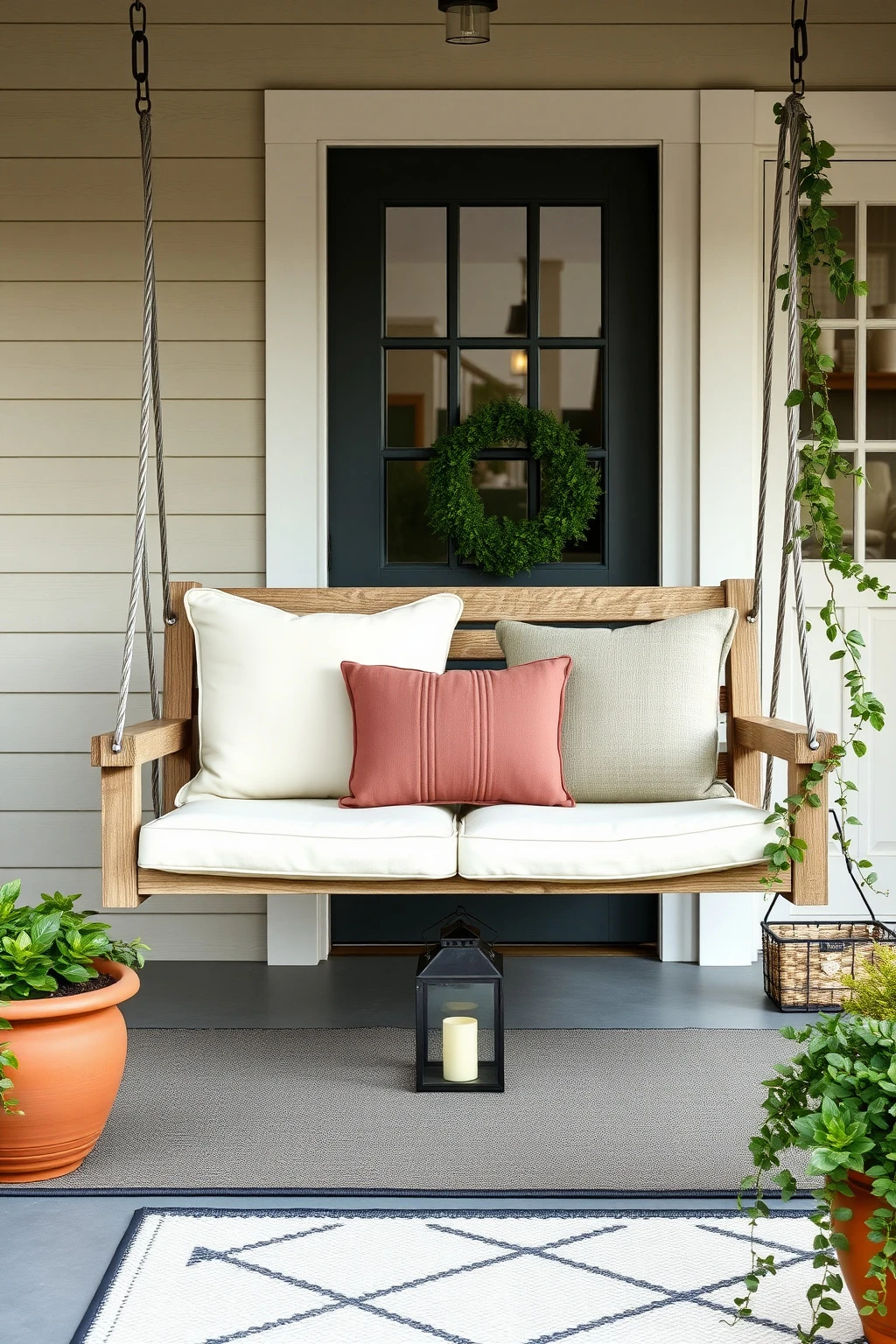
A porch swing looks best when it’s styled with contrast in texture, not just color. If you match cushions perfectly, the swing can look flat and stiff. When you use two different cushion textures, the swing becomes inviting, even when no one is sitting there.
Choose one cushion in a smooth weave like canvas in warm ivory, and one in a heavier texture like striped acrylic knit or outdoor boucle in sage or dusty rose. Arrange them so the textured cushion sits closer to the seat back, creating depth in the silhouette. Add a small lumbar pillow about 12×18 inches with a simple pattern, like a thin black stripe. Keep patterns restrained: one patterned item per “corner,” or your porch will feel busy instead of farmhouse cozy.
Style a Ceiling Fan Area With a Simple Centerpiece Bowl
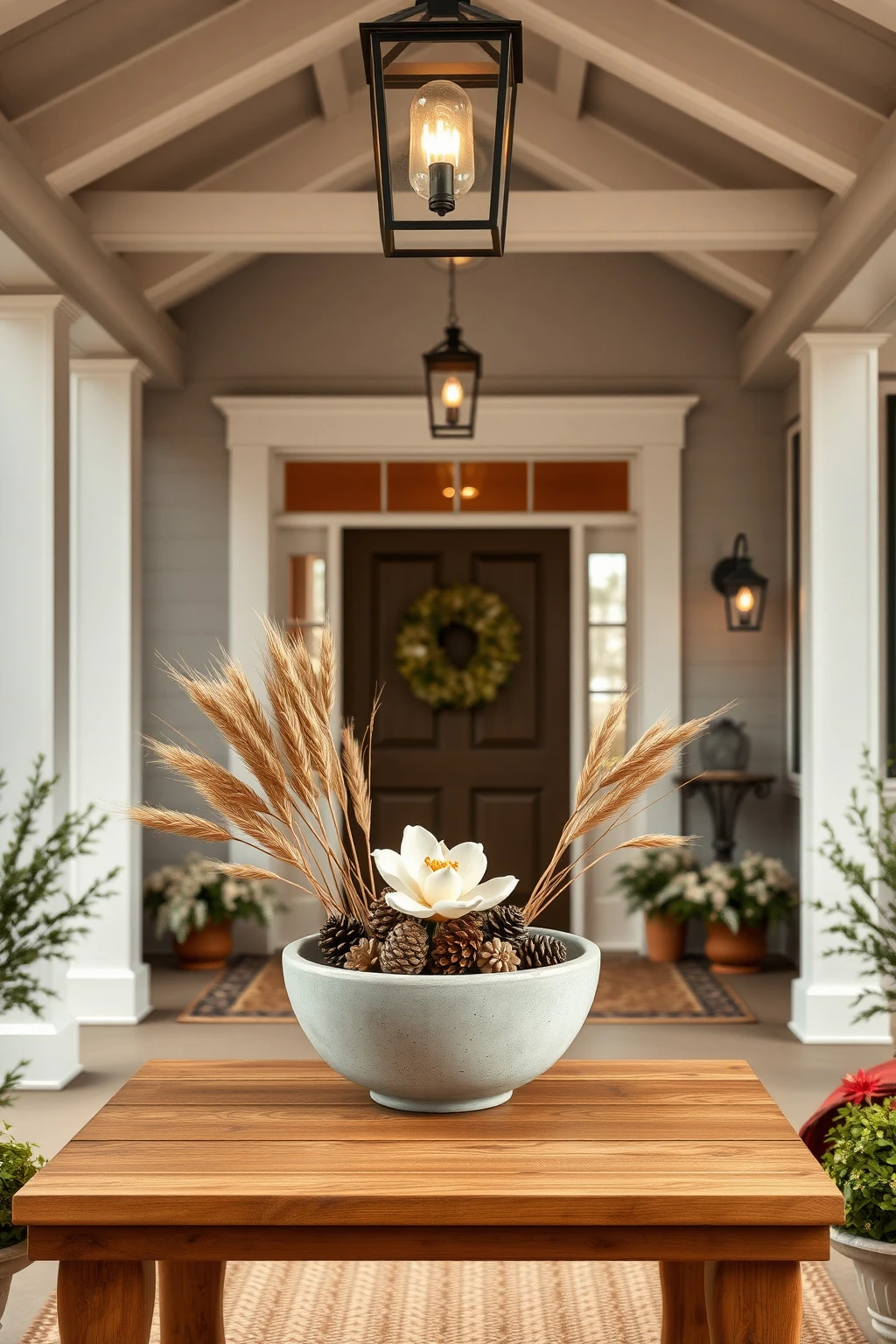
If your porch has a ceiling fixture, people often hang random decor nearby. That can block airflow or make the space feel cluttered, especially if you have a fan or exposed beams. Instead of adding hanging clutter, use a grounded centerpiece bowl on a nearby table so the area looks styled without interfering with movement.
Pick a shallow bowl about 16, 20 inches wide made of metal, ceramic, or weatherproof wicker. Fill it with one “hero” element like dried wheat or magnolia pods, then add smaller fillers like acorns, pinecones, or faux eucalyptus, keeping everything within the bowl so it stays tidy. For a farmhouse look, color everything in warm neutrals and one accent like burnt orange or deep red. Replace fillers seasonally by swapping only the top layer, which keeps your base styling consistent year-round.
Add a Water-Wise Planter Setup for Hot, Sunny Porches
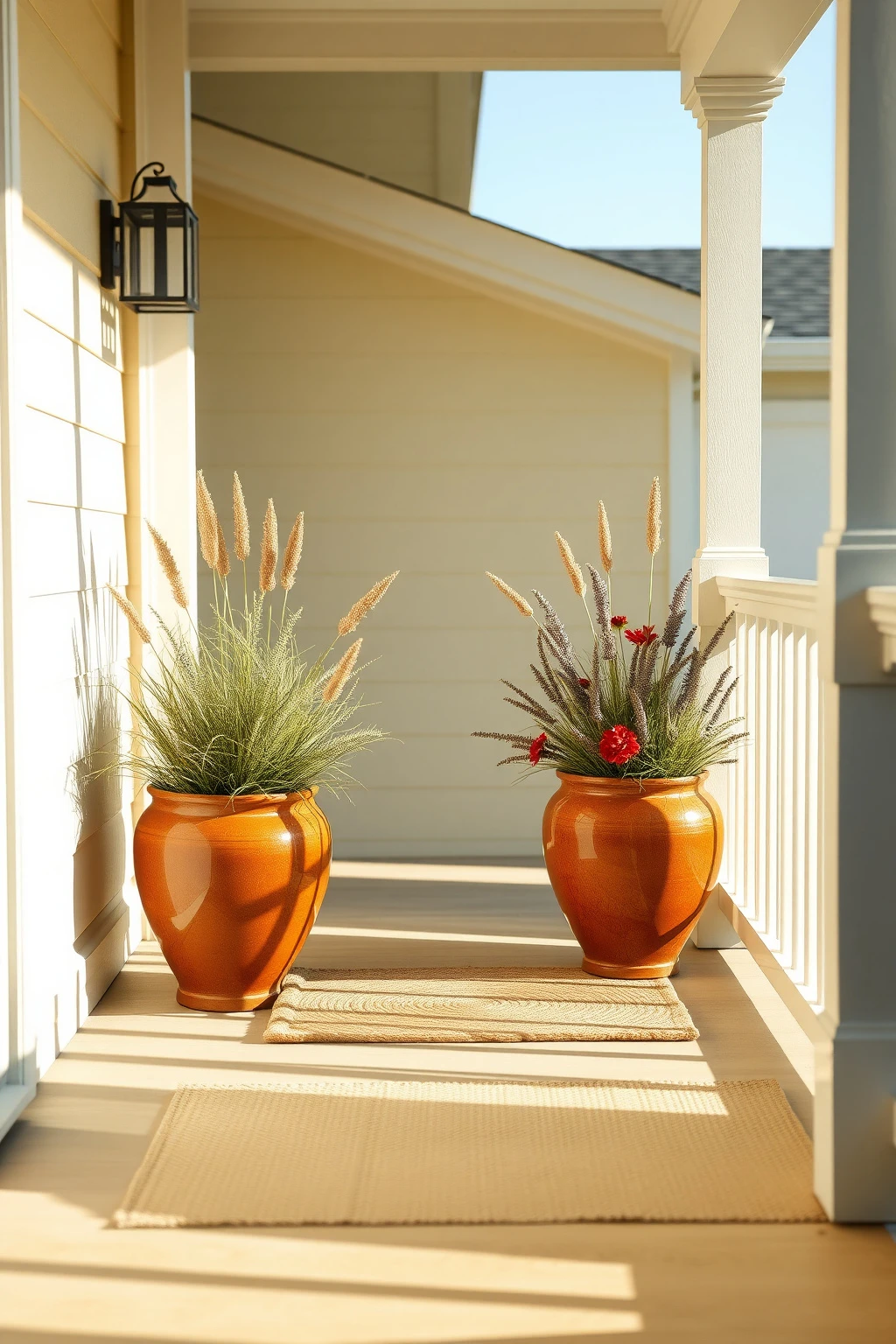
On hot, south-facing porches, porch decor can look great for two weeks and then collapse because plants dry out and fade. Farmhouse style can still thrive there if you choose the right plant type and planter materials. A thoughtful setup keeps your porch looking “always ready” without daily panic watering.
Use glazed ceramic or plastic nursery pots tucked into larger decorative planters so you can control drainage. Add a 1, 2 inch layer of mulch and consider drought-tolerant fillers like ornamental grasses, rosemary (where hardy), or lavender in containers. Choose a terracotta-look planter only if it’s glazed or lined, because unglazed terracotta dries too fast in heat. For a consistent look, repeat one plant in both planters, then add seasonal annuals sparingly so the base doesn’t disappear when blooms drop.
Use Shaker-Style Bench Hooks for a Practical Entry Wall
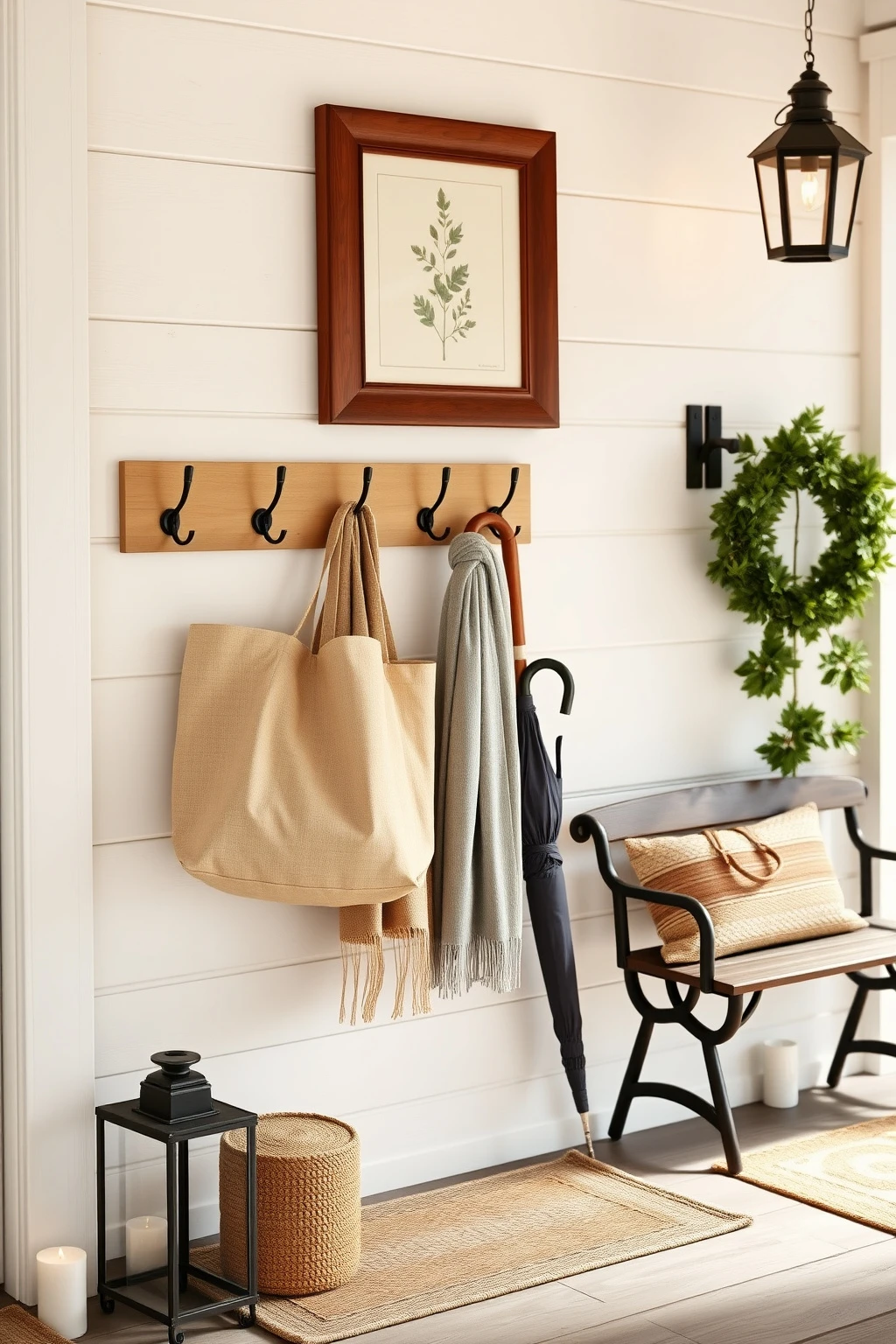
Porches with a wall beside the door can look unfinished, and clutter grows fast if there’s nowhere to hang coats or bags. Instead of relying on floor baskets, use a small set of Shaker-style hooks. They’re visually farmhouse, but more importantly, they keep your entry functional and clear.
Mount hooks in a simple vertical line: the bottom of the lowest hook around 54, 56 inches from the floor, and the highest around 66 inches. Use exterior-rated screws into studs and paint-touch the area if needed to prevent rust. Style above the hooks with a small framed print in a warm wood frame or a slim seasonal wreath. Common mistake: spacing hooks too far apart for the items people actually carry, so keep about 3, 5 inches between hooks.
Balance a Small Porch With One Statement Piece and Plenty of Negative Space
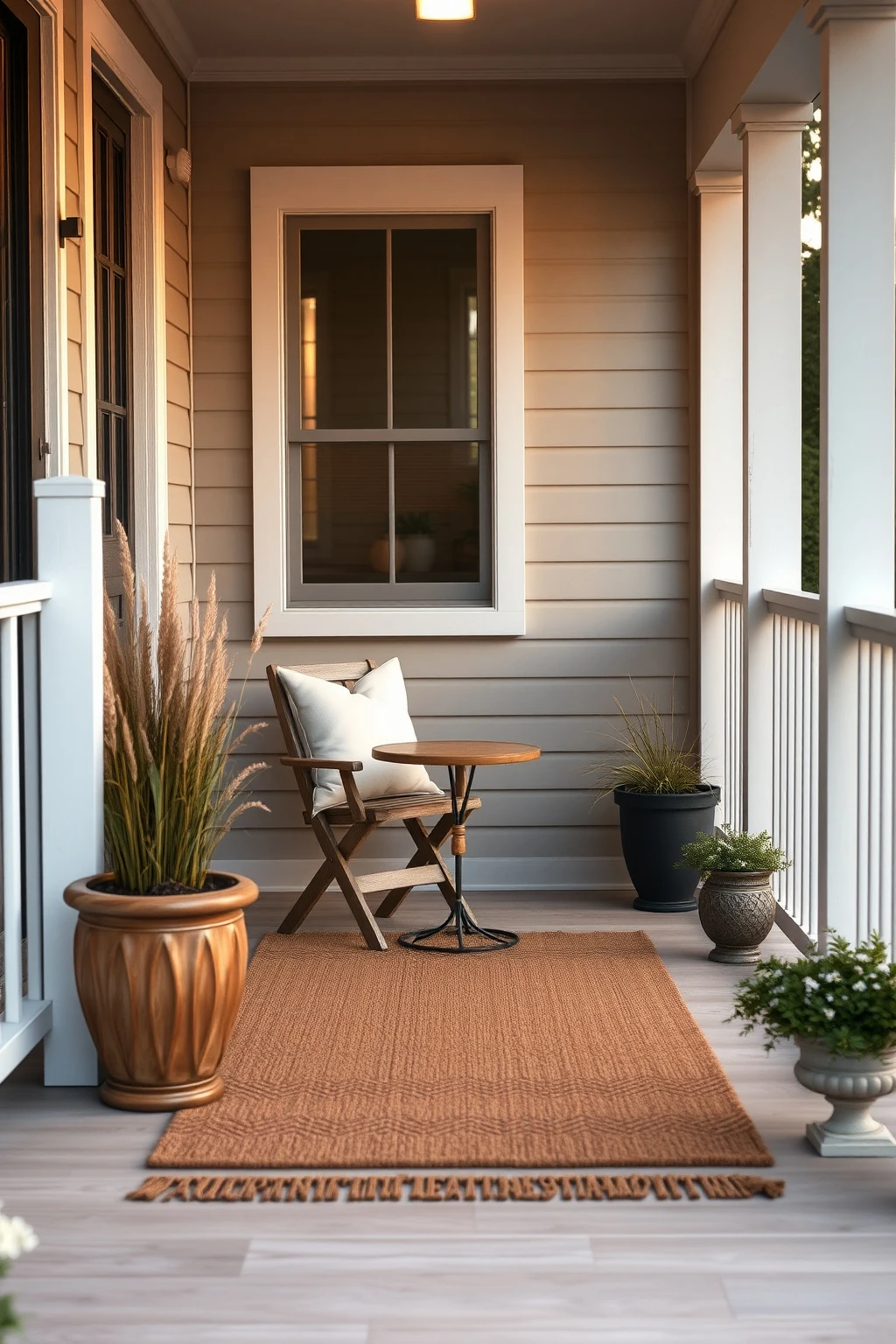
Small porches can feel crowded fast, especially when you try to add chairs, multiple planters, signs, and decor all at once. The farmhouse fix is to choose one statement piece and then leave breathing room so the porch still feels welcoming. Negative space is not emptiness, it’s what makes your eye relax.
Pick one anchor: a slim bistro set, a single bench, or a porch swing that fits your layout. Keep decor in a “triangle” around the entry: one planter by the steps, one on the side, and one grounded textile item like a rug or runner. For a compact porch, choose rug sizes that stop short of the door swing path, typically 3×5 or 4×6. If you’re tempted to add a second bench, don’t, because it usually kills the walkway clearance and makes the porch feel tight rather than cozy.
Go Vintage-Inspired With a Refinished Wood Step Stool
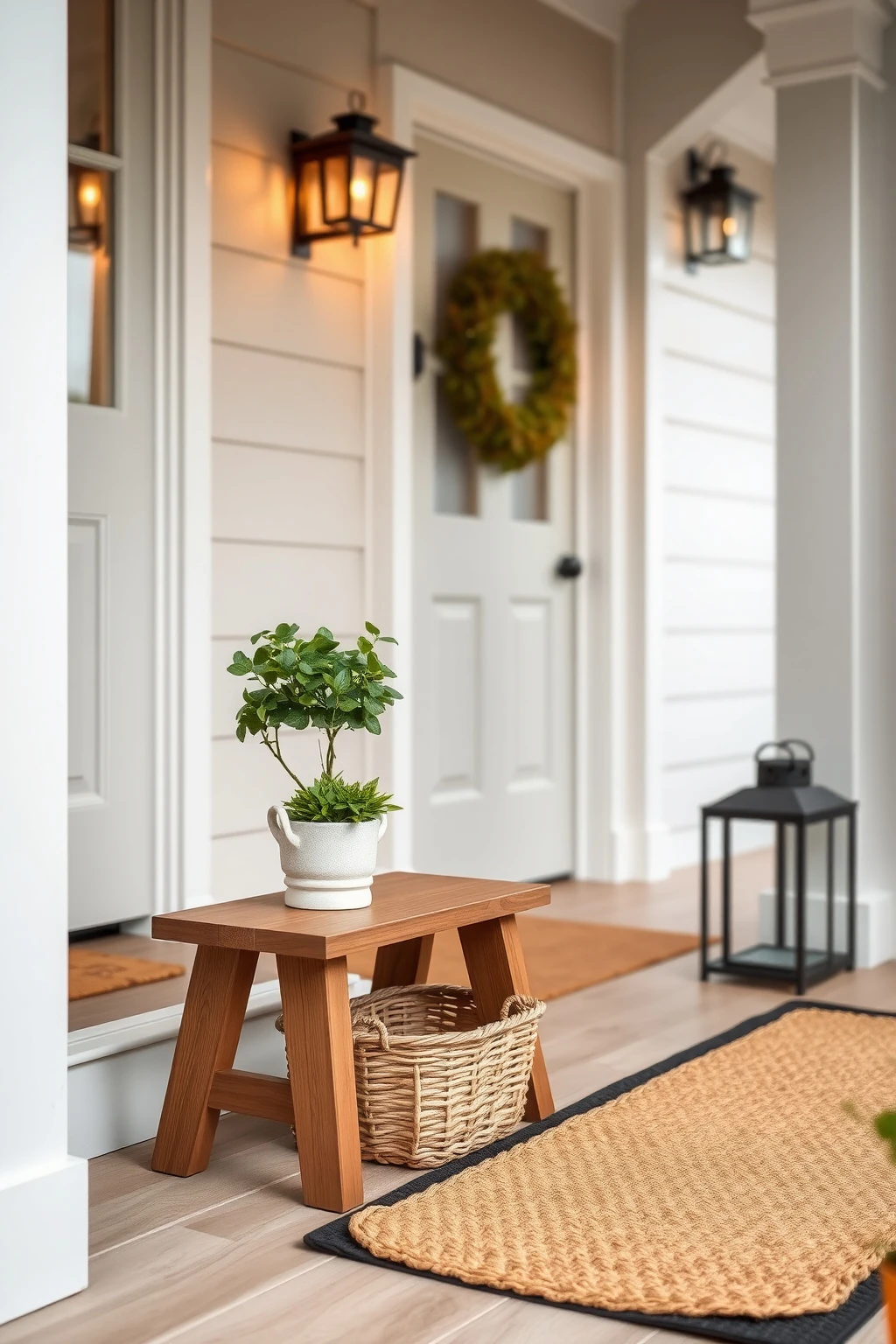
Farmhouse charm often comes from objects that look like they’ve had a life. A simple step stool refinished in a warm, aged finish adds that lived-in warmth without needing a ton of decor. The design principle here is patina: it creates depth and tells the eye there’s history on the porch.
Refinish a small wood stool in warm walnut or reclaimed pine with a matte clear coat so it doesn’t look glossy. Use it as a functional decor piece: set it beside the door with a small potted plant on top, or place it near the lantern area for instant height. Add one basket underneath for gloves or seasonal accessories. Avoid heavy, dark stains that look muddy in daylight; warm walnut and honeyed pine photograph beautifully and still read farmhouse.
Try a Galvanized Tray for a Low-Slung Porch Styling Moment
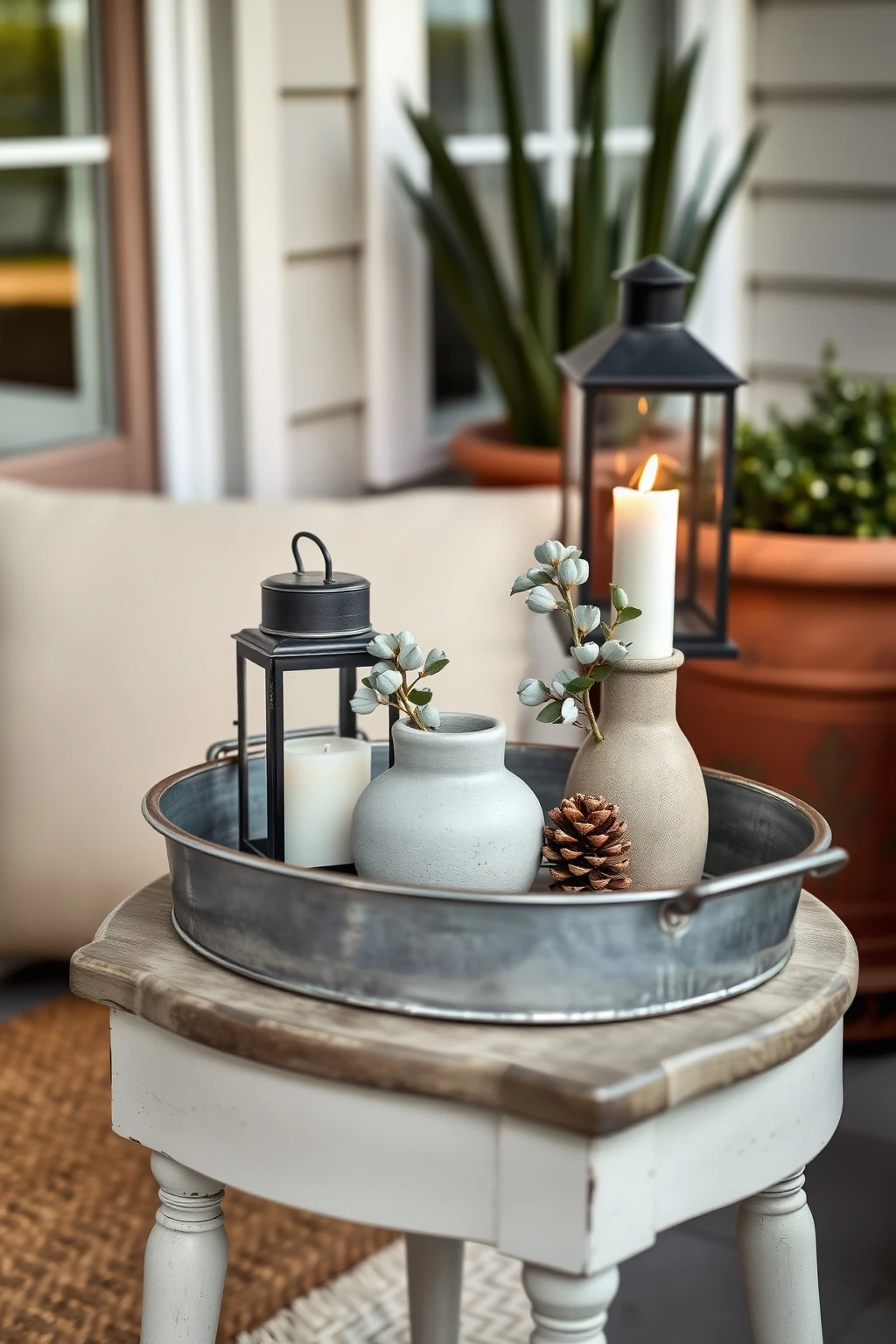
Sometimes farmhouse style needs a low, tidy surface to keep things feeling intentional. Galvanized trays do that beautifully, especially when you’re working with small side tables or limited porch space. They also protect wood surfaces from water rings, which is a sneaky but real practical win.
Choose a galvanized tray about 18, 22 inches wide, then style it with one candle holder, one lantern, and a small seasonal arrangement in a washable container. If you’re using candles, choose flameless LED tea lights for porch safety and consistent glow. Add a thin layer of decorative sand or weatherproof filler at the base so greenery stays stable. Avoid mixing too many metals in one tray; if you use galvanized, keep other accents in black iron or warm wood rather than bright chrome.
Make Your Porch Smell Like Home With Lidded Outdoor Candles
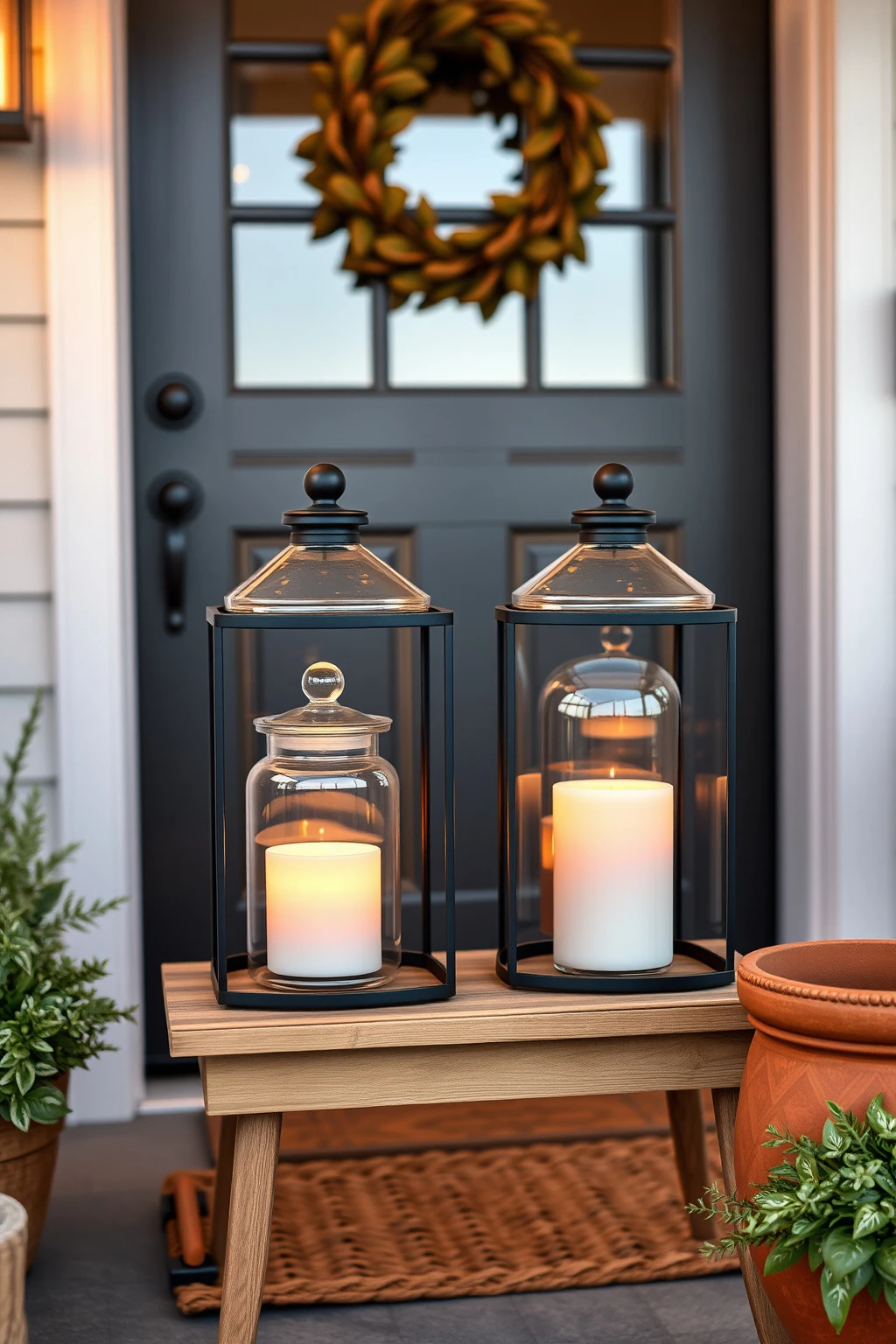
Farmhouse welcome isn’t just visual. Scent affects how cozy people feel, and a porch is the perfect place to add a gentle aroma without lingering inside. The mistake is using strong indoor fragrances that overwhelm in open air. Lidded outdoor candles give you a controlled, soft scent that feels warm, not perfumey.
Use outdoor-rated candles in glass jars with lids, then place them in metal lanterns or on a tray to protect from breeze. Burn-time matters too: choose medium-size candles that last 40, 60 hours so you’re not constantly replacing them. Scents that fit farmhouse are cedar, warm vanilla, or a subtle apple cider blend in fall. Keep one candle per “zone,” such as one near the door, and skip placing them under direct sun where glass heats quickly.
Conclusion
Once you start thinking of your porch like a warm entry room, the styling becomes easier and the results last longer. Choose a few anchor pieces you can repeat (rug, lighting, planters) and then add seasonal touches in small swaps, not full overhauls.
If you do just one thing this weekend, make sure your porch has warm light near the door and a clear, tidy landing on the floor. That combination tells everyone, quietly but unmistakably, that you meant to welcome them.

Mush Decor
Writes about accessible, timeless interior styling for readers worldwide.
More about Mush Decor