
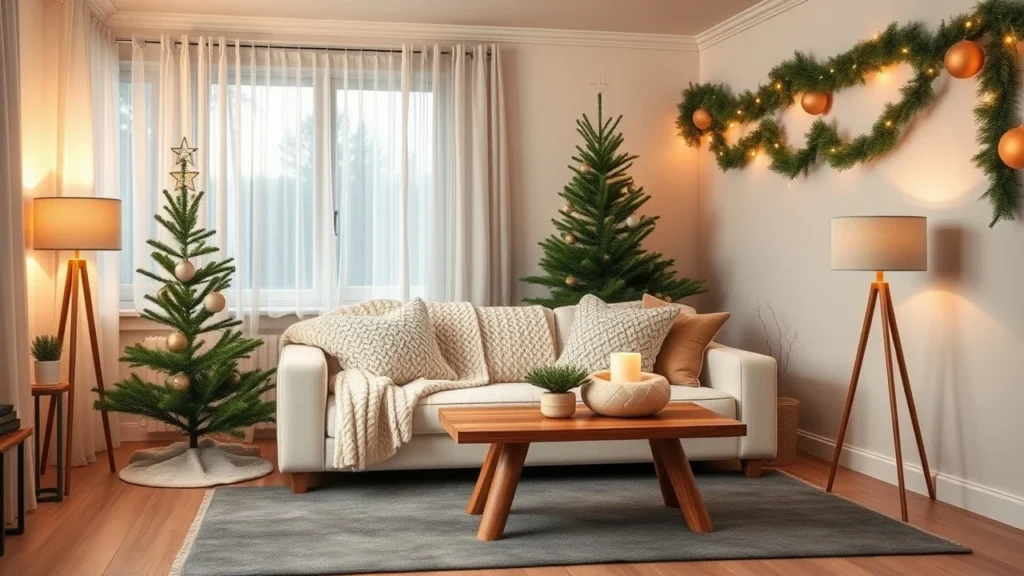
Your small living room has two jobs in December: feel warm and still let you actually move. If you’ve ever tried to “go full Christmas” and ended up with a cramped tangle of boxes, chairs you can’t pull out, and decorations that look great only from one angle, you’re not alone.
The good news is that cozy Christmas styling is mostly about layout, light, and texture, not more stuff. In this guide, you’ll find small-space-friendly ideas that use smart scale, intentional color, and practical placement so your living room looks festive without feeling crowded.
Scroll through 22 specific ways to pull off a cozy holiday look, from a narrow-entry tree placement to storage-friendly mantel swaps and lighting tricks that make winter evenings feel softer.
Choose a slim tree and place it where traffic naturally flows
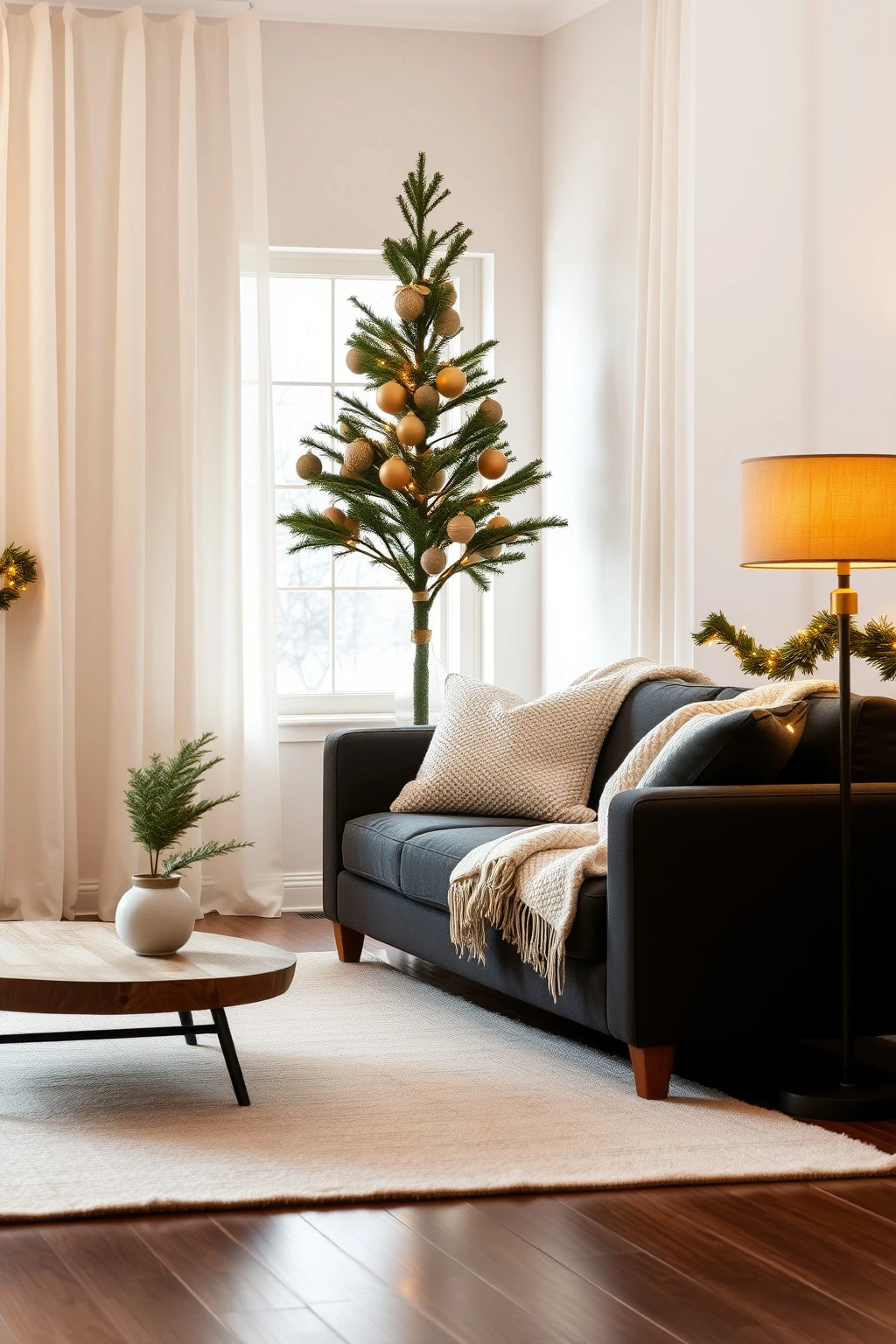
If your living room is tight, the most common mistake is buying the “right” tree size and then fighting the floor plan. Instead of pushing furniture back and creating dead-end pathways, let the tree live in a corner or beside a doorway where you already move slowly.
For a small room, go for a slim tree in the 4 to 6 foot range and keep the widest point under about 28 inches. Place it 6 to 10 inches away from the wall so light and ornaments catch from the room without making the corner feel too tight. If you have a narrow entry hall, tuck the tree near the entry so you get the holiday moment without crowding the main seating area. Finish the look with ribbon garland wrapped loosely at a diagonal to avoid a “dense hedgehog” effect that visually compresses the room.
Build a “tabletop tree” using layered shelves instead of a floor tree
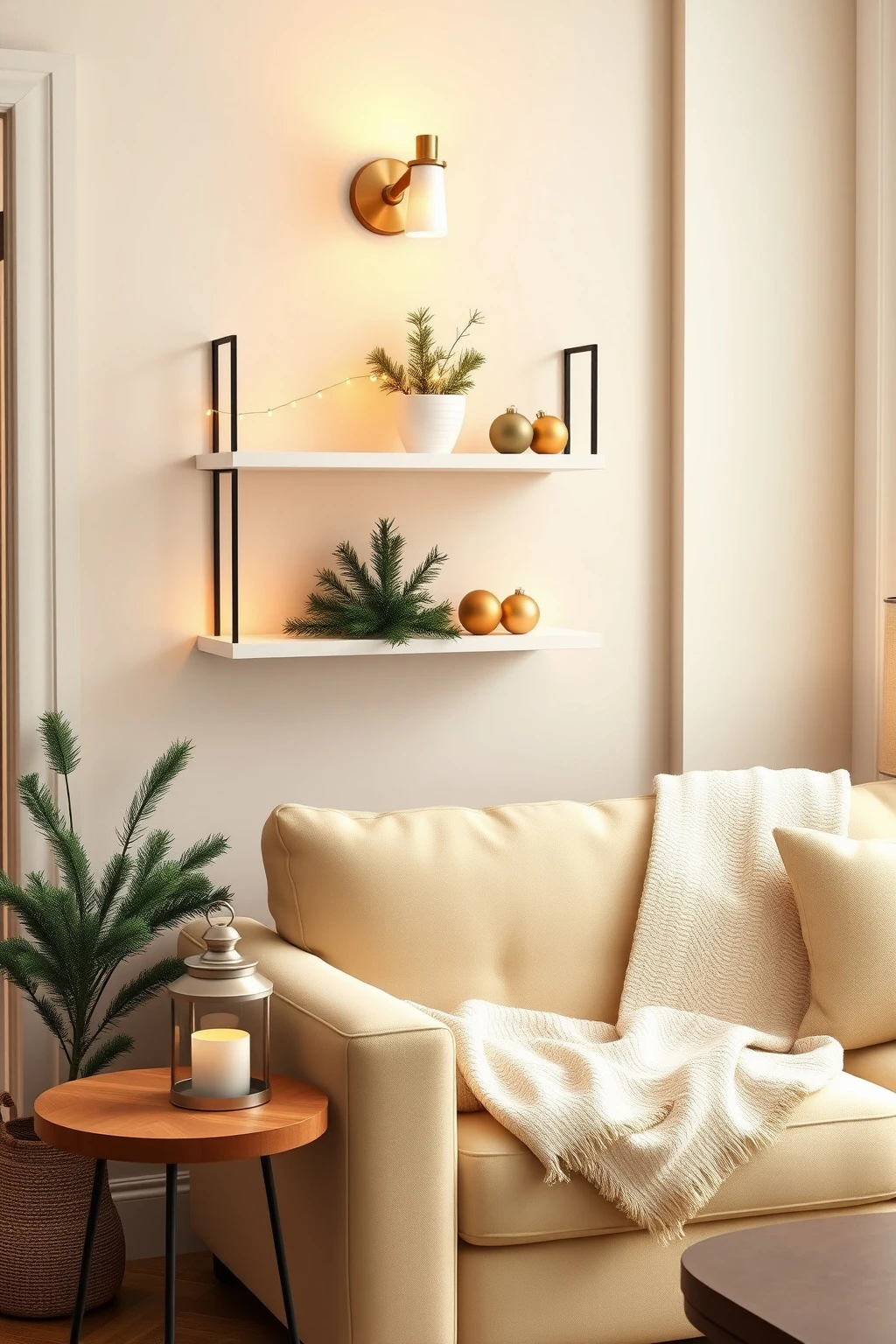
Sometimes the best Christmas tree is the one that never blocks your pathway. If you live in a studio or have a living room that doubles as an office, a full-size tree can feel like a furniture purchase you cannot return.
Make a tabletop tree out of a slim bookcase or two floating shelves, then stack evergreen-looking items at different heights: a 10-inch faux spruce, a small branch bundle in a ceramic pot, and a string of lights tucked behind. Keep the widest shelf items within about 12 to 16 inches so the “tree” reads compactly from your sofa. Add ornaments in three scales only, like 2-inch, 3-inch, and one larger 4-inch piece, so it looks styled instead of scattered. Finish by hanging a single ribbon loop on the lowest shelf and letting the rest stay clean.
Swap bulky curtains for warm, light-filtering window layers
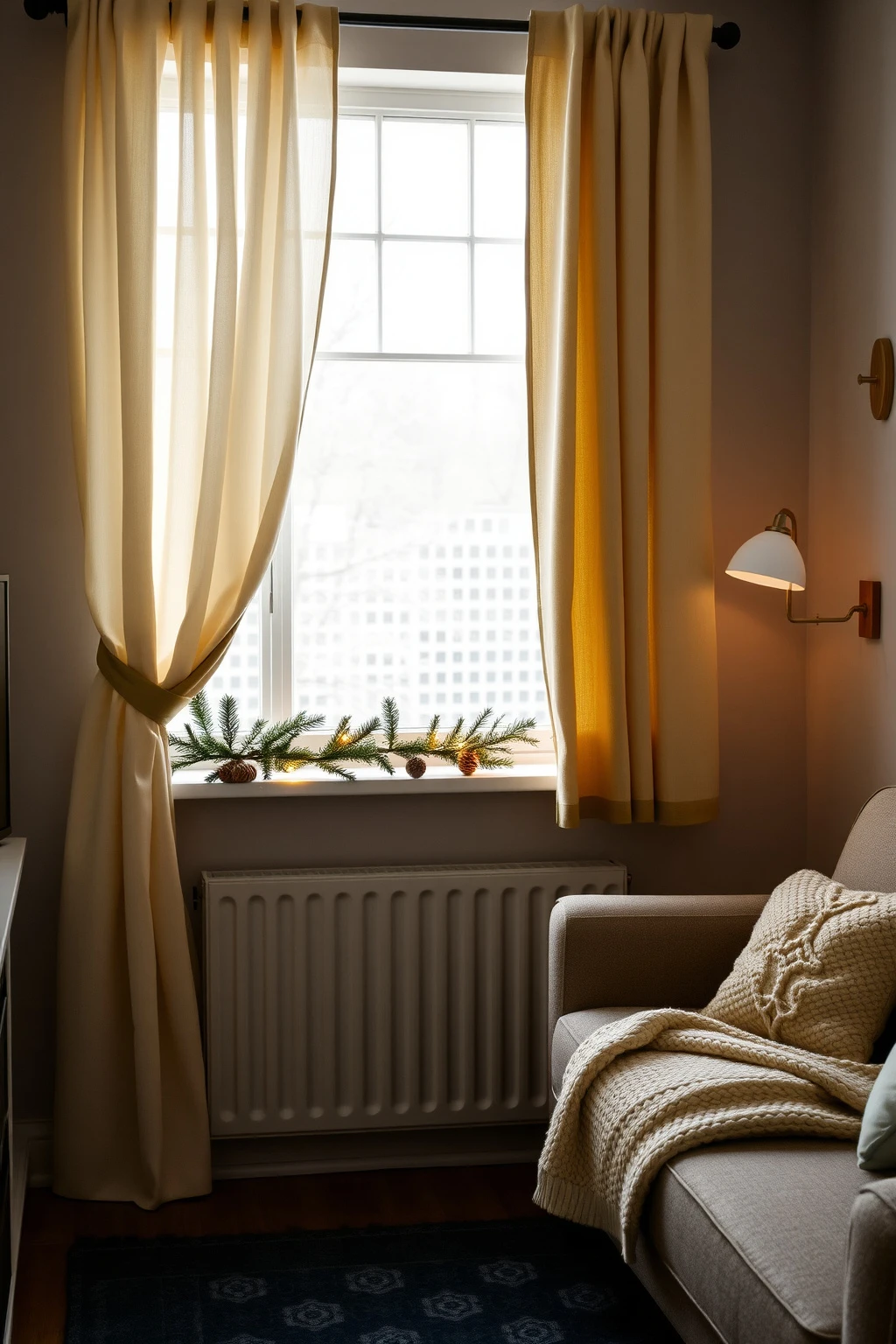
In small rooms, heavy holiday drapes can trap winter darkness. If your living room is north-facing or you’re decorating in late afternoon, your decorations will look dull unless the window treatment works with the light.
Instead of swapping everything for thick velvet, layer sheers with a cozy second layer you can actually move. Try warm ivory linen panels in a 50 to 84 inch drop length, then add a slim valance or short cafe curtain in sage or pine green. Use a tension rod or magnetic track so installation is easy and the window stays accessible. For a quick visual trick, tie the window layers back with a 2.5 to 3 inch satin ribbon at mid-height so the light spills in and makes your garland glow.
Create a cozy mantel moment with “horizontal stacks” (not clutter)
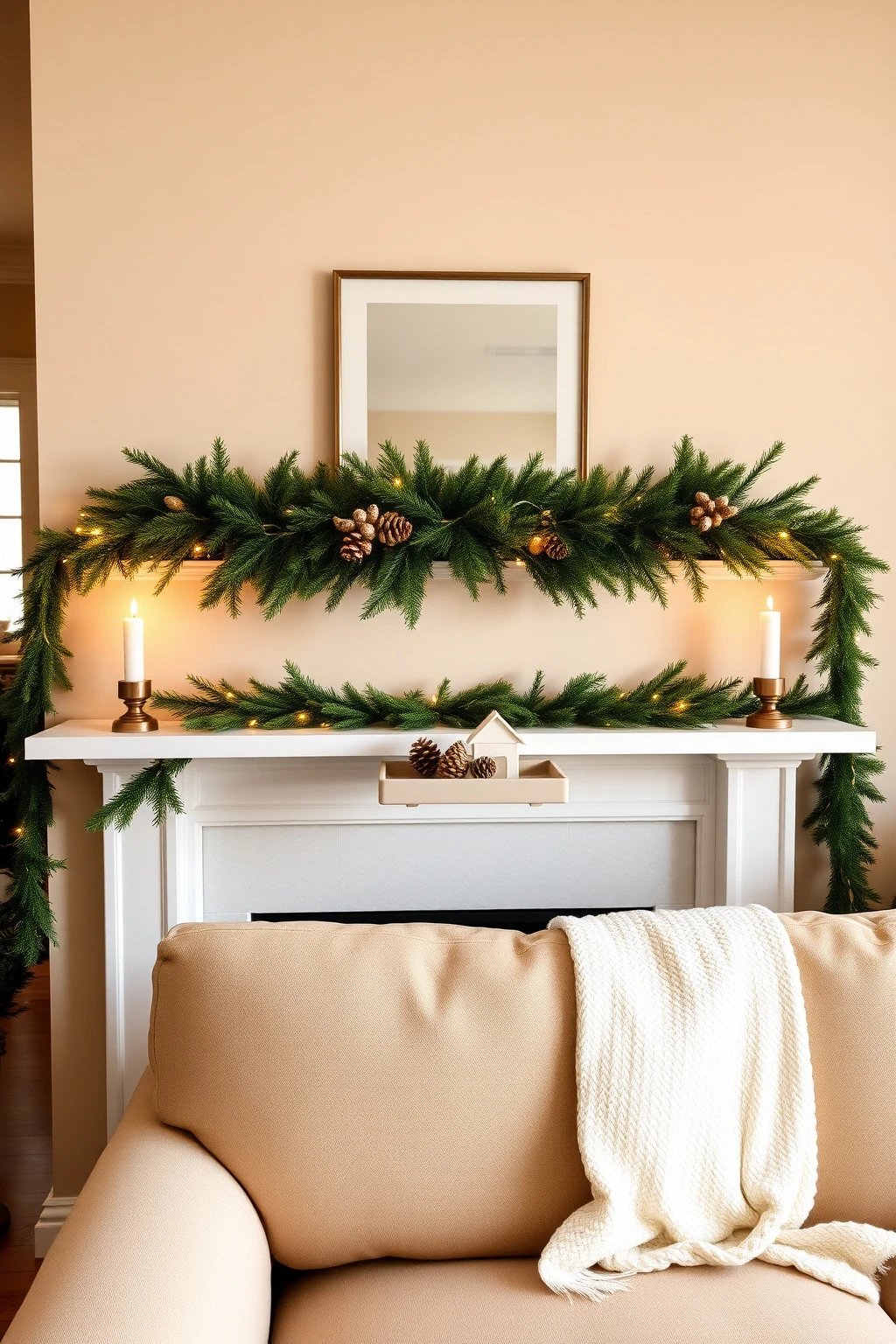
A mantel can look like a catch-all in small spaces, and then it stops feeling intentional. Instead of loading it with ornaments everywhere, think in horizontal stacks that guide the eye and keep negative space.
Try this formula: one tall element, like a 14 to 20 inch taper candle holder or a short mirror, plus two medium pieces and a long garland. Lay a garland strip about the mantel’s length, then add a tray in the center sized roughly one-third the mantel width. Arrange items in a low-to-high sweep: pinecones in a shallow bowl, then one ceramic house or small lantern, then candles at the ends. Keep the color palette to three tones like forest green, warm ivory, and antique gold so the mantel reads calm, not crowded.
Use warm lighting layers: sconces, candles, and one “glow point”
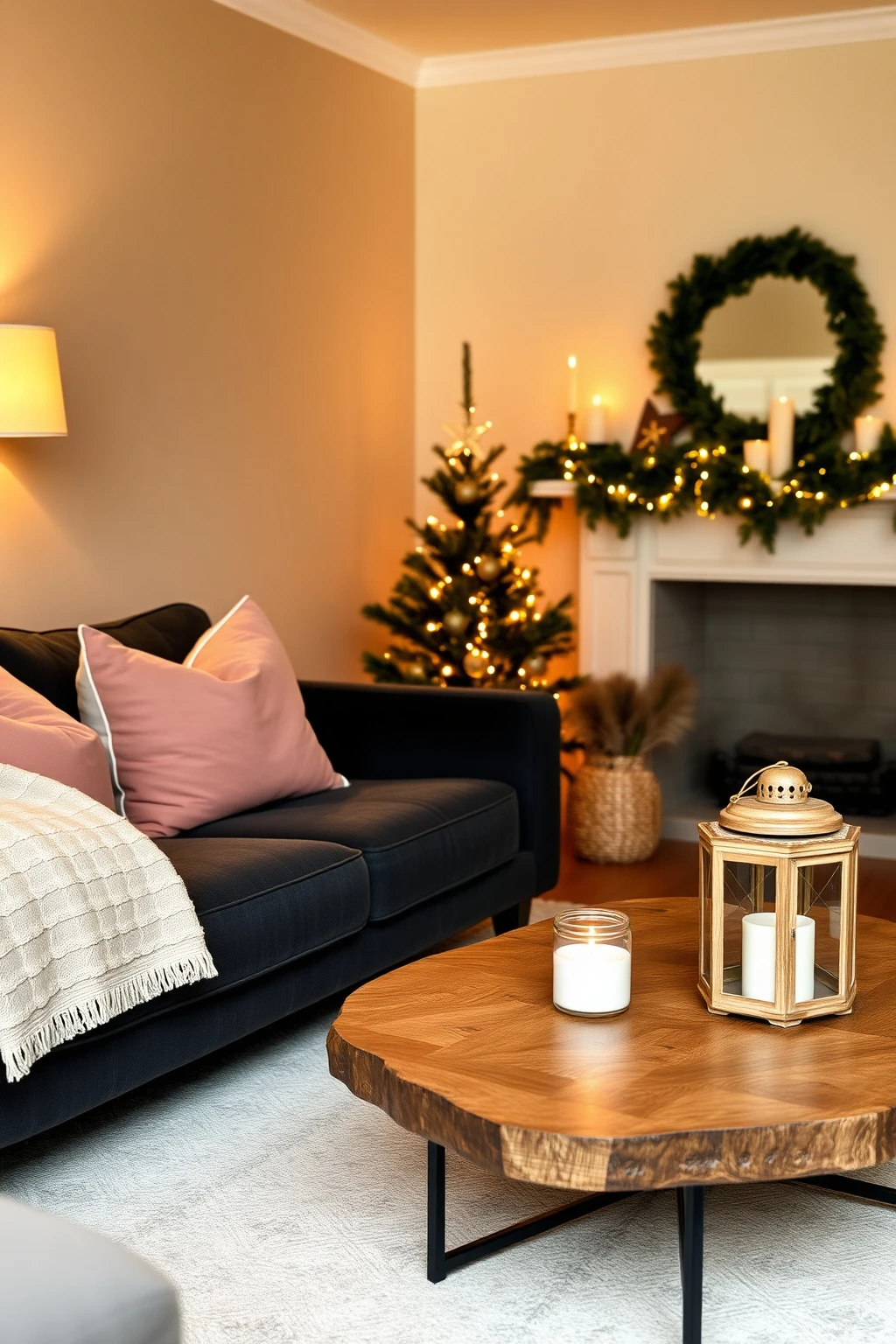
If your Christmas decor looks pretty but not cozy, the culprit is usually lighting temperature and placement. Overhead lights make the room feel showroom-clean, which is the opposite of what you want on winter nights.
Aim for three layers. First, use warm bulbs around 2700K if you can. Second, add a wall sconce or small table lamp with a linen shade so the light bounces softly off your walls. Third, create one glow point: a candle lantern on the coffee table or a larger candle on the hearth. Place the glow point opposite the tree or main decoration so the whole room feels lit, not just one corner.
Drape a “garland ribbon line” along a railing or shelf edge
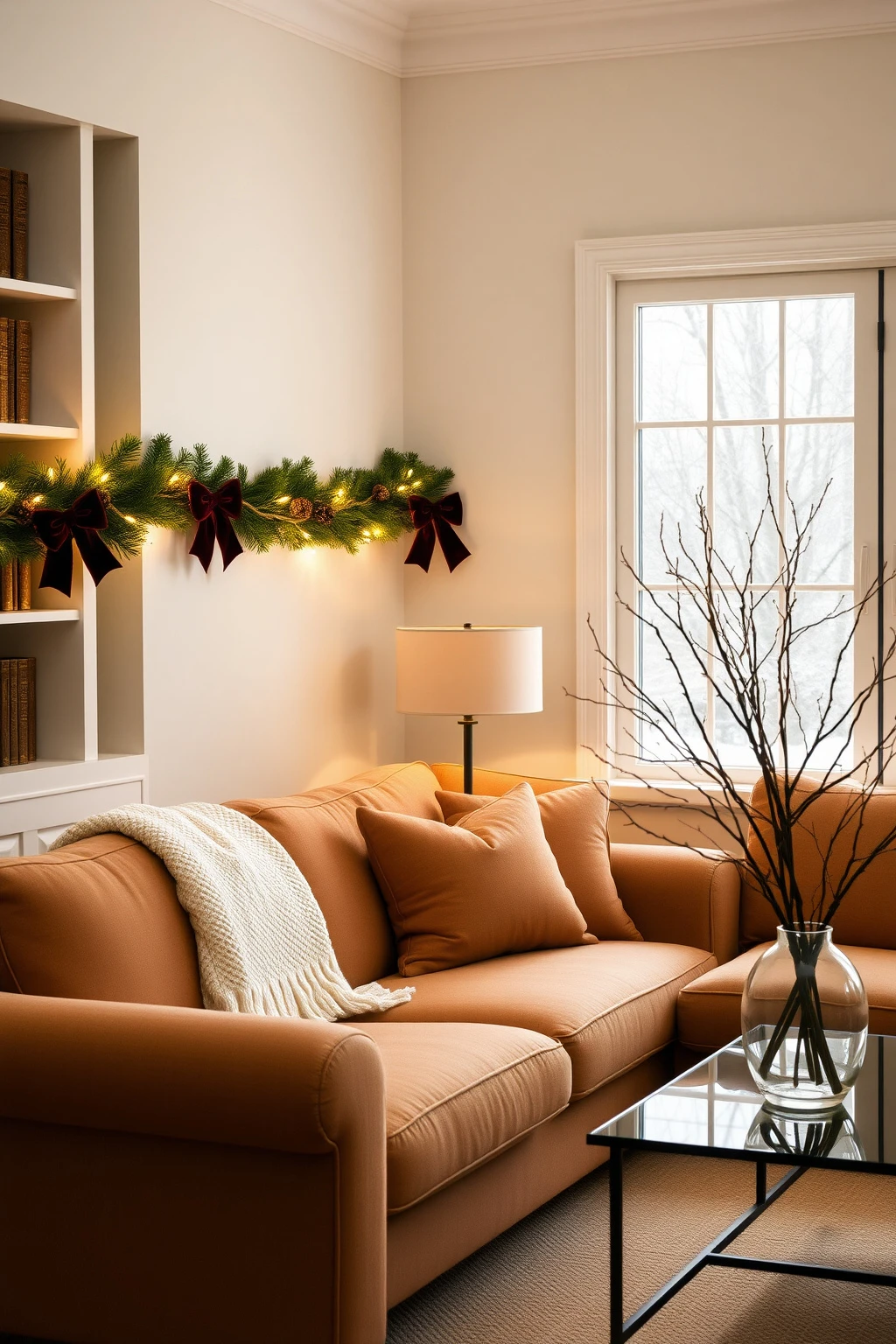
Garland on the floor is a small-space trap because it steals usable walking space. Instead, hang it where your eye already travels: along the edge of a shelf, railing, or even the top of a bookcase.
Use a garland strip about 12 to 18 inches long per visual segment, then separate segments with small gaps to avoid bulk. Tuck warm lights through the garland before placing it, so you do not see cords. Secure with removable hooks so you’re not drilling into rental walls. Finish by adding one consistent accent every 18 to 24 inches, like a pinecone cluster or a single velvet bow in deep red-burgundy.
Style your coffee table like a landing pad: one tray, one height
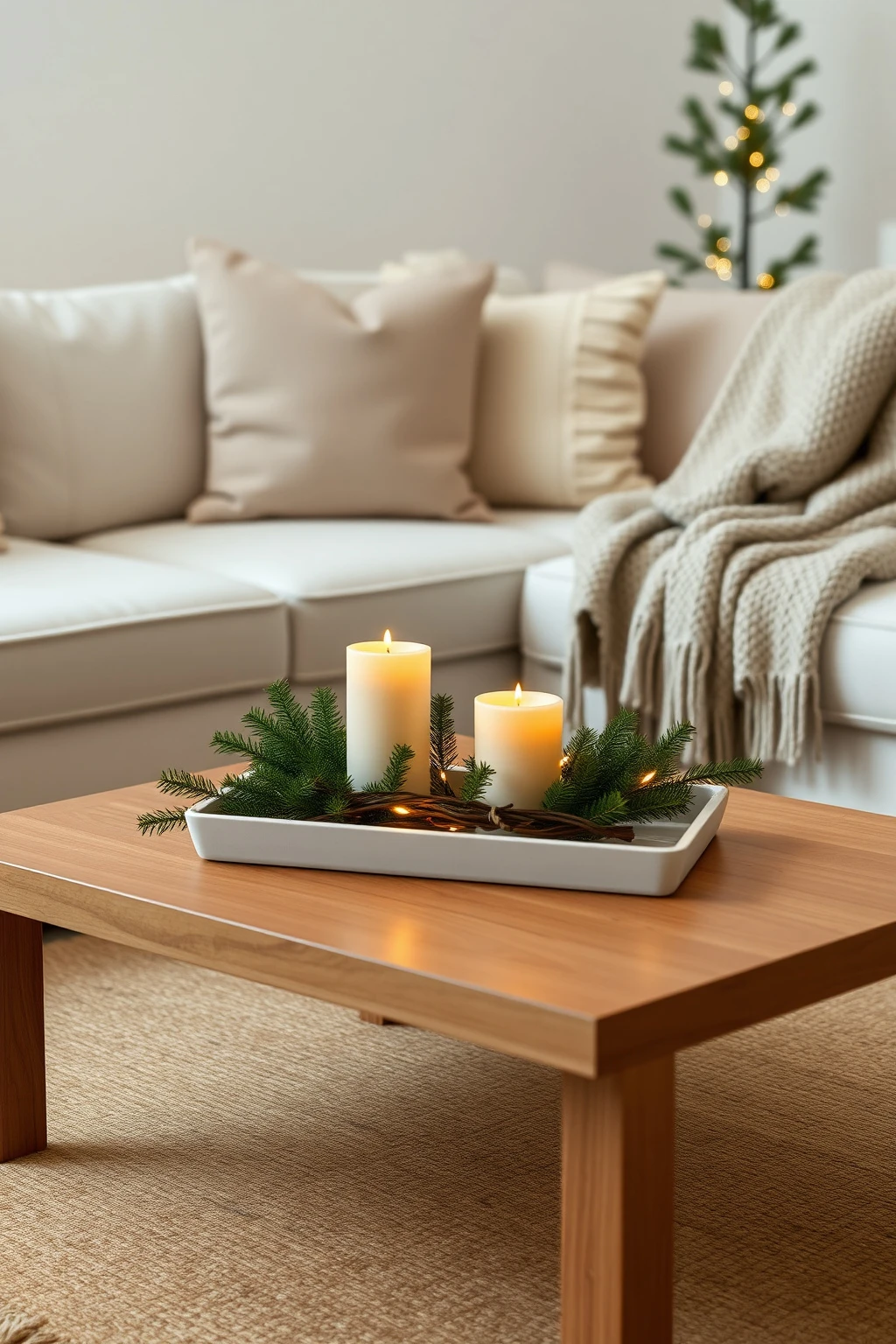
In small spaces, too many objects on the coffee table makes it feel chaotic even if you like everything you bought. The cozy trick is to give your decor a “landing pad” so it has a clear home base.
Pick one tray sized about two-thirds of your coffee table width. Set one low base item inside, such as a ceramic riser with a small evergreen arrangement, then add candles or a lantern. Keep the tallest element under about 10 inches tall so you don’t block sightlines between seating. If you love lights, wrap a short strand around a twig centerpiece instead of scattering them across multiple items. When guests come over, you can keep the rest of the table clear and still feel fully decorated.
Use the “odd-even” ornament rule to avoid visual noise
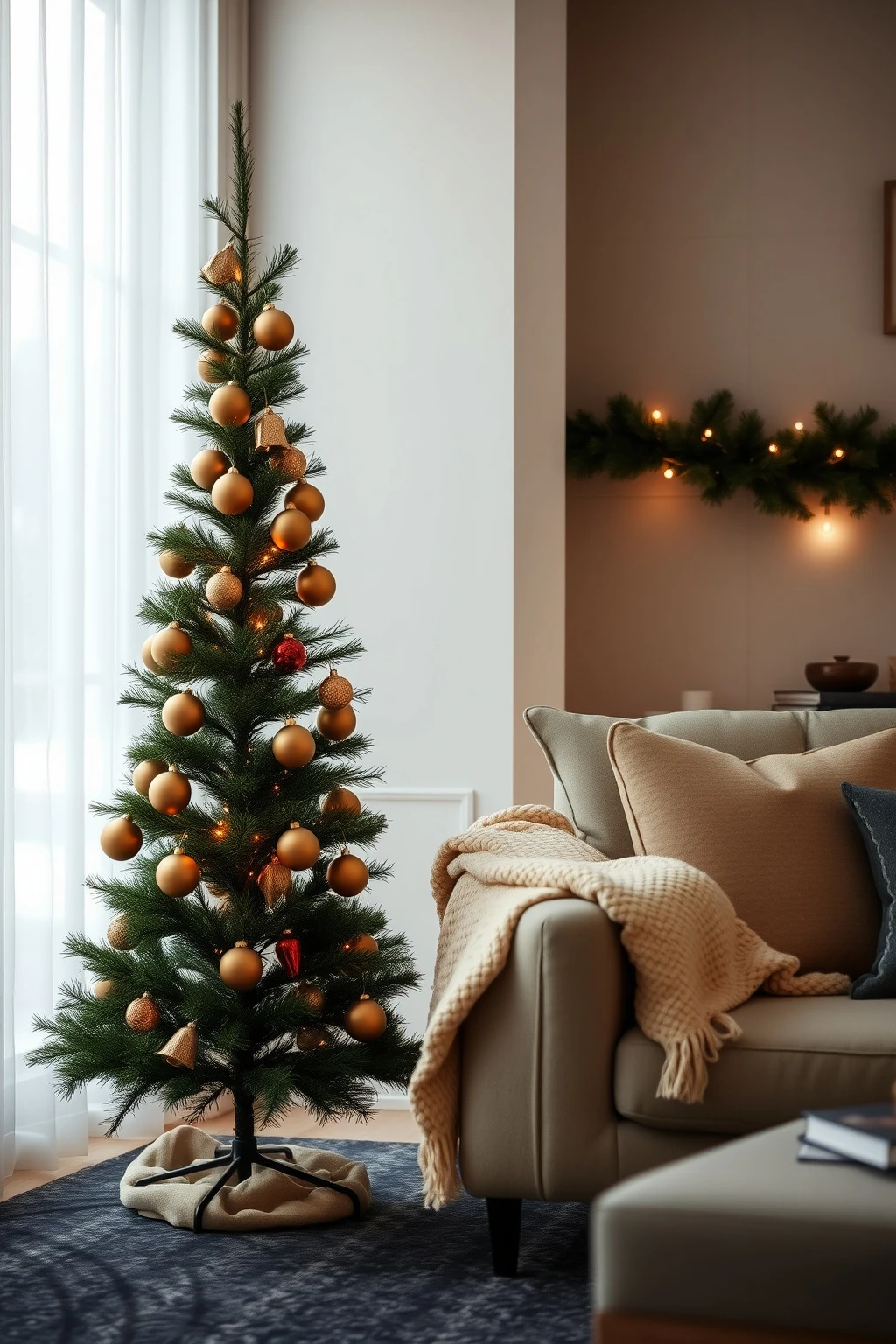
Ornaments get overwhelming fast in small rooms because your eyes keep finding new focal points. One of the easiest design hacks is to control repetition and spacing instead of adding more décor.
Pick two sizes as your main repeat, like 3-inch and 4-inch ornaments, then place them in odd-number groupings such as 3, 5, or 7. Keep them at eye level where you view the tree from the sofa, usually around 48 to 60 inches from the floor. If you’re decorating a wreath or garland, use just two ornament colors, like matte gold and deep green, and add a third accent color only once, like berry red. Step back every few minutes to check for “clumps,” and redistribute until the ornaments look evenly weighted across the tree.
Pick one luxe textile and repeat it three times
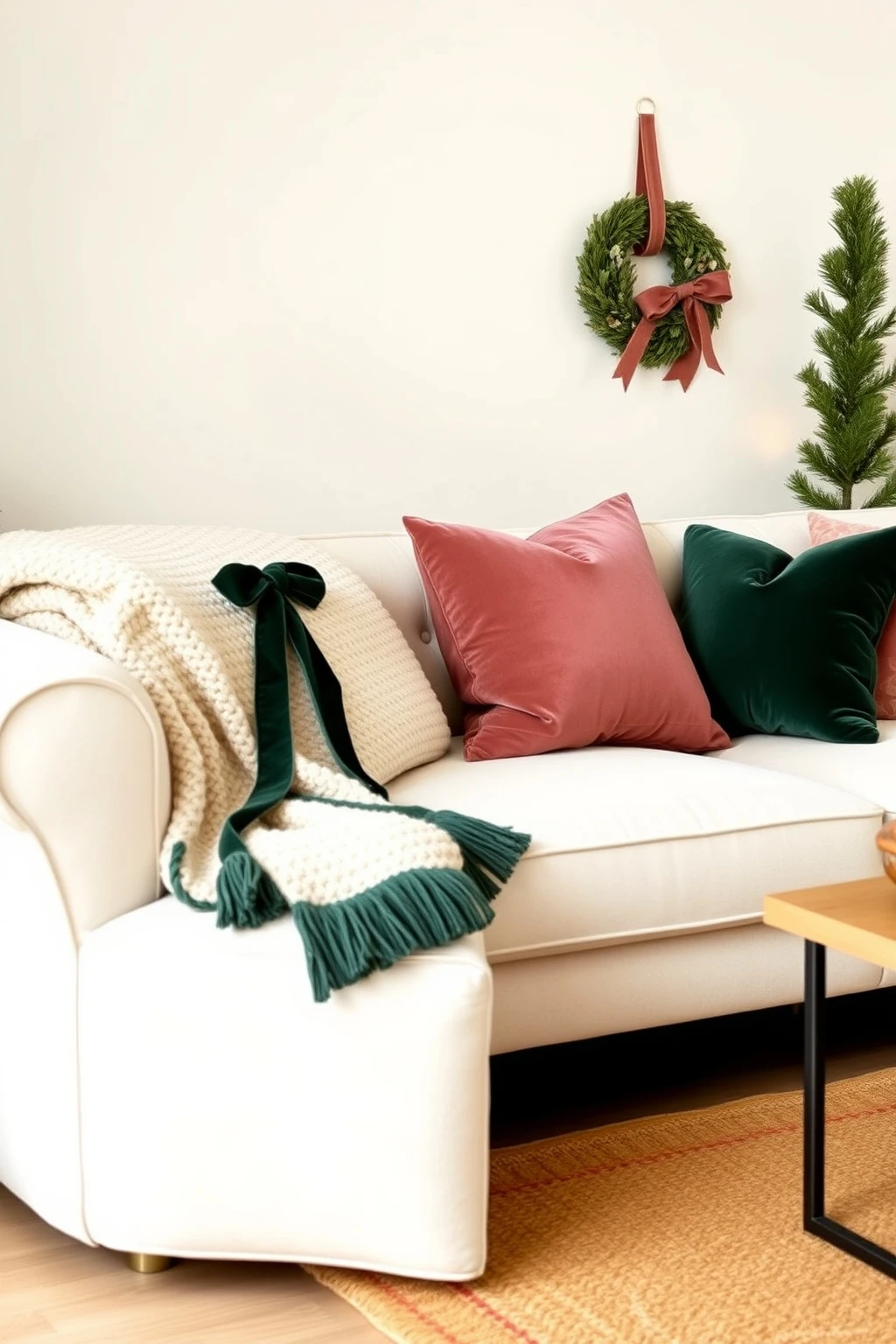
Cozy isn’t about matching everything, it’s about repeating texture so your room feels designed. Small rooms especially need a clear “textile story,” or they can end up looking like a pile of holiday linens.
Choose one luxe texture to lead, like boucle, velvet, or chunky knit. Then repeat it three ways: a throw on the sofa, an accent pillow, and a smaller detail like a velvet ribbon tie on a wreath or a stocking. Keep the main base fabric neutral, such as warm ivory, and let the accent texture be your holiday statement in deep green, dusty rose, or berry. Avoid the mistake of using three different heavy fabrics at once, which can make the room feel bulky. Aim for one hero texture, two supporting neutrals, and one pop color.
Layer a patterned rug under your holiday seating for instant warmth
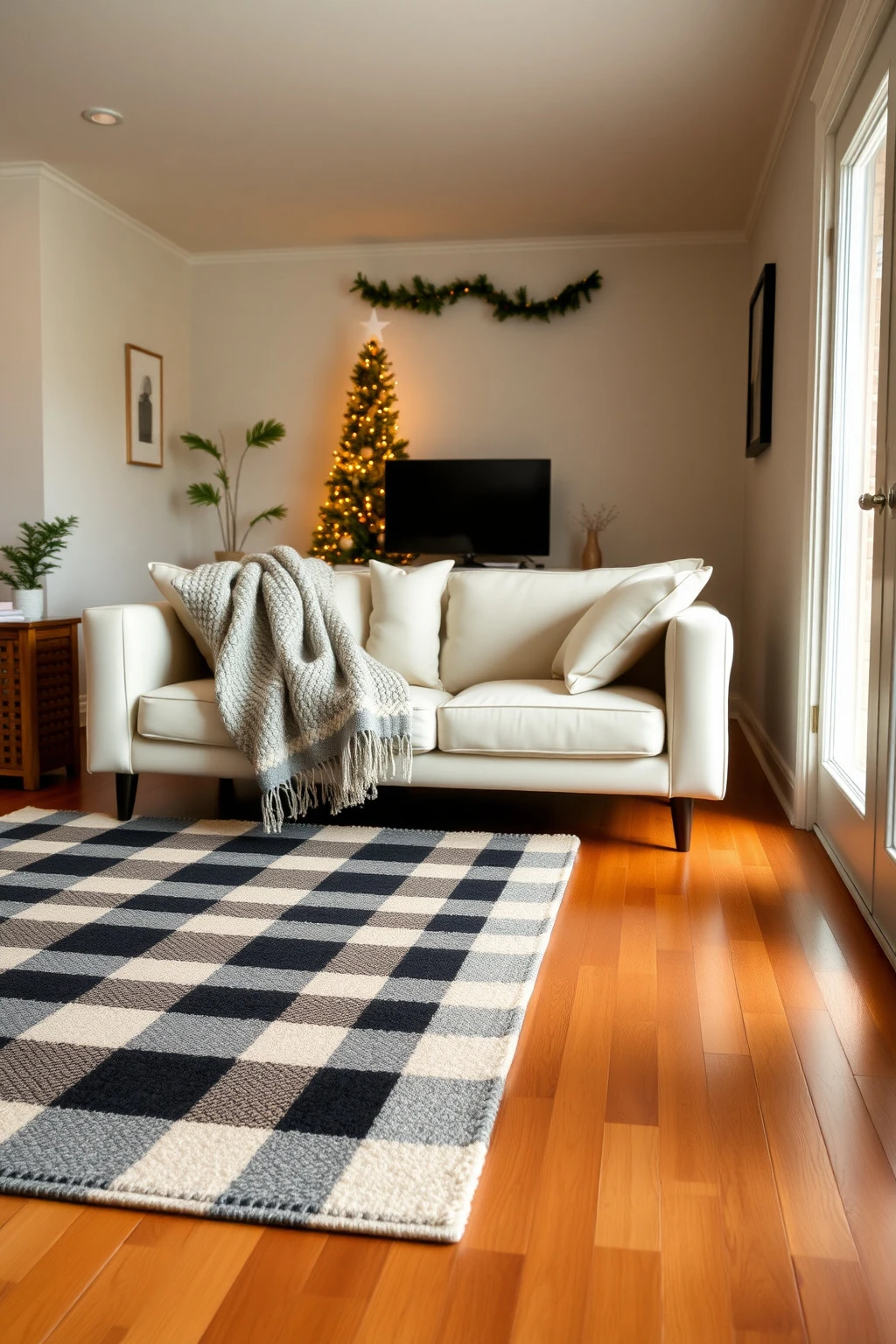
Rugs do more than ground furniture. In winter, a rug can be the difference between “decorated” and “cozy,” because it softens the acoustics and adds visual texture beneath all your holiday accessories.
If your current rug is too flat or dark, add a holiday-friendly layer rather than replacing the whole thing. Use a washable flatweave in jute, wool, or a subtle buffalo plaid in charcoal and warm cream. Keep it to at least the front legs of your sofa and chairs so it reads intentional, not like a throw blanket on the floor. For traction, place a thin rug pad under the layer and trim it so it does not bunch near doorways. This works especially well if your living room has hardwood floors and sounds echo too much in the evening.
Hang stockings on a wall-mounted “stocking rail” instead of the mantel
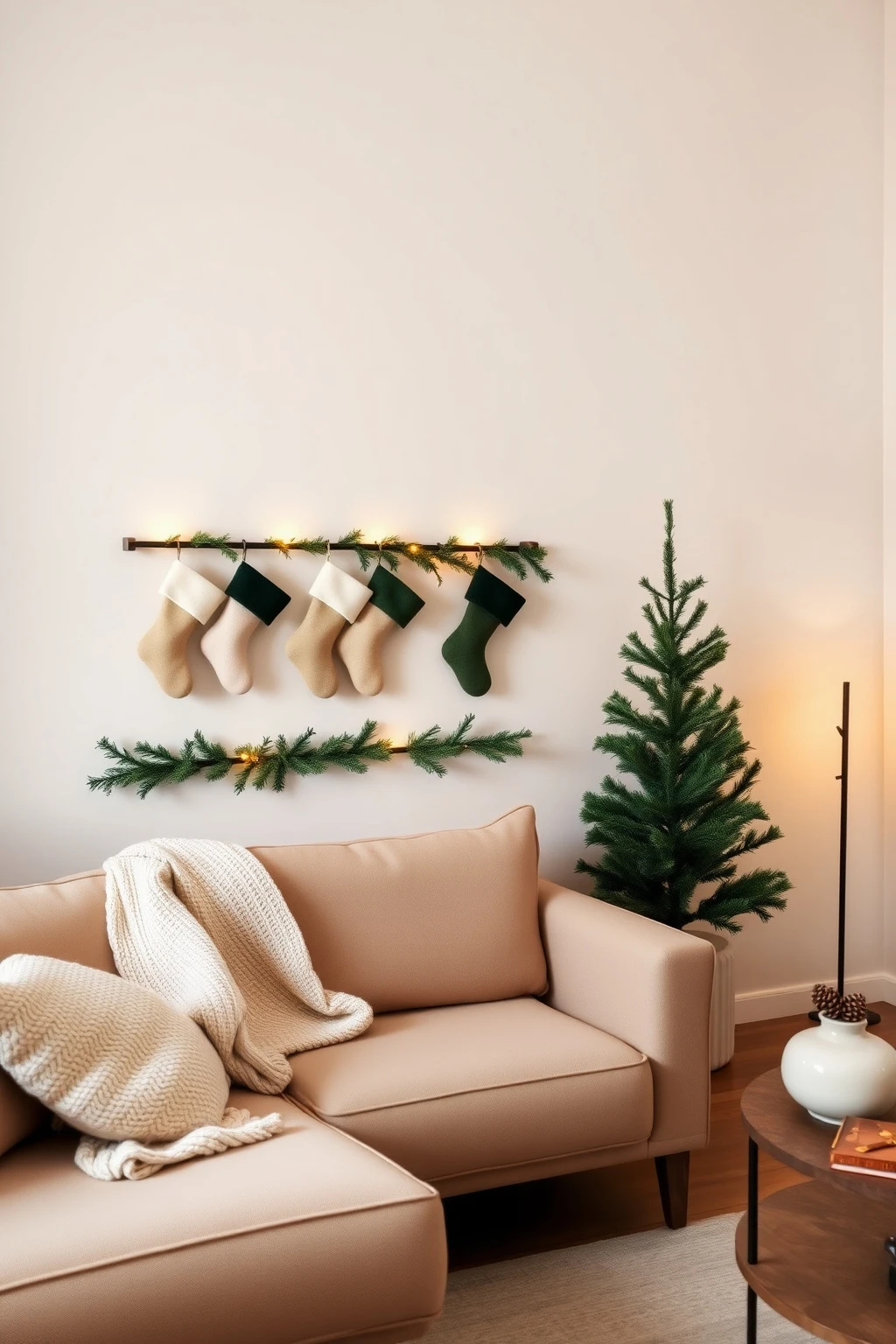
If you have a small mantel or no fireplace, hanging stockings the usual way can steal precious counter space and look messy. Wall-mounted stocking rails keep everything neat and visible without adding clutter to surfaces you need for everyday life.
Install a narrow picture ledge or a simple metal rail about 52 to 60 inches from the floor, then hang stockings from small hooks. If you’re renting, use adhesive hooks rated for your wall type and distribute weight across at least 2 to 3 mounting points. Choose stockings in a consistent material family, like felt, faux shearling, or knit wool, and stick to two color tones like warm ivory and forest green. Place a small evergreen garland along the wall under the rail, not across the whole room, so the holiday moment stays focused and tidy.
Make a holiday “color curtain” with wrapping paper behind a mirror
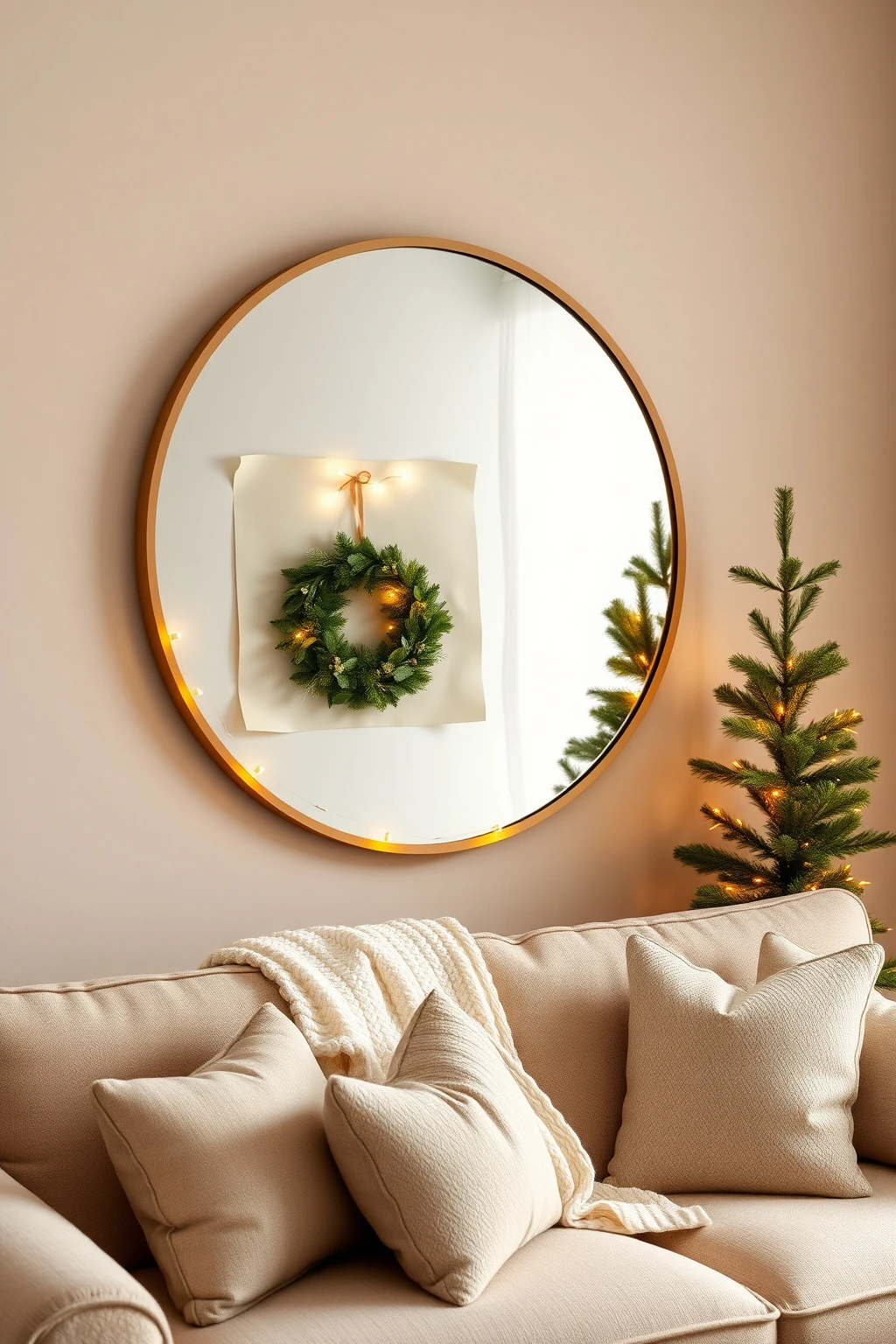
This is one of my favorite tricks for small spaces: use wrapping paper like background art. It instantly makes a wall feel styled without adding bulky décor, which is perfect when every inch counts.
Place a large mirror on the wall, then lean a piece of patterned wrapping paper behind it so it peeks around the edges. Choose paper in a restrained palette such as warm ivory with thin pine green lines, or soft red-burgundy with gold accents. Add two small elements in front, like a mini wreath (about 8 to 10 inches) and a string of battery lights tucked into the mirror frame. The mirror will bounce the color and light, making the room feel brighter. Avoid thick, glossy paper that reflects too much light and looks harsh at night.
Lean into “negative space” by choosing fewer ornaments per surface
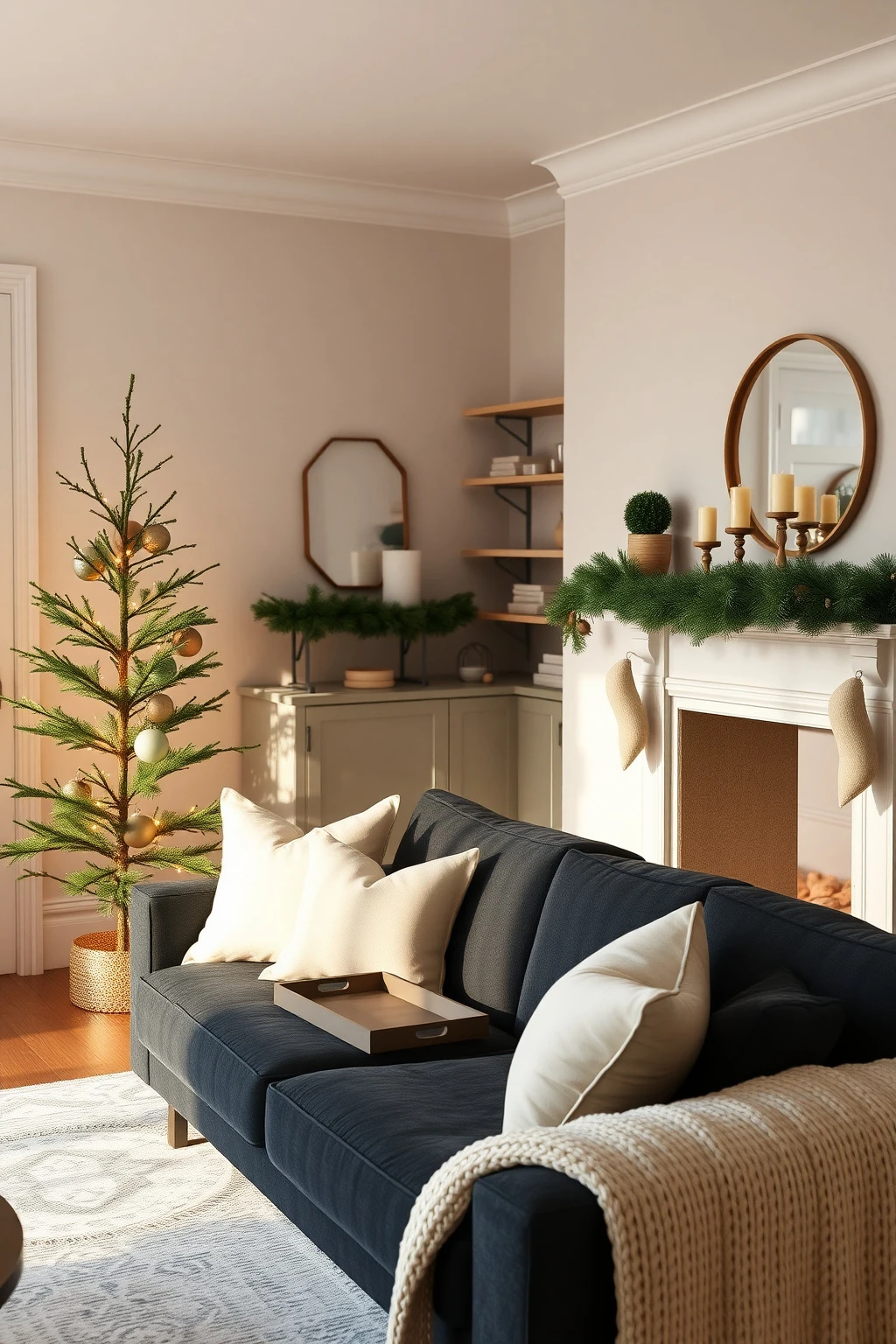
The prettiest small-space Christmas rooms often look like they’re edited. If you fill every surface, you lose breathing room, and the whole room starts to feel visually heavy.
Pick one decorated surface per zone: tree corner, mantel, or coffee table. For the mantel, choose 5 to 8 items max, then stop. For shelves, use repeatable groupings like three pinecone clusters and one candle instead of scattering 20 small things. Keep the walls mostly clean so garland and lights stand out. This approach works because your eyes need contrast and space to rest, especially in rooms with limited square footage.
Switch to evergreen garland in “vase groups” for clutter-free placement
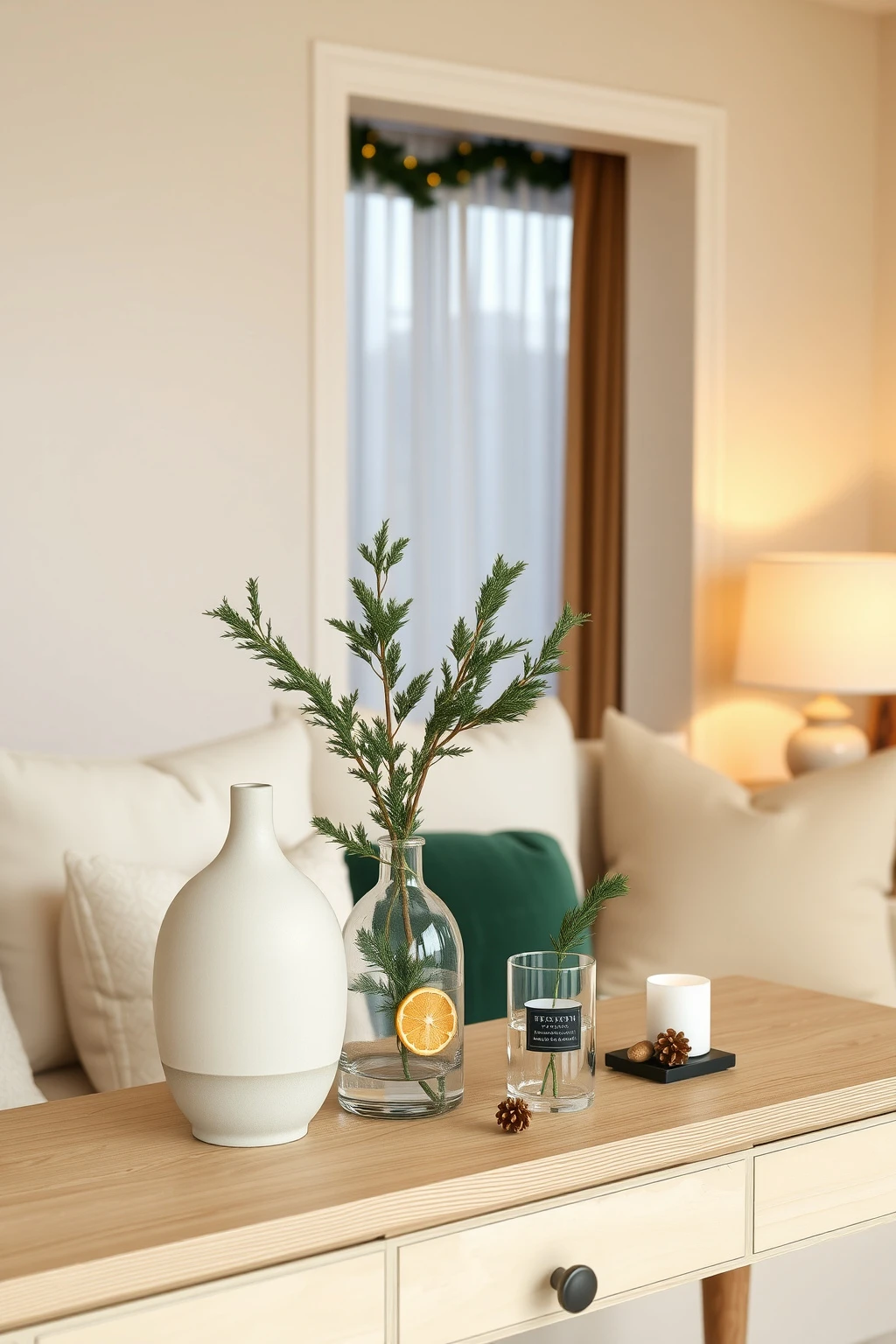
When you want greenery but don’t want it wandering across the room, vase groups are the fix. They give you a controlled look and keep stems from shedding onto your rug.
Use three vessels in different heights, like a 12-inch ceramic jug, a 9-inch glass vase, and a 6-inch candle cup. Group them on a sideboard, window ledge, or end table and fill with clippings of pine, cedar, or eucalyptus mixed with small dried oranges. Keep the widest vase diameter around 6 to 8 inches so they do not take over your surfaces. If you have pets or allergies, skip strong-scenting varieties and stick to faux where needed. The design principle here is repetition plus height variation, which creates a holiday focal point without stuffing the room.
Hang oversized art at the right height so garland doesn’t cut the room
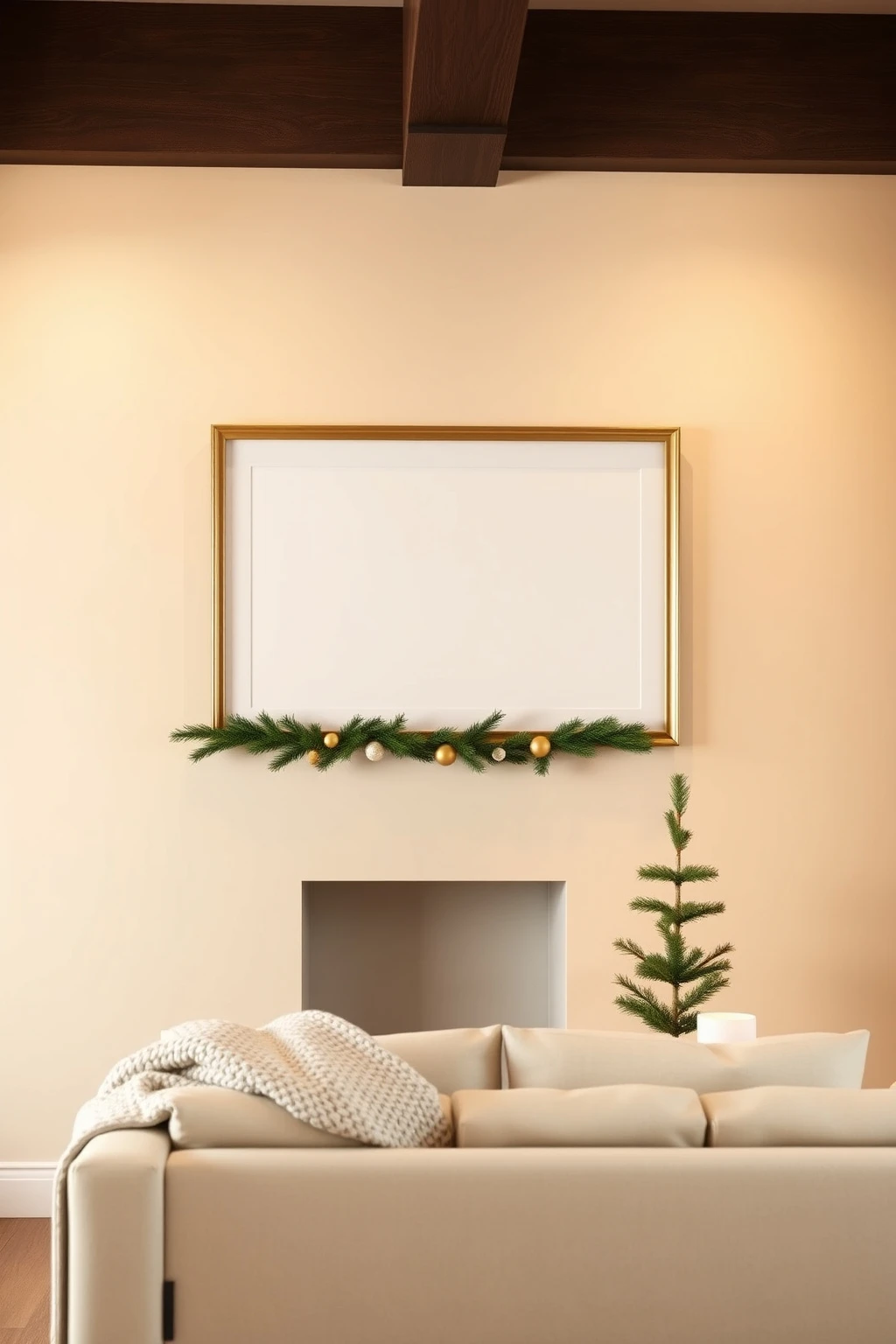
Small spaces already feel vertically constrained, so holiday décor shouldn’t make your walls look chopped up. If your art hangs too low, it can collide visually with garland and make the ceiling seem lower.
Use a simple rule: hang your main artwork so its center sits about 57 to 60 inches from the floor, then place garland above it rather than across it. Keep the garland height to roughly 6 to 10 inches down from the top of the frame, so it looks like a frame-within-a-frame. For a holiday vibe, swap in a print with pine silhouettes or a simple gold foil frame, then add one small ornament detail to echo the colors. This works because it preserves vertical rhythm and keeps sightlines clean from your seating angle.
Use battery candles and place them on “safe zones” near seating
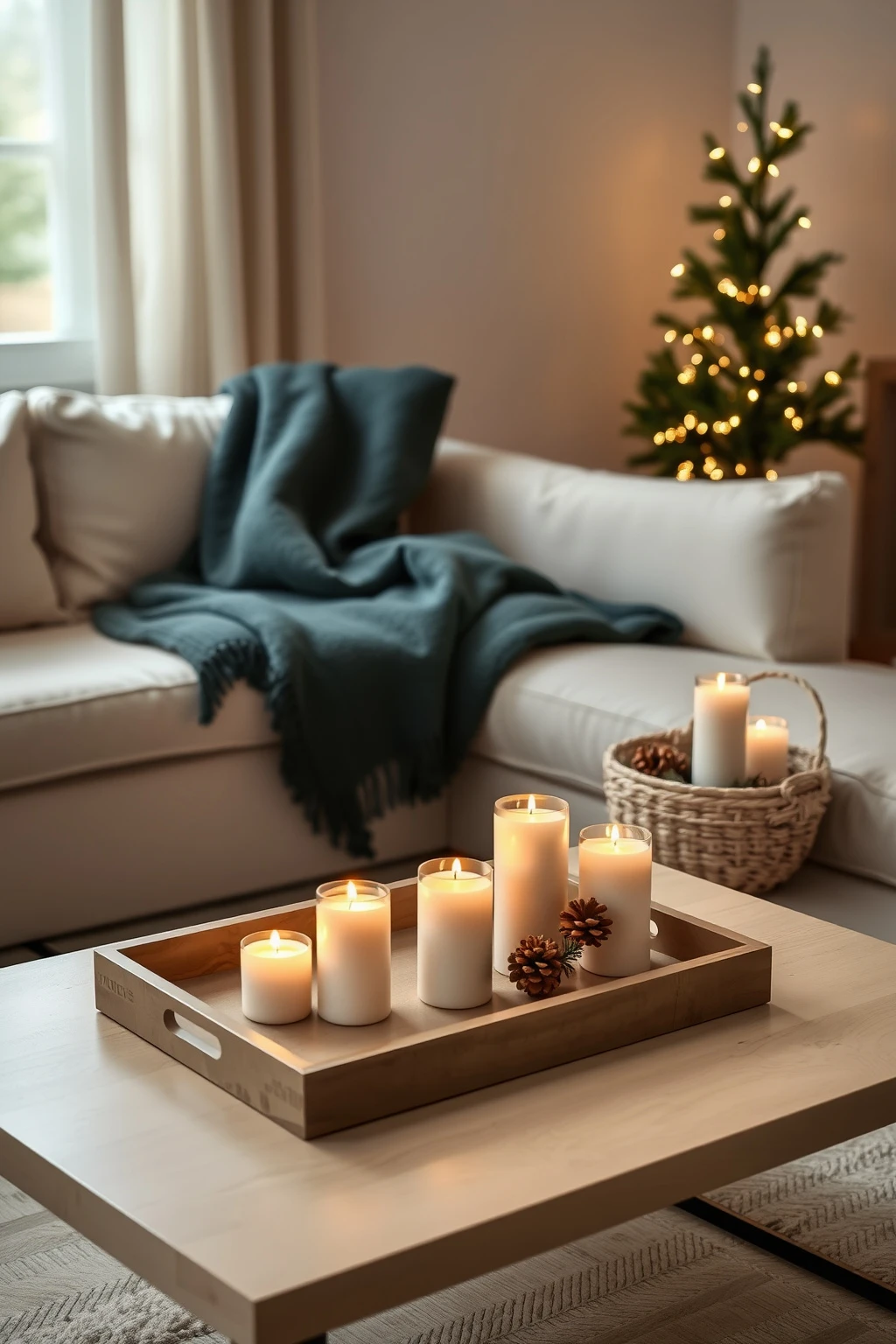
If you have kids, pets, or you’re just tired of worrying about open flames, battery candles can still look genuinely cozy. The key is placement: put light where your eyes naturally land when you sit down.
Choose LED candles with soft warm light, then cluster them in two safe zones like the coffee table and a bookshelf base. Keep tall candles in the corners of the tray and smaller ones in the center so the arrangement reads balanced. Avoid placing candles directly on top of airy greenery where they look disconnected. Pair candlelight with one natural texture, such as a jute runner or woven basket, so the glow has something grounded to sit on. This gives you the cozy feel of candlelight without the risk or constant monitoring.
Try a wreath “halo” on the wall for a focal point without floor space
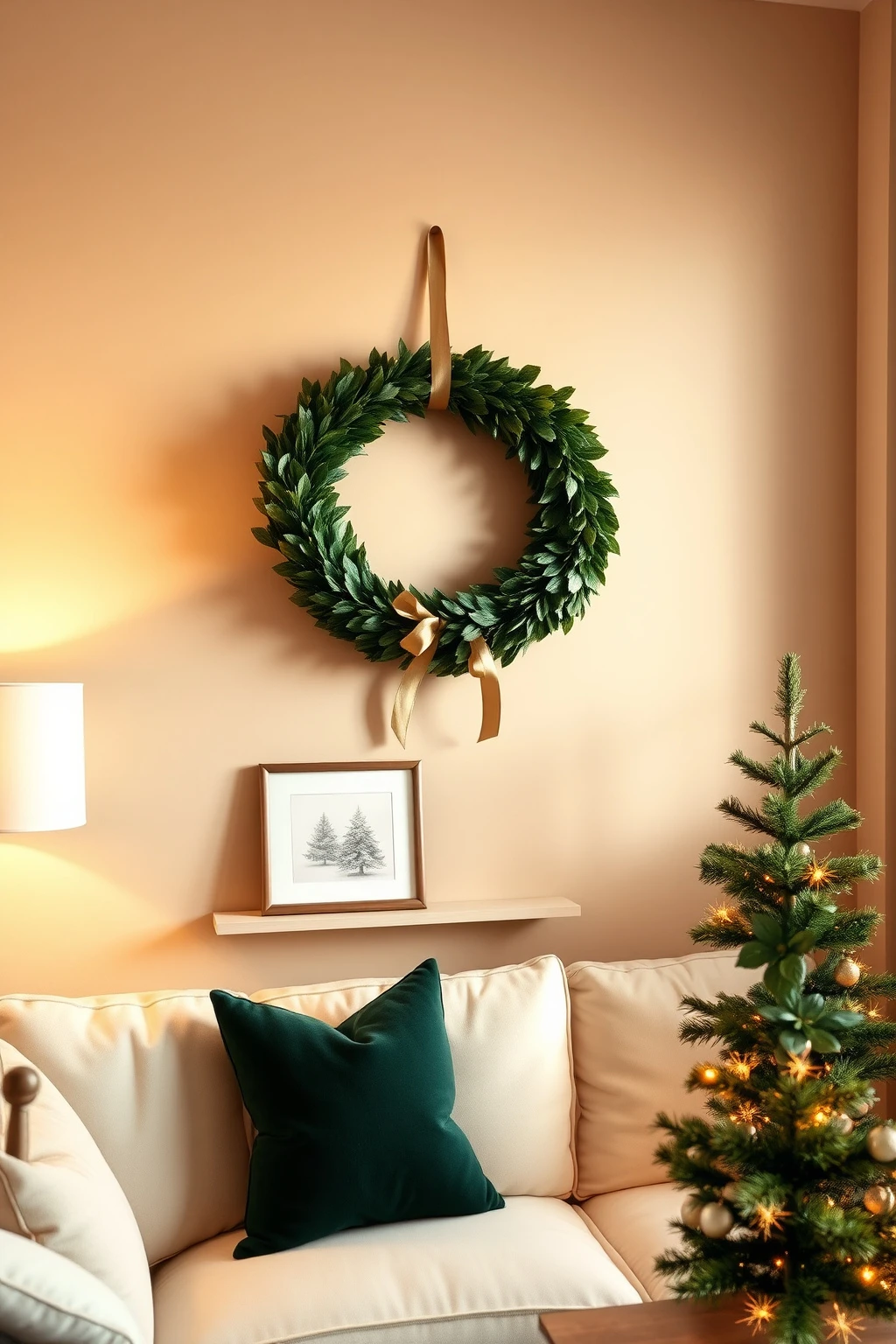
A wreath is one of the fastest ways to make a room feel holiday-ready, but in small spaces, hanging it too low or too close to furniture can make it feel cramped. The goal is to create a vertical focal point that reads from the sofa.
Hang your wreath at eye level so the center lands around 60 inches from the floor. Choose a simple wreath in cedar or faux boxwood, then add a single accent ribbon that falls no more than 12 inches on either side. If you’re working with a narrow wall, use a slightly smaller wreath around 18 to 24 inches wide and pair it with a single framed print underneath. This design works because it creates contrast and a clear anchor, letting your other decorations stay minimal.
Layer a throw ladder alternative: use a wall-mounted towel bar for blankets
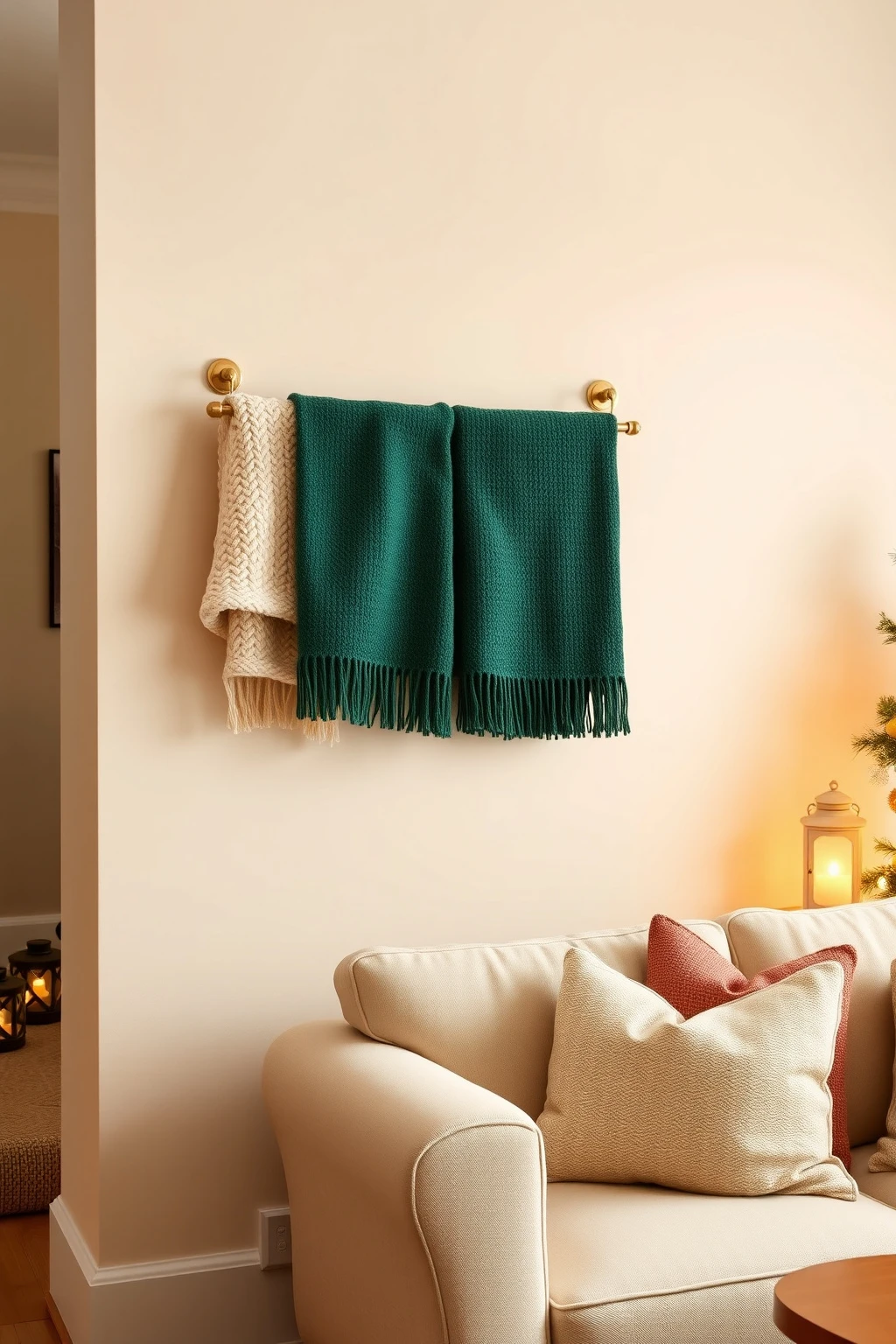
In small living rooms, blanket “storage” is usually what gets you last. Throws end up in a pile, then holiday décor looks messy because everything is being used and re-stacked all day.
Install a wall-mounted towel bar or narrow rail and hang two throws for a curated seasonal display. Choose throws in cohesive colors like warm ivory and forest green, and make sure they’re thick enough to show texture. Keep the bar height so the bottom edge of the folded throw sits around 40 to 42 inches from the floor, then cover the ends with clip-on decorative pins or ribbon ties. This keeps blankets reachable while freeing your coffee table and chair arms, which is where clutter forms fastest.
Style a media console like a “floating vignette” to reduce countertop chaos
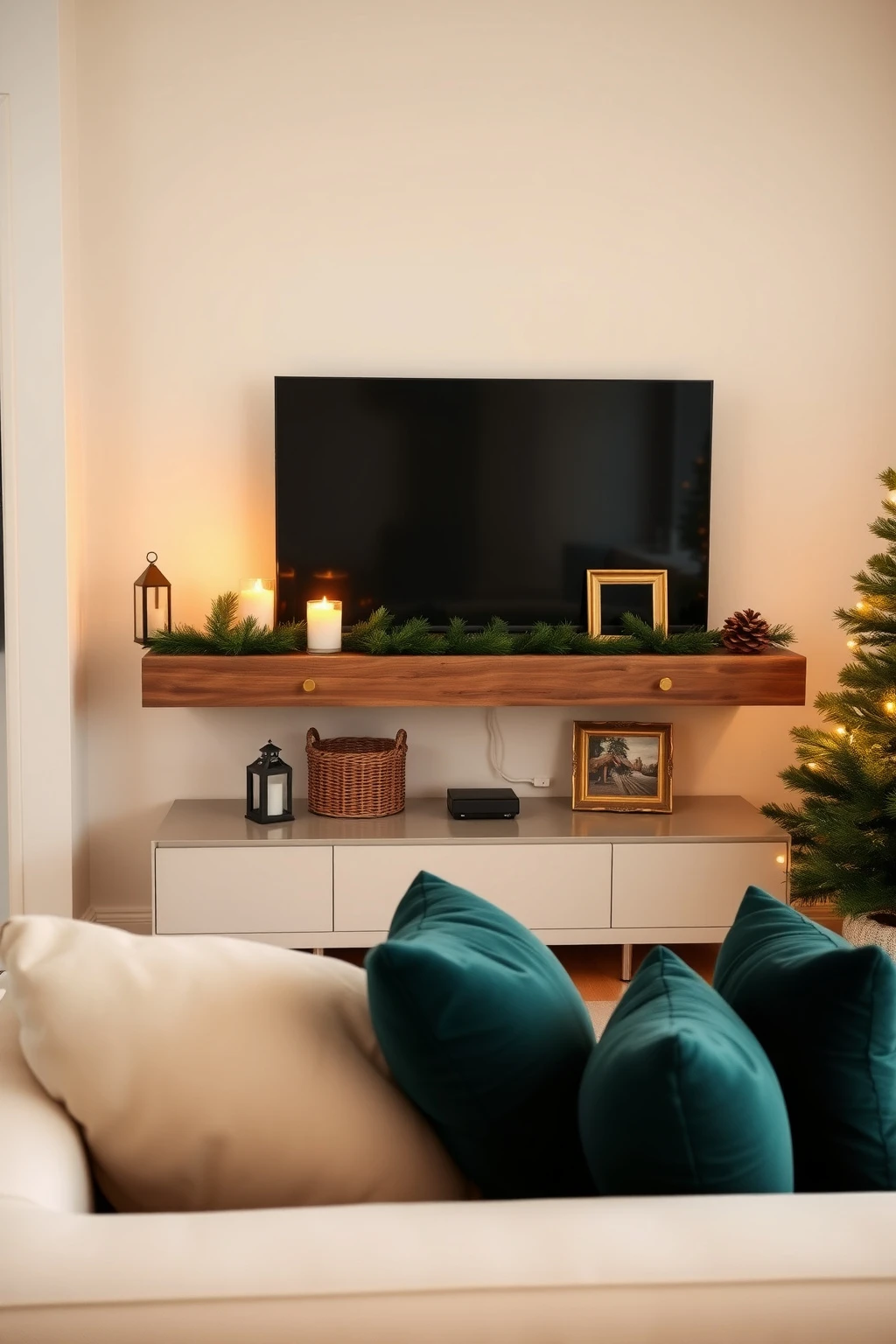
Media consoles are magnets for wires, remotes, and random holiday purchases. If you’re decorating a small living room, treat the console as a curated platform, not a storage bin.
Add a long tray across the console, sized about 80 to 90 percent of the console width. Inside, place a garland strip and two candle holders, then group remotes in a small fabric basket underneath the tray if possible. Use warm metallics like antique gold or brushed brass to bounce light off the television area. Add one vertical element for balance, like a slim lantern or a narrow picture frame leaning at the back edge. This works because the tray creates one boundary line, which visually organizes the chaos.
Make your seating cozier with “banded” pillow heights and a single accent color
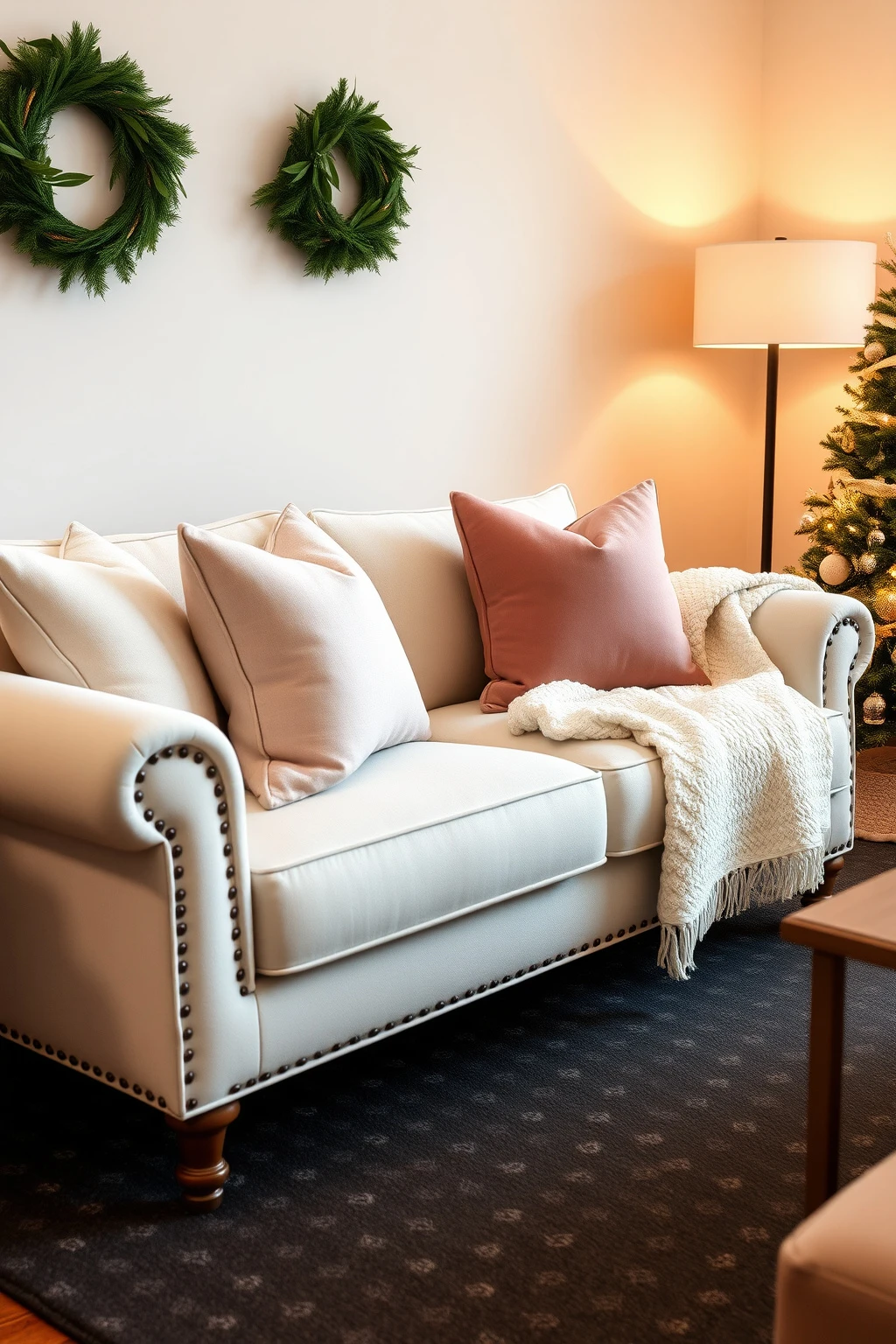
Cozy seating is about layering, but not just piling pillows. Small rooms look best when pillow sizes graduate in height and you choose one accent color so the palette stays controlled.
Aim for a three-layer pillow stack: two standard sleeping pillows behind, plus two smaller lumbar cushions in front. Choose an accent color like dusty rose or deep red-burgundy, and limit it to one set of pillows while the rest are warm neutrals like warm ivory or oatmeal. For extra warmth, add one textured pillow cover such as velvet, then place the most textured pillow in the top layer. Keep pillow thickness consistent, roughly 6 to 8 inches total stacking height, so the sofa back stays comfortable to sit against. This creates shape and depth without making the couch look swallowed.
Rethink garland size: short, dense sections beat long sagging lengths
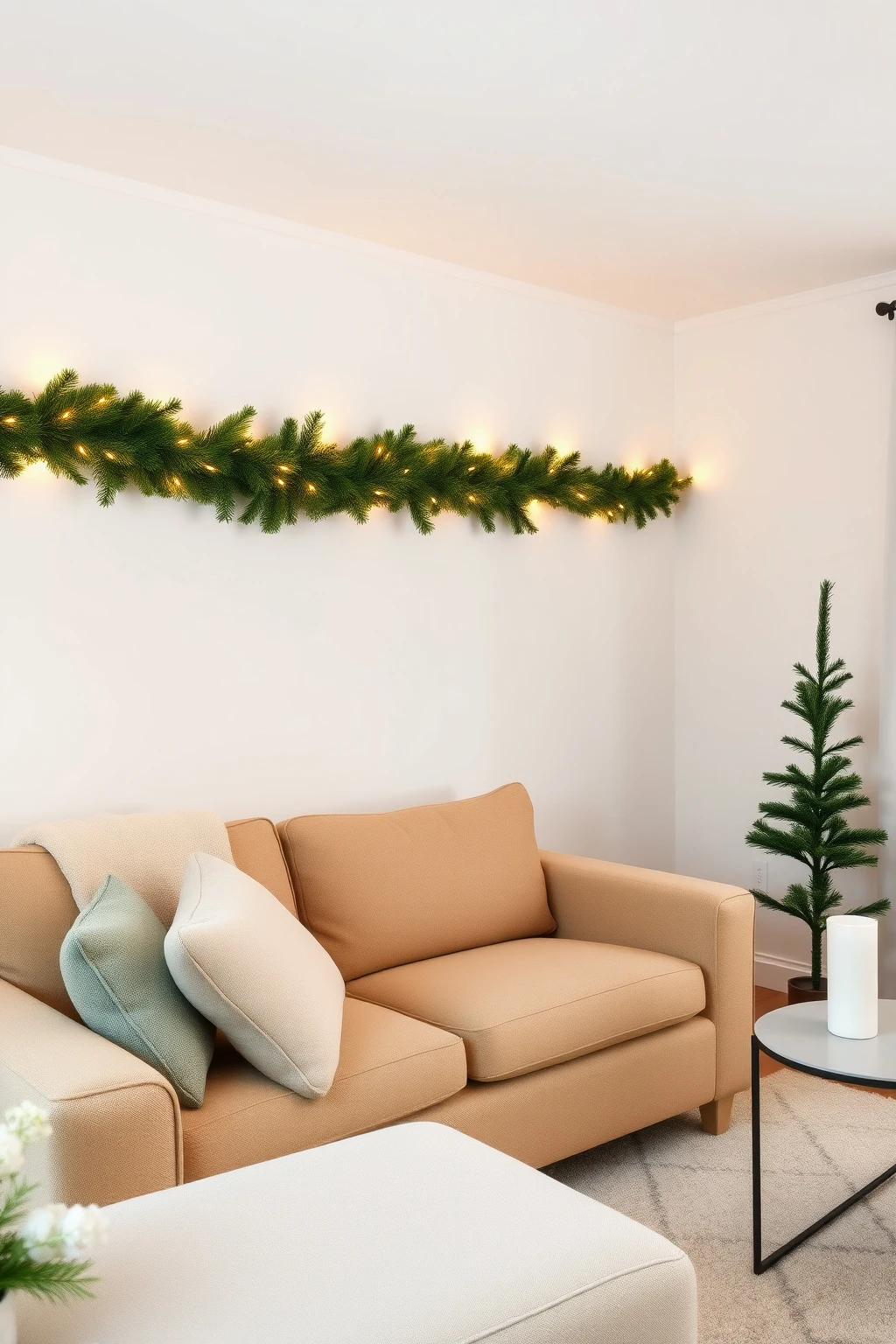
Long garland that sags can make small rooms look visually messy, especially when it drapes across windows or media units. Instead of using one huge length and hoping it behaves, style in shorter, denser sections that look intentional.
Cut garland into 12 to 18 inch sections and secure each piece individually so the tips stay lifted. Tuck micro warm lights inside each section before hanging, which creates brightness without extra cords. Place the sections at eye level around 56 to 65 inches, so you feel the holiday vibe when you’re seated. If you’re using real greenery, mist lightly and rotate placement so it dries evenly and sheds less. This works because controlled segmentation gives you a clean rhythm and reduces visual sprawl.
Use a patterned runner on your walkway to guide movement
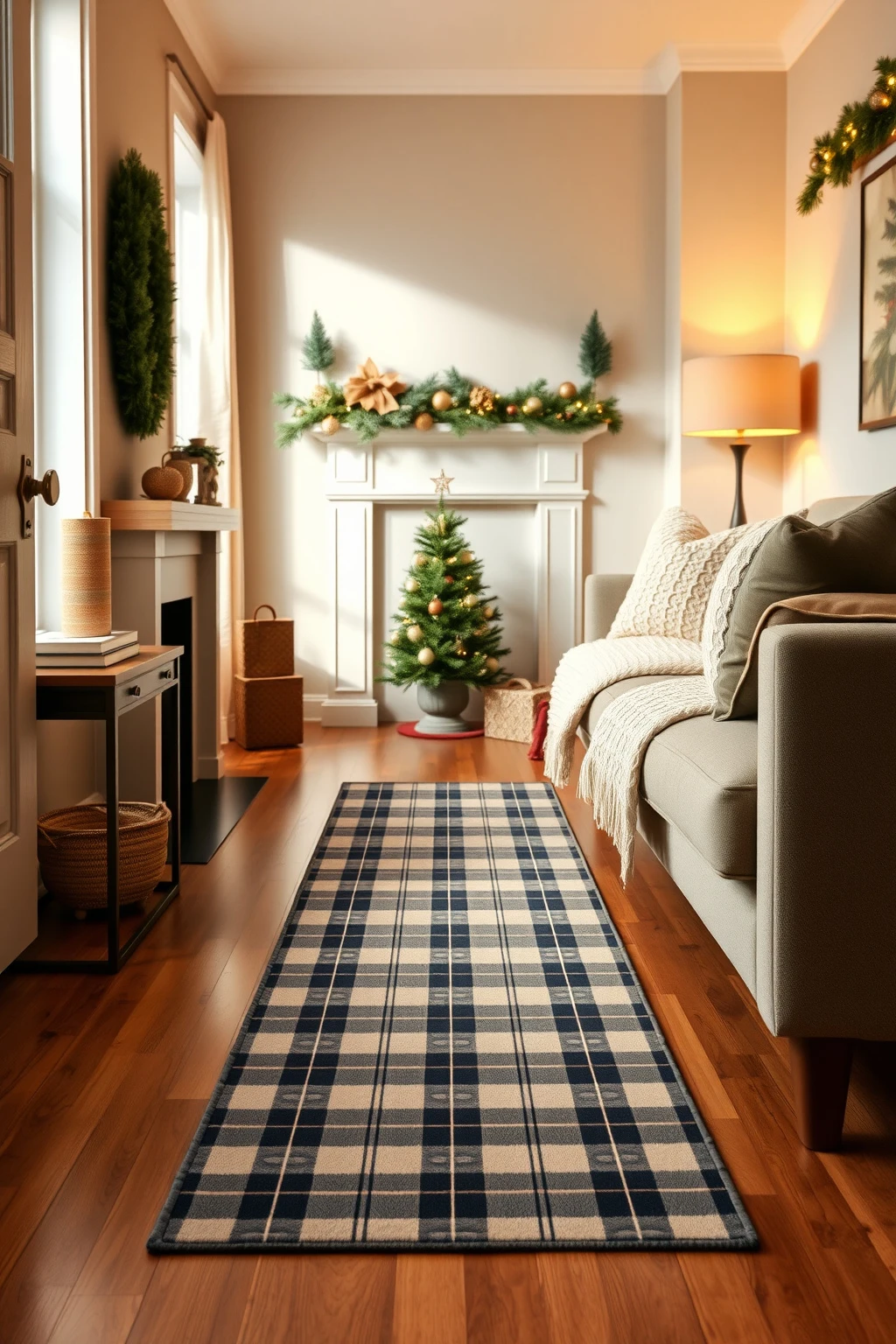
Small-space Christmas can feel stressful because your room needs to stay functional. If decorations block your usual path, you end up stepping around them all day, which kills the cozy feeling.
Place a non-slip runner along the main walkway route, ideally in a narrow width like 2 to 3 feet so it doesn’t swallow the room. Choose a holiday-leaning pattern in charcoal and warm cream, or muted red-burgundy and ivory, that harmonizes with your rug and textiles. Then, keep your larger décor on the edges of the room so the runner stays clear. This is a subtle design principle: guiding movement reduces collisions and makes the room feel calmer. Plus, the runner adds a seasonal layer without taking up surfaces where you store remotes and drinks.
Conclusion
Cozy Christmas in a small living room isn’t about doing everything. It’s about choosing a few high-impact focal points, keeping pathways clear, and letting warm light and texture do the heavy lifting.
If you remember one thing, make your plan around how the room moves and how it looks at night. When the lighting is warm, the scale is edited, and the decor has breathing room, your space will feel festive and actually liveable.

Mush Decor
Writes about accessible, timeless interior styling for readers worldwide.
More about Mush DecorRelated articles
 Living Room
Cozy Christmas Fireplace Living Room Ideas
Get 25 cozy Christmas living room ideas with fireplaces, from garlands and stockings to lighting and styling tips you can copy.
Read More