
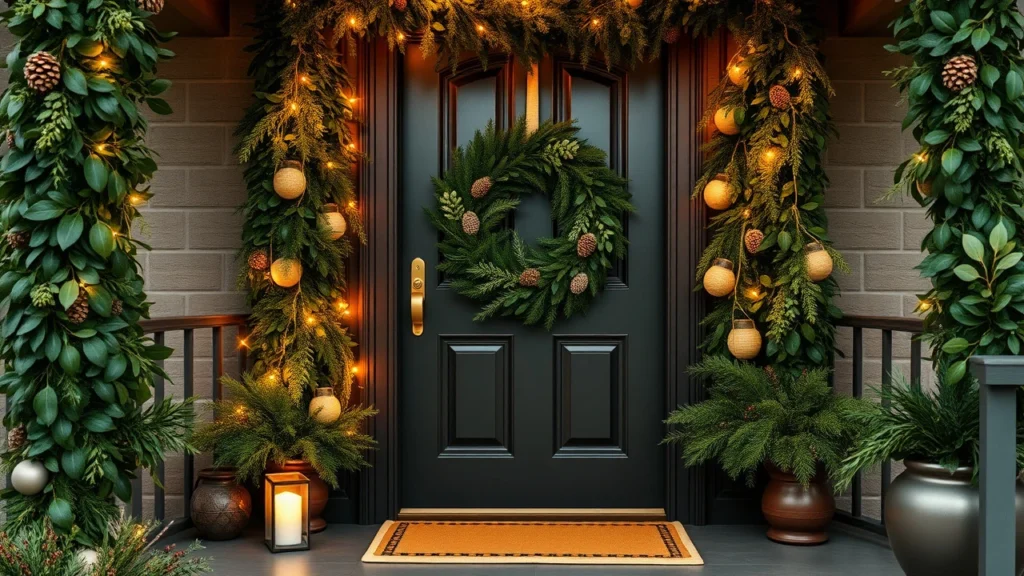
Every December, you walk up to the door and you know in your gut whether the welcome feels thoughtfully dressed or just “thrown together.” The secret is that fresh greenery can look expensive fast, but only if you treat it like design, not like a last-minute craft.
In this guide, you’ll get 23 front door decorating ideas built around real, practical styling: how to hang garland so it drapes instead of droops, what colors photograph best in evening light, and where to place the pops of red or warm brass so they guide people toward the door. Think of it as a friendly checklist you can actually follow, whether you’ve got a wide traditional entry or a tight apartment stoop.
Choose your “green base” first: evergreen + eucalyptus mix
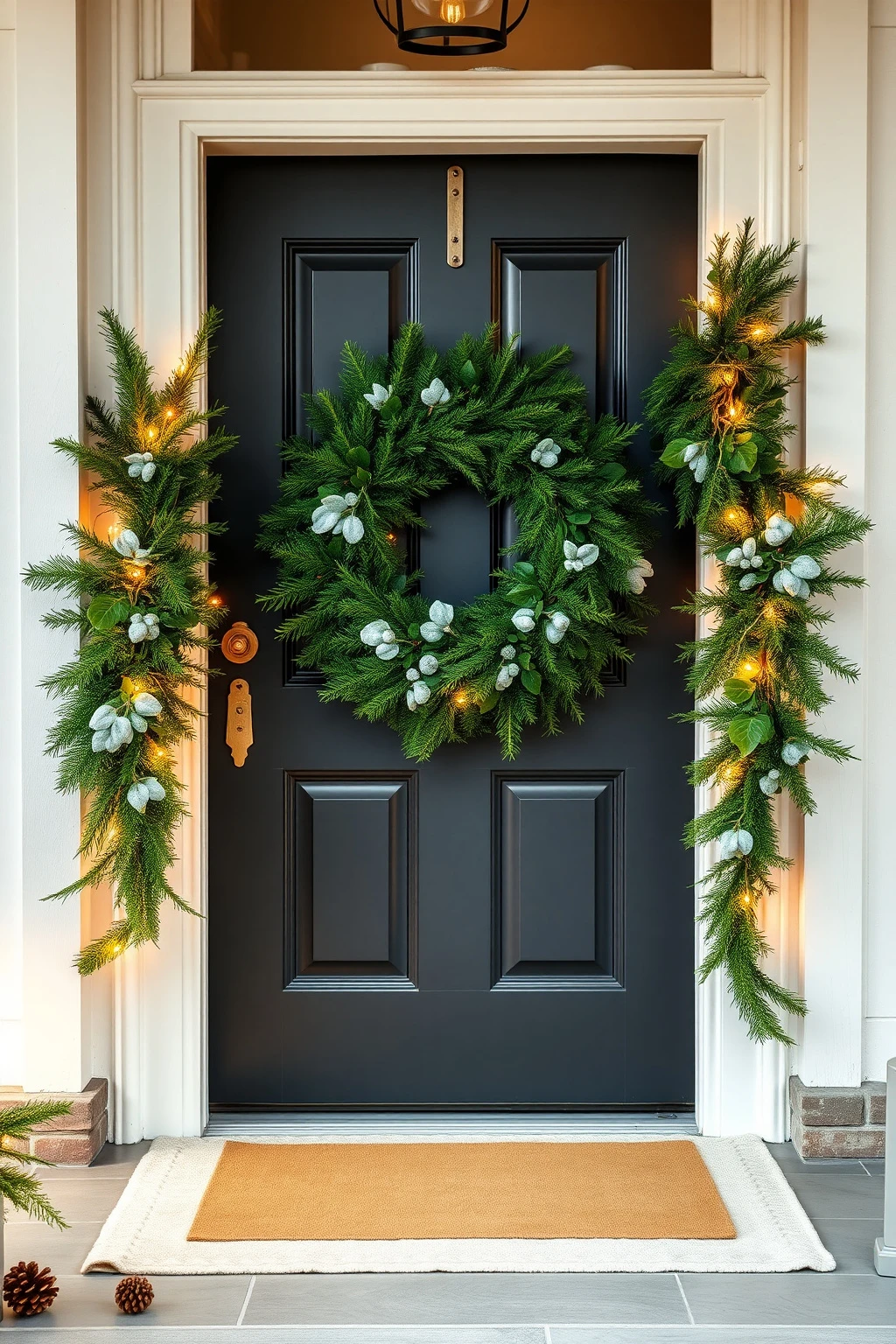
If your door decor looks a little flat, it’s often because everything is the same shade of green. Mixing textures does the heavy lifting for you, especially with evergreen branches (dense and structured) paired with eucalyptus (silvery-gray, airy, and bright). The contrast helps your decorations read clearly in low winter light.
Start by building a base of two greens only. For example, use fir or spruce for bulk, then tuck eucalyptus stems in between every 3, 4 inches so the lighter leaves peek through. Keep the eucalyptus to the top half and inside edges, so you get lift without making the whole door look dusty.
Wire your wreath to match your door hardware (not just the frame)
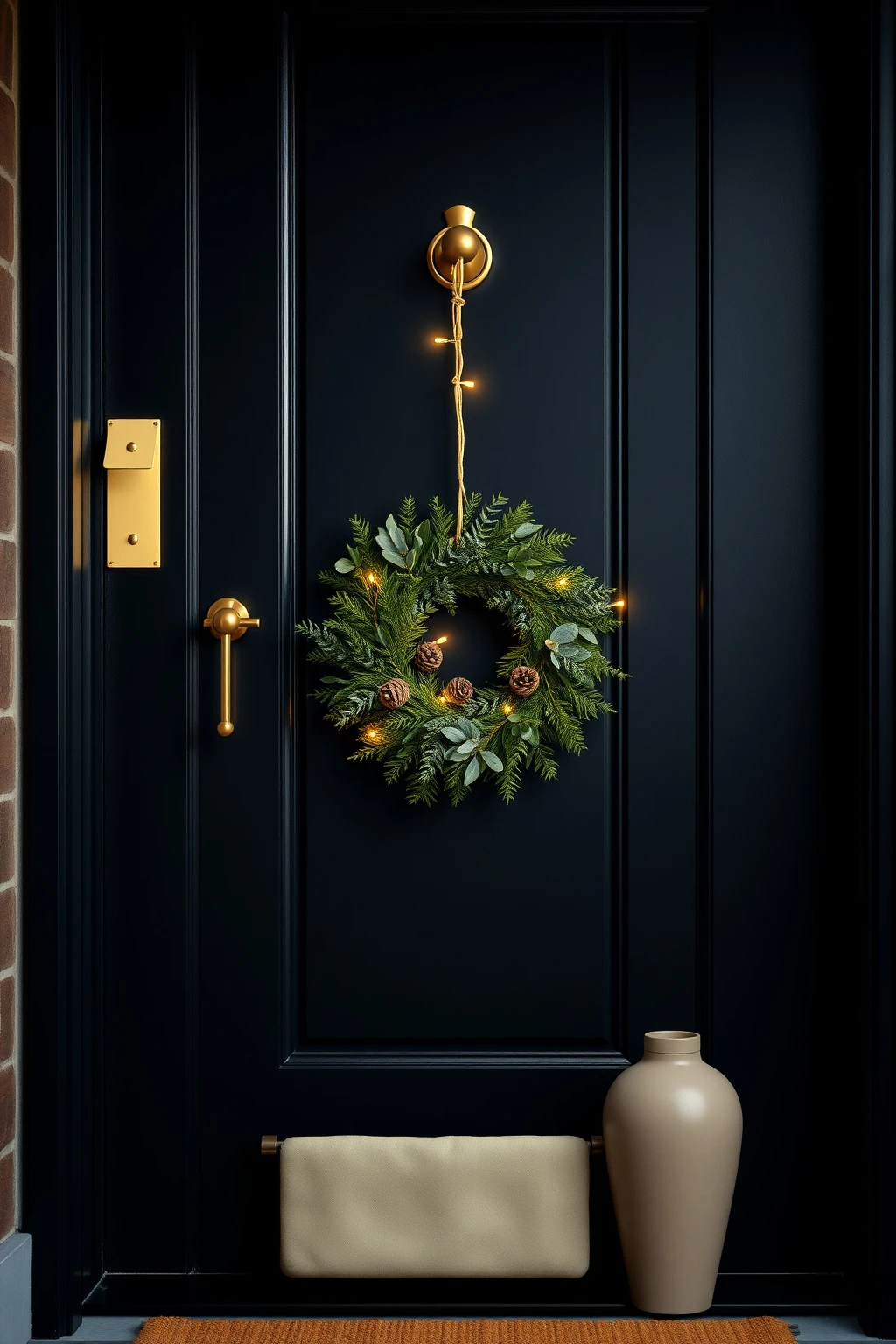
A wreath can look “right” in a showroom and wrong on your actual door if the proportions fight your hardware. If your knocker, mail slot, or handle is bold, you need a wreath that clears it visually and still feels centered at arrival height. The goal is for the wreath to look like it belongs to the door, not like it’s taped on.
Measure the distance from the handle to the top of the door, then choose a wreath diameter that leaves about 6, 8 inches of breathing room. Attach with a wreath hanger that grabs two points on the door (or mount a small shepherd’s hook bracket inside the frame), so it hangs level. Aim for the wreath center to land roughly 58, 62 inches from the floor.
Drape garland like a curtain: add 8-inch “breaks”
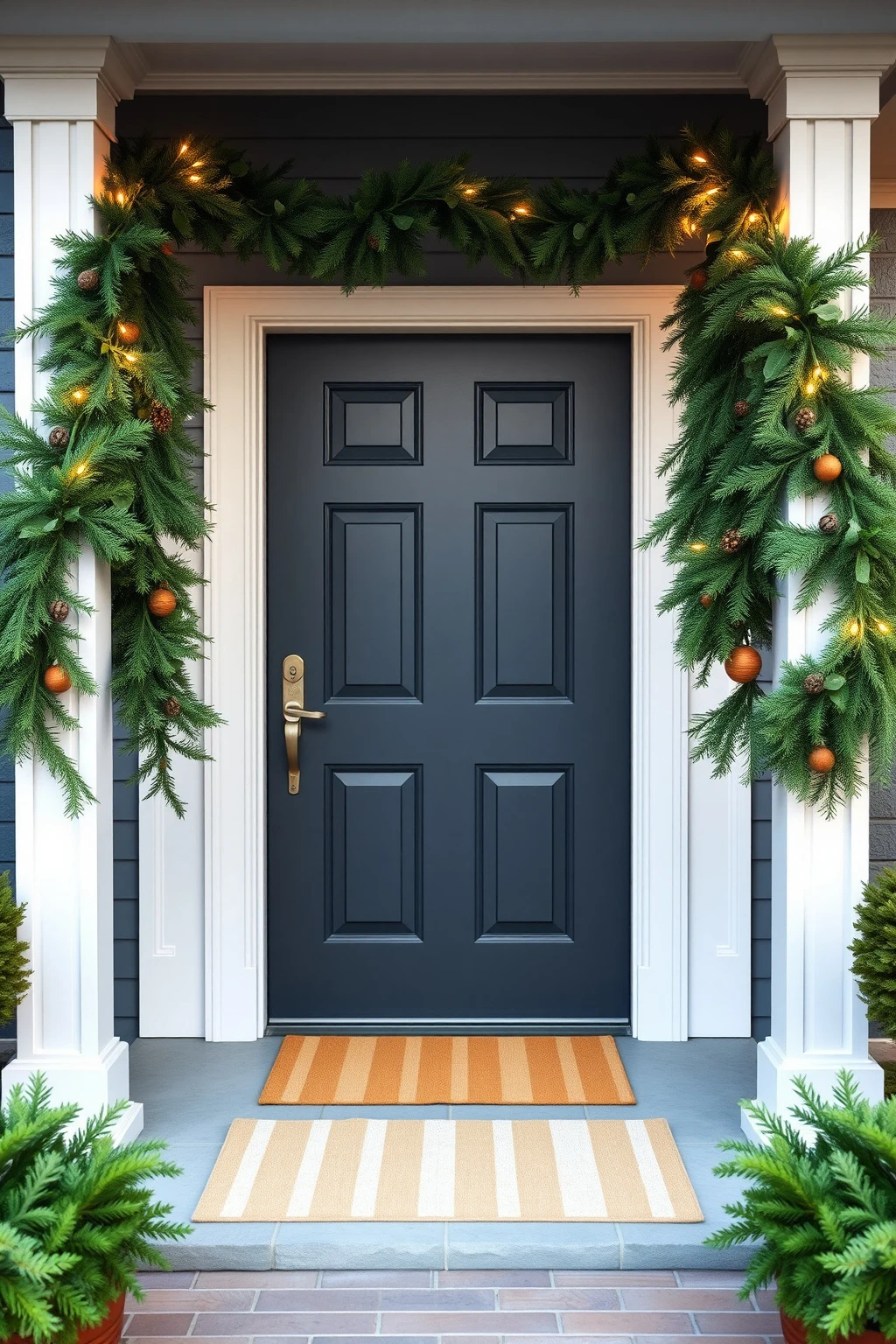
Front door garland that droops is usually missing a structure step. Greenery behaves differently than cloth because it has weight and spring, so it needs planned breaks where it can hang naturally. If you try to glue or clip everything in a straight line, it will sag where your eye least wants it.
Instead, hang your garland in sections. Create 8-inch gaps between the main drapes by attaching at three points per side (top third, middle third, and near the threshold). Use clear zip ties on the back of the frame or hooks hidden behind trim, then fluff the ends so each “break” looks intentional.
Make a simple bow that looks custom: 24-inch ribbon loops
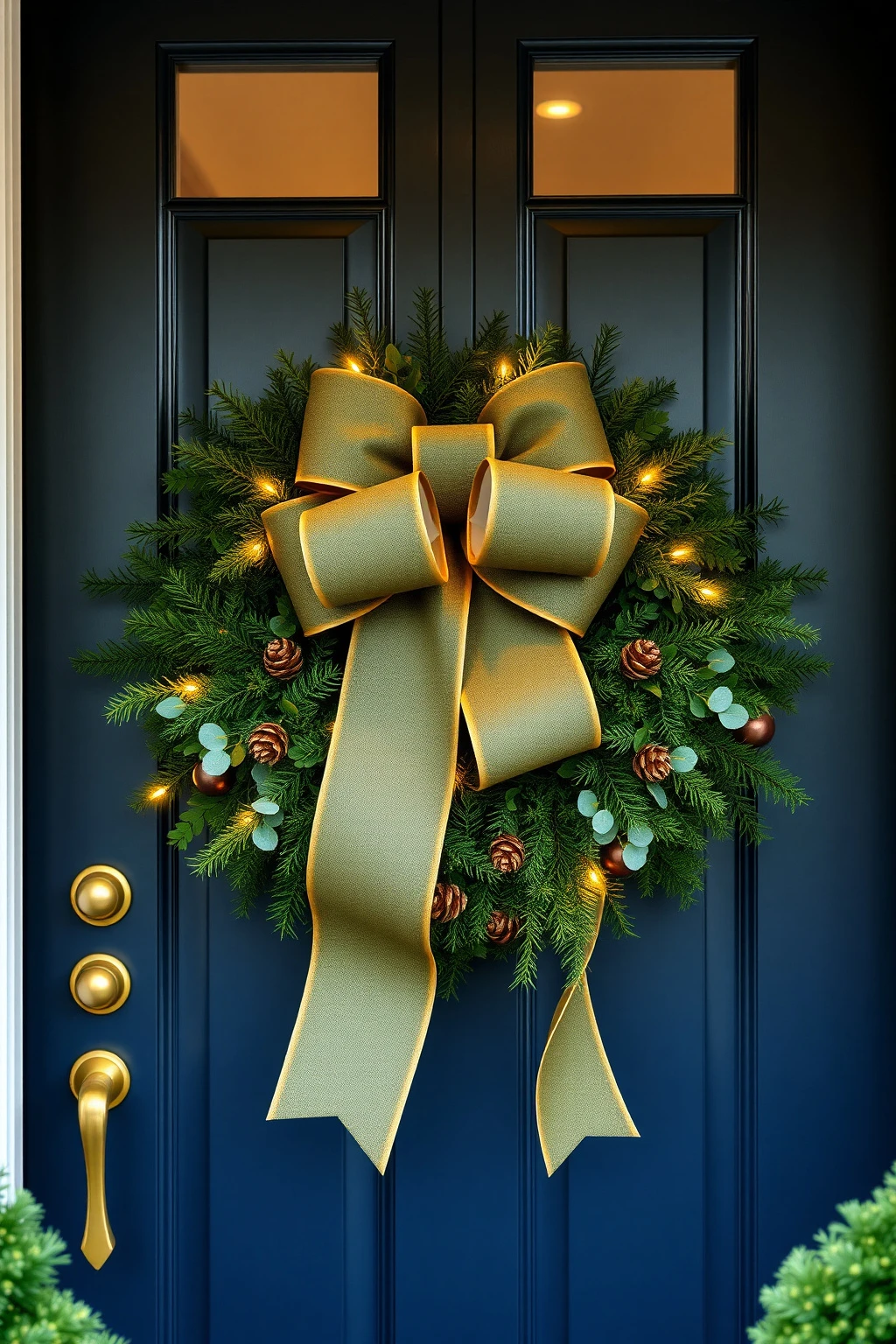
Big bows fail when the loops are too small. If your ribbon is narrow or the loops are tight, the bow reads like leftover craft ribbon instead of entryway design. A true custom feel comes from scale and shape.
Use wired ribbon that holds a curl, then cut 24-inch loops for a front-door size bow. Make 5, 7 loops, pinch the center, and wrap floral wire around the back of the wreath or garland. Leave at least 10 inches of long tails so the bow sits like a focal point, not like a topper.
Warm-brass rule: match your ornaments to your hardware finish
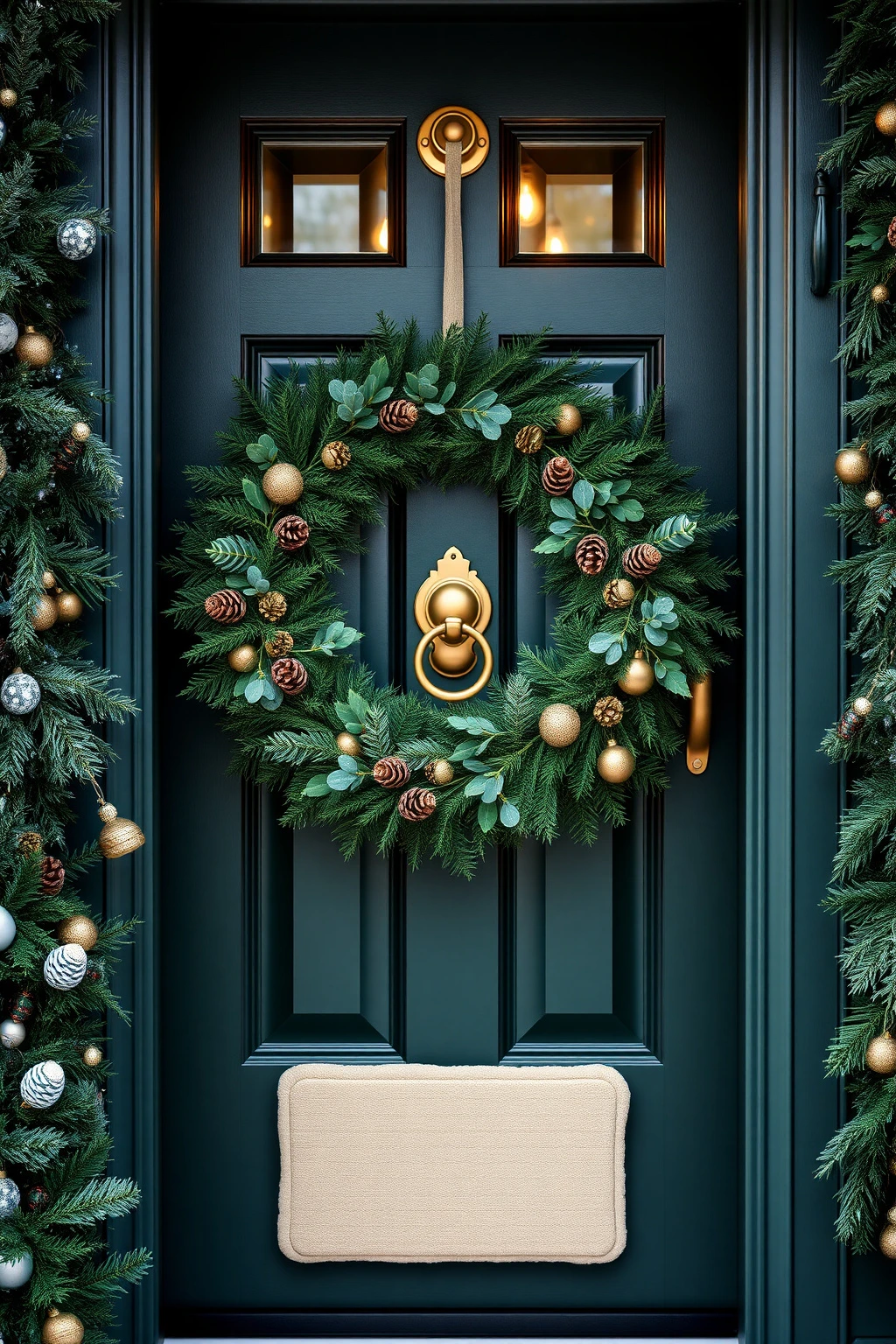
If your door hardware is brass, don’t randomly add silver ornaments just because they’re available. Your eye catches these metals instantly, and mismatched finishes can make the whole look feel messy. Using one metal family creates a polished, “designer” read.
Pick your match: warm brass or antique gold, then choose ornaments in that same finish. Use 6, 10 small brass-toned picks or clips and space them evenly every 6, 7 inches around the wreath edge. If you want a second accent, add just one color detail like terracotta-brown cinnamon sticks or cranberry picks, not another metal.
Add height with a greenery swag, not more wreath
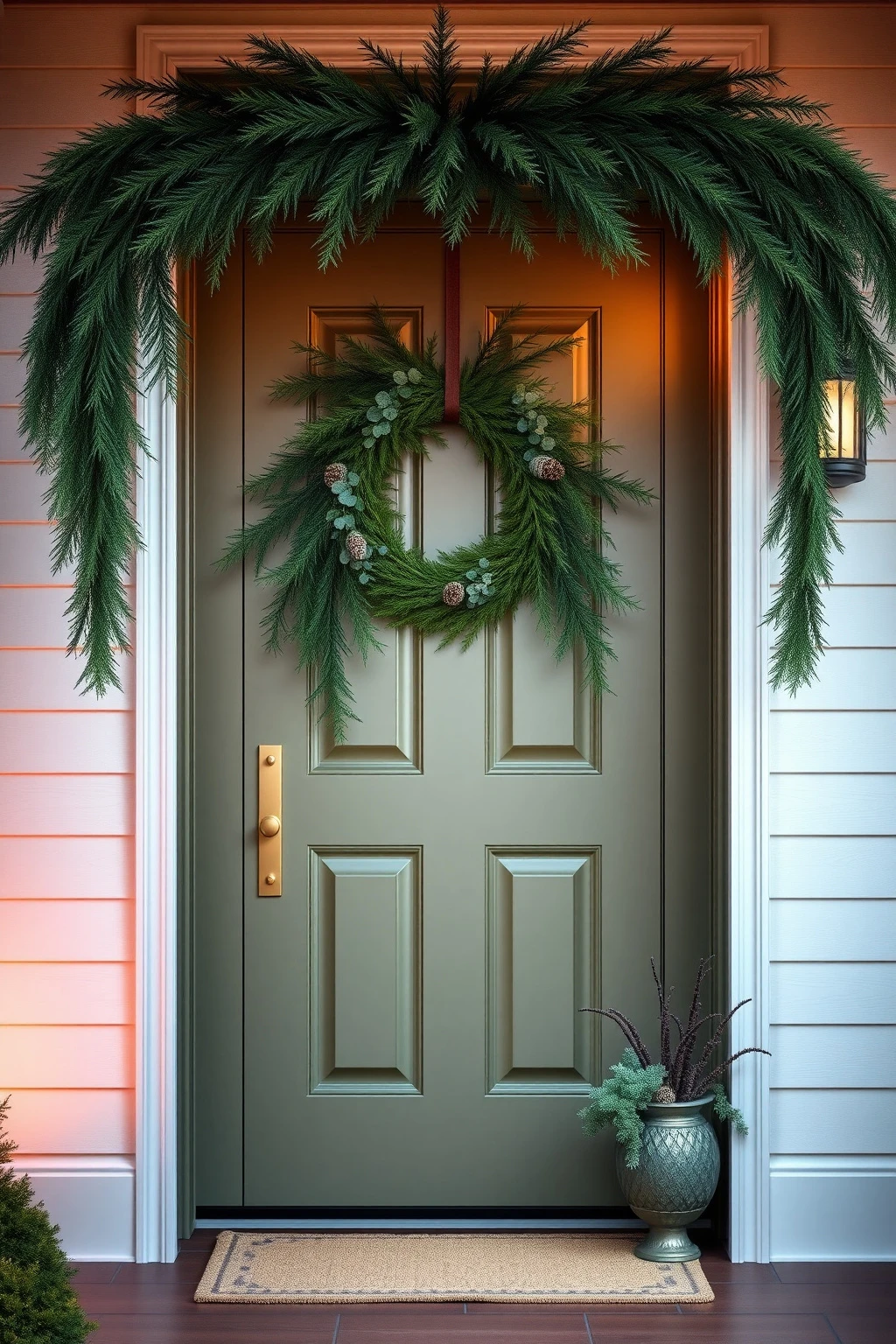
You might already have a wreath, and adding another round shape can start to feel repetitive. For extra presence, swap one wreath-adjacent element for a vertical-friendly swag that stretches upward and adds dimension. It’s a subtle move that changes how the whole entry reads from the street.
Mount a swag using two anchors above eye level, usually inside the frame corners. Build it with longer branches and let the longest stems fall 10, 12 inches below the anchor points. Finish by tucking tiny clusters of pinecones at varying heights so the eye moves upward and then back to the wreath.
Use “one red, repeated” for instant cohesion
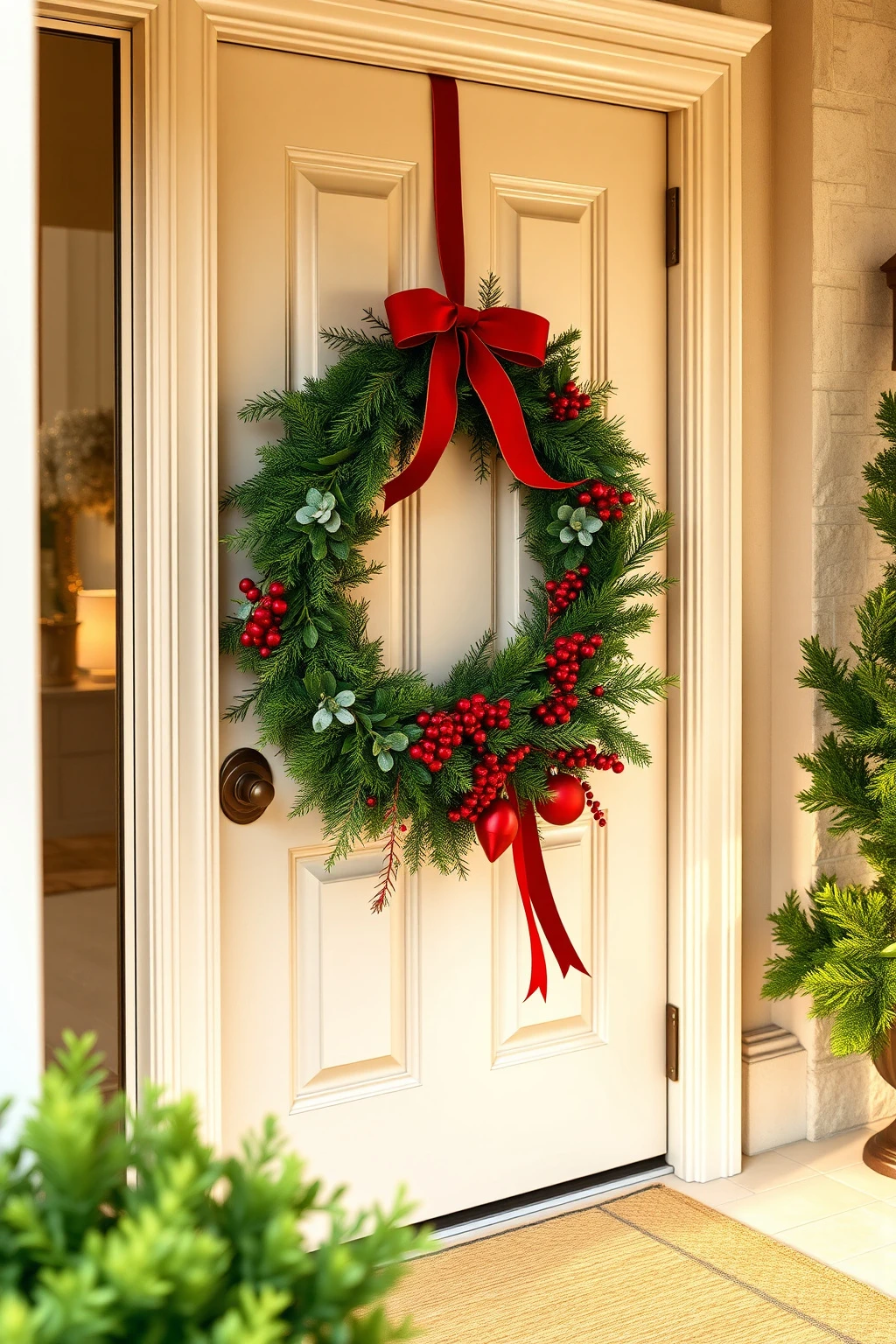
Red can go tacky fast if it’s scattered in many shades. Instead, pick one red tone and repeat it in at least three places so the entry feels intentional. This is especially helpful when your home has natural wood trim or stone that already brings in warm variation.
Choose one: cranberry, cherry, or terracotta-red. For instance, use cranberry ribbon, three cranberry ornaments, and a small cluster of red berries tucked under the wreath. Keep the red accents small and concentrated, about the size of a golf ball or slightly smaller for ornaments, so they act like punctuation rather than full stops.
Low-light trick: use warm-white lights, not icy LED
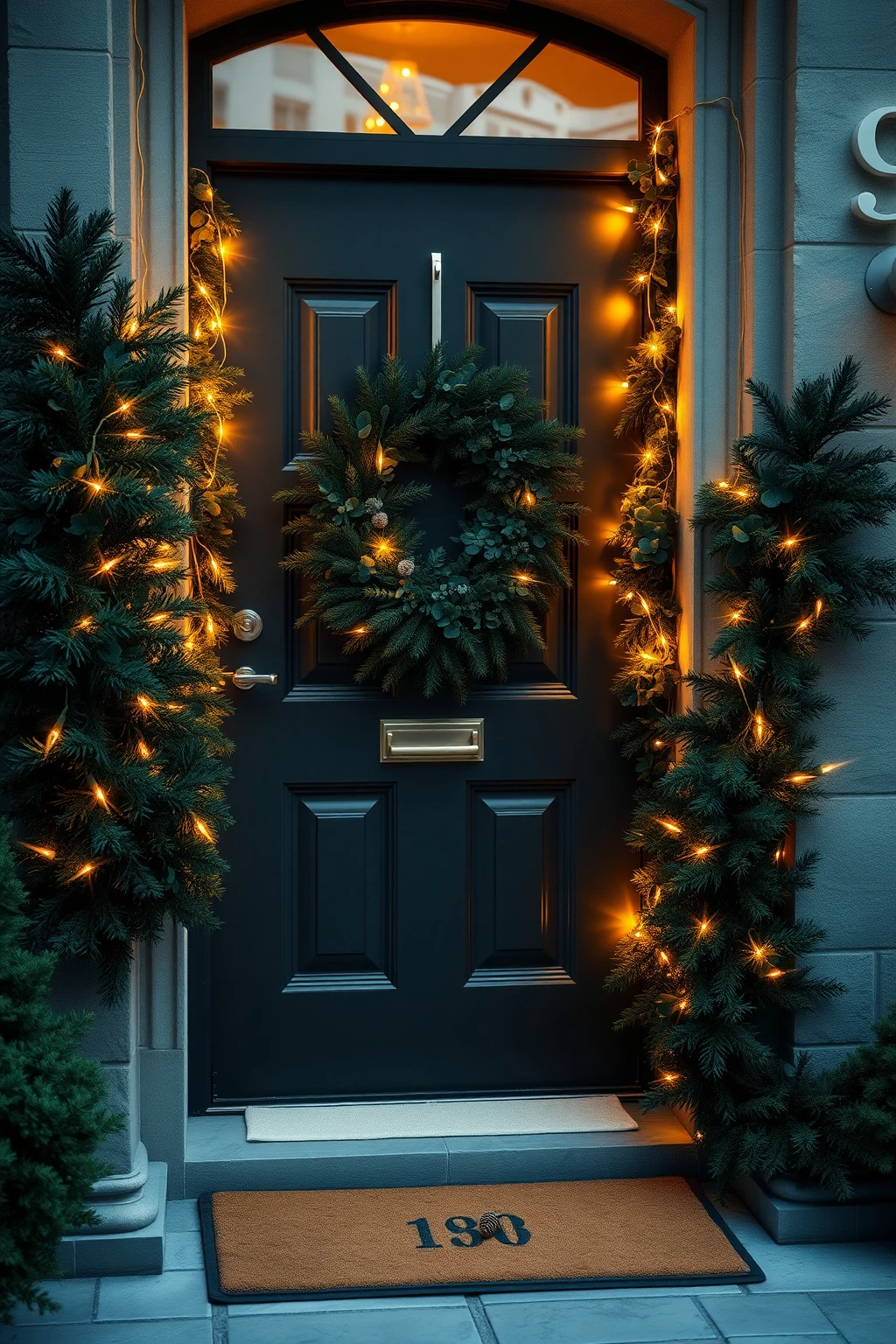
North-facing entries and shady porches make greenery look dull, and the wrong lighting can flatten it even more. Icy white lights can make greens look gray and washed out, especially against dark doors. Warm-white lighting brings out the depth in fir needles and eucalyptus leaves.
Choose warm white LED mini lights, then weave them lightly. Aim for one strand per garland section rather than packing lights tightly. Start at the top anchor and run the wire in shallow loops, then tuck the last 6 inches toward the inside so the brightest points don’t glare when you approach the door.
Frame the entry with two matching planters (even if they’re small)
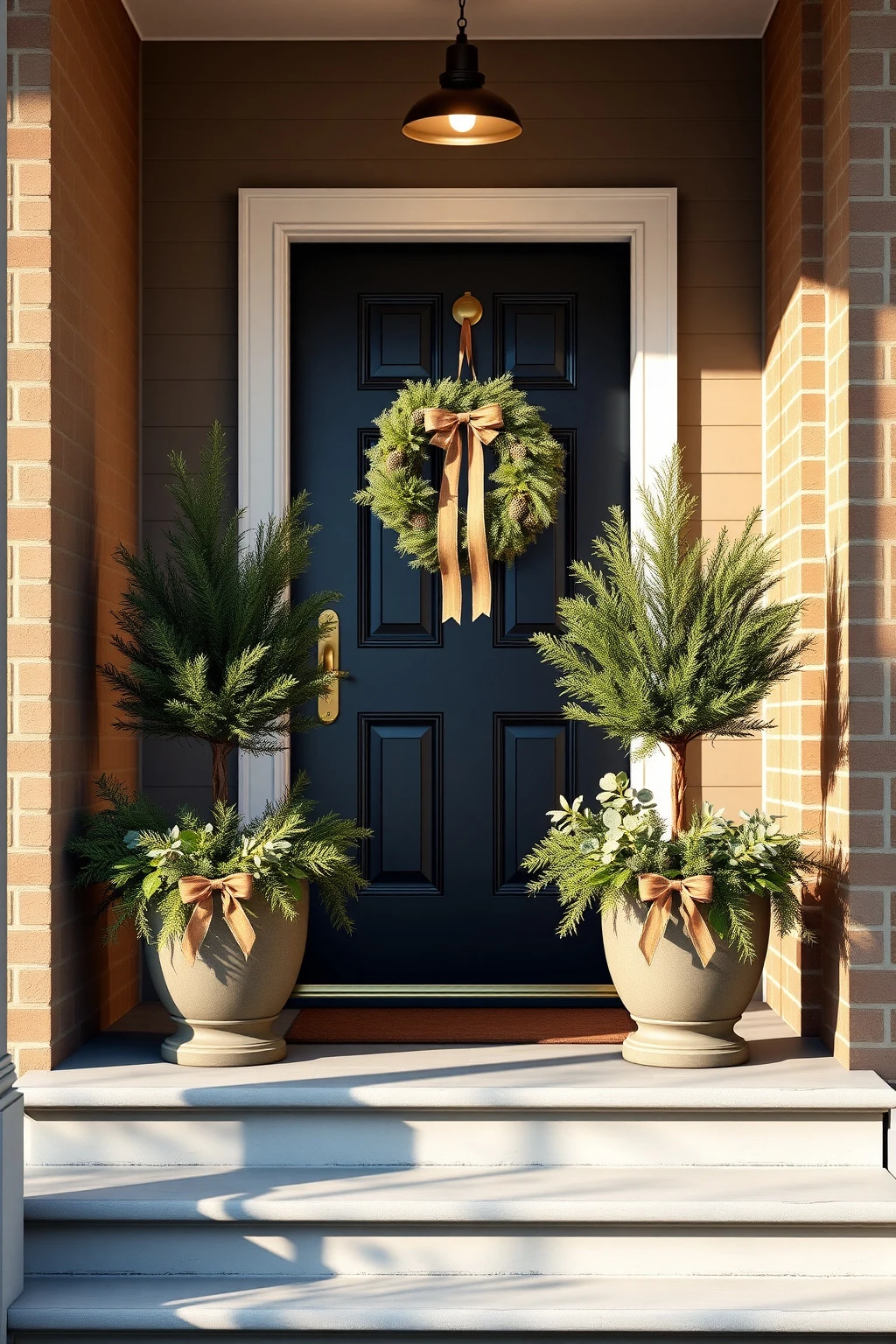
If your porch is narrow, you can still get that high-end “arrived” feeling without adding bulky decor. Two matching planters create symmetry and give the greenery somewhere to visually continue. It’s also practical: you can swap plants later without redoing the door entirely.
Use planters about 12, 16 inches wide, then fill them with evergreen cuttings and winter stems like seeded eucalyptus or winterberry. Place taller branches at the back so the plants don’t look top-heavy. Tie the door wreath palette into the planters by using the same ribbon color on a single pick in each container.
Swap berries for a cleaner look: eucalyptus + pinecone clusters
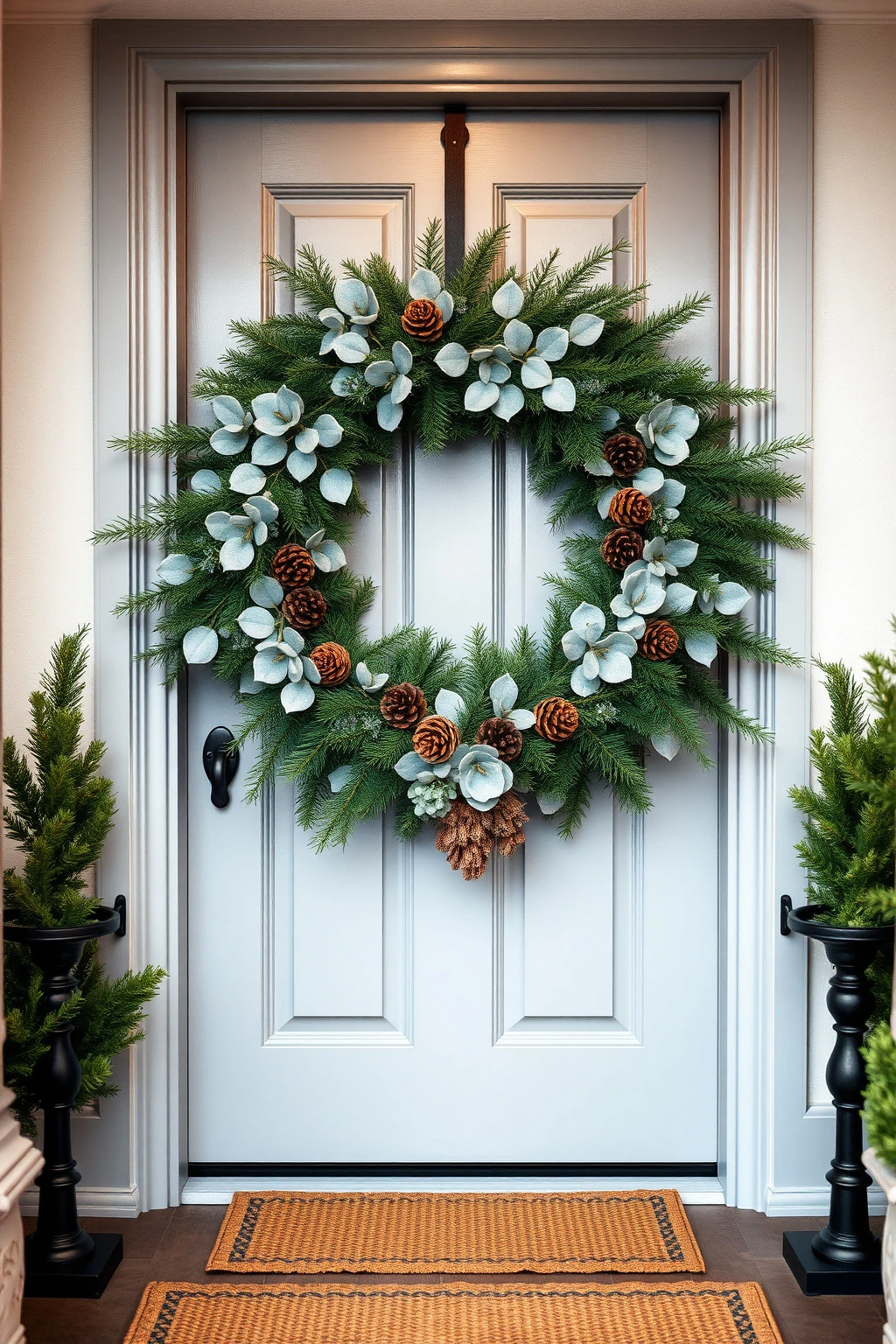
Berry picks look gorgeous, but they can smear or dry out quickly, especially in freezing swings. If you want a cleaner, longer-lasting palette, go heavy on pinecones and eucalyptus for a sculptural texture. Pinecones also photograph beautifully because they create real shadows.
Skip berries entirely and build your texture mix with pinecones of two sizes: golf-ball small and walnut-sized. Place the biggest cones at the wreath lower third and opposite side of the knocker, then tuck smaller ones where the greenery is thinnest. Mist eucalyptus lightly with water before styling to reduce brittleness and keep it looking fresh.
Make your doormat part of the design: choose cream + dark green
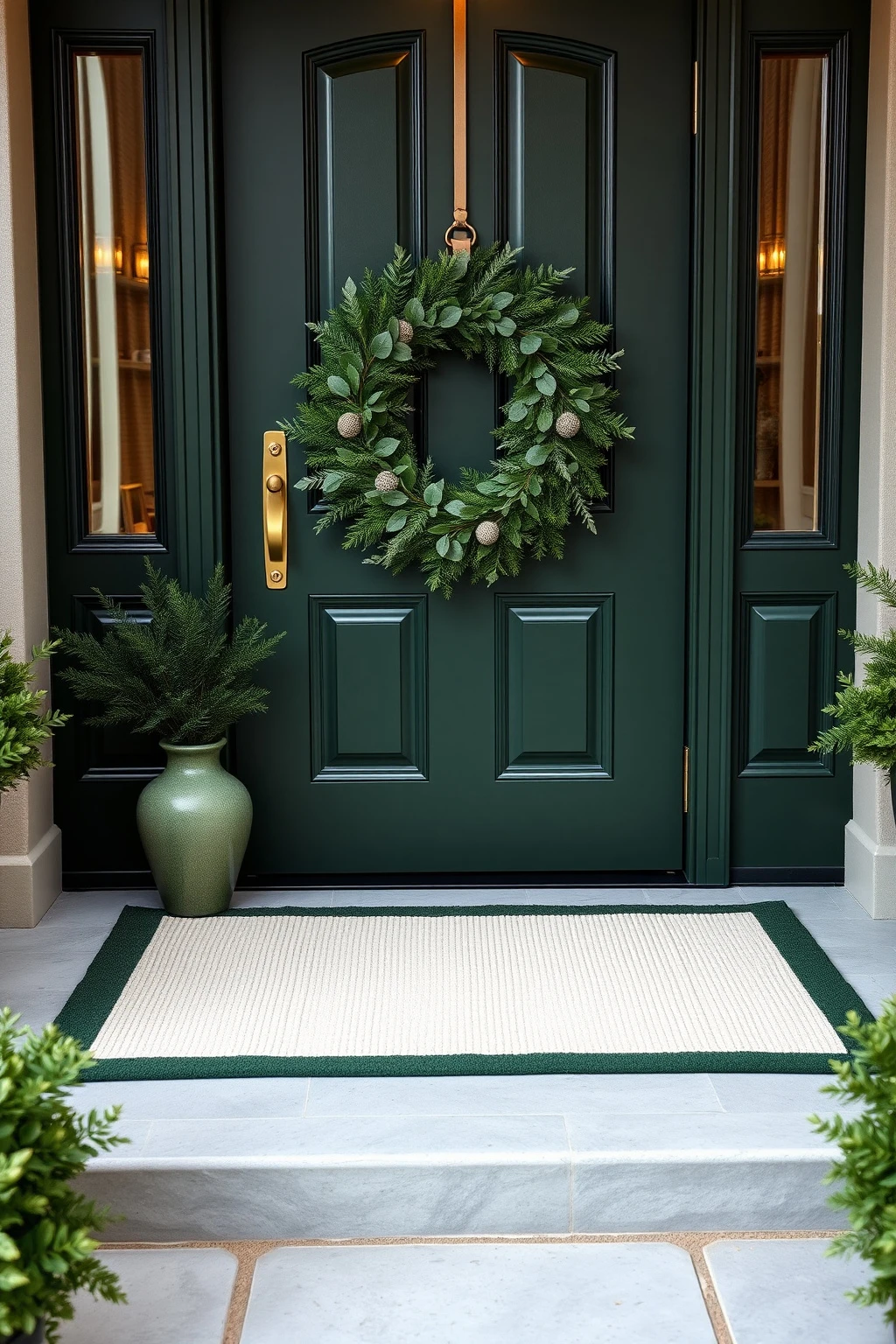
People forget that your doormat is the “bottom frame” for your front door. If it’s bright red or a random pattern, it can compete with your greenery and make the whole look busier than it needs to be. A restrained mat grounds everything and makes your wreath look intentional.
Pick a doormat in warm ivory, cream, or oatmeal, with dark green or black accents. Aim for a width that matches the door’s swing area, typically 20, 30 inches wide for standard doors, so it doesn’t bunch. If you already have a patterned mat, keep the door palette simple: one green base and just one accent color like warm brass.
Add a “story” element: cinnamon stick bundles tied to greenery
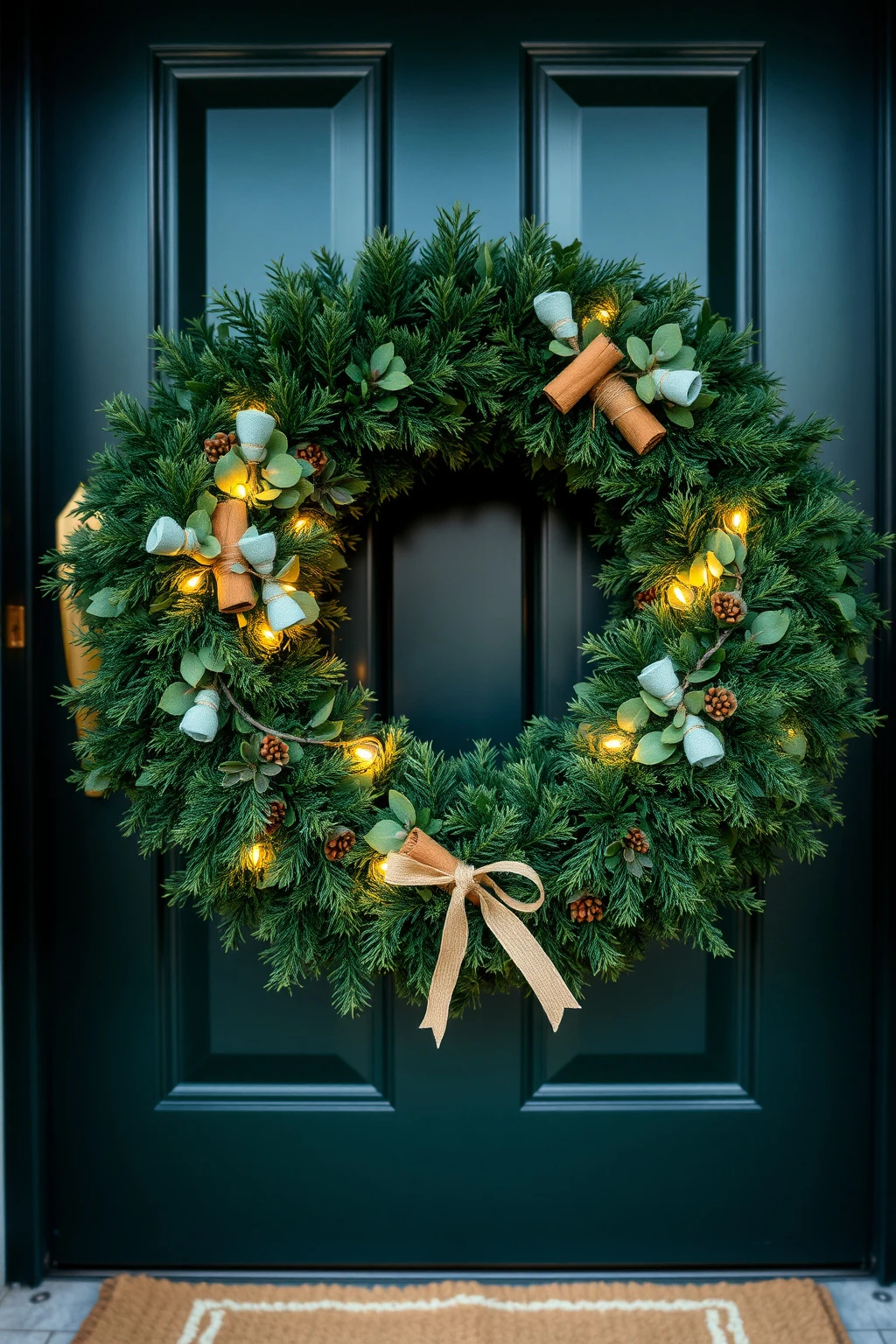
Decorating with greenery can feel purely visual, but smell is what makes it memorable. Cinnamon adds a cozy, grounded scent that also introduces a warm brown note that balances bright greens. It’s a small addition that feels boutique, not gimmicky.
Bundle 3, 4 cinnamon sticks with twine, then tie them onto the inside edge of the wreath at about 2, 3 inches below the top of the circle. Keep bundles small, roughly 2, 3 inches wide, so they look like design accents. Replace them every couple of weeks if you’re hosting holiday guests, since scent fades before visual freshness does.
Create contrast with a warm ivory ribbon instead of red
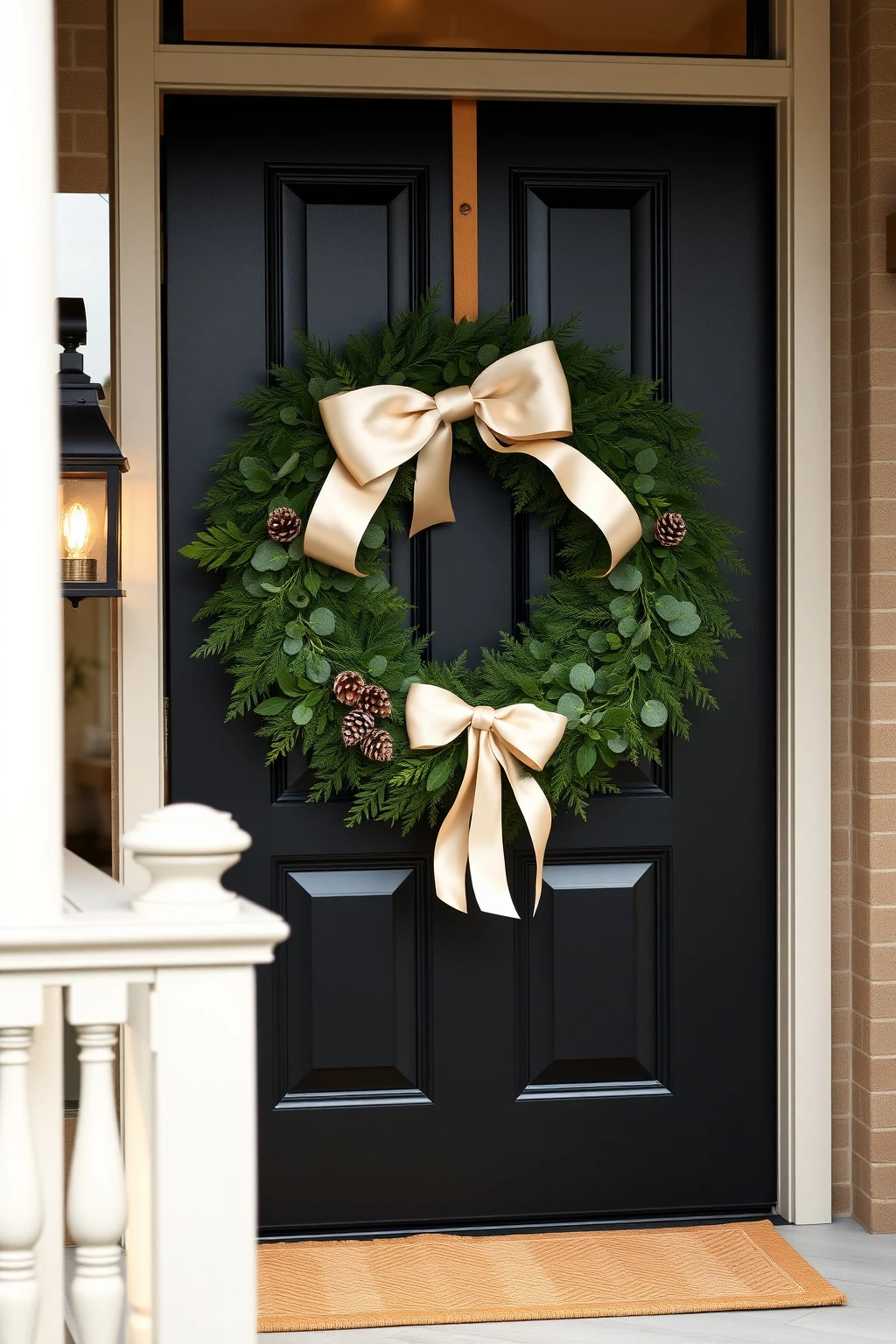
If you love greenery but don’t want a traditional red Christmas look, try warm ivory. Ivory makes evergreen feel calmer and more tailored, especially on dark doors and black iron railings. The contrast is elegant rather than festive in a loud way.
Use a satin or grosgrain ribbon in warm ivory, about 1.5, 2.5 inches wide. Make one large bow and one smaller tie at the bottom edge of the wreath, keeping everything else neutral. For a cohesive finish, add two or three pinecones that match the scale of the bow tails, so the ivory doesn’t look alone.
For apartments: do a ‘door sandwich’ with two light garlands
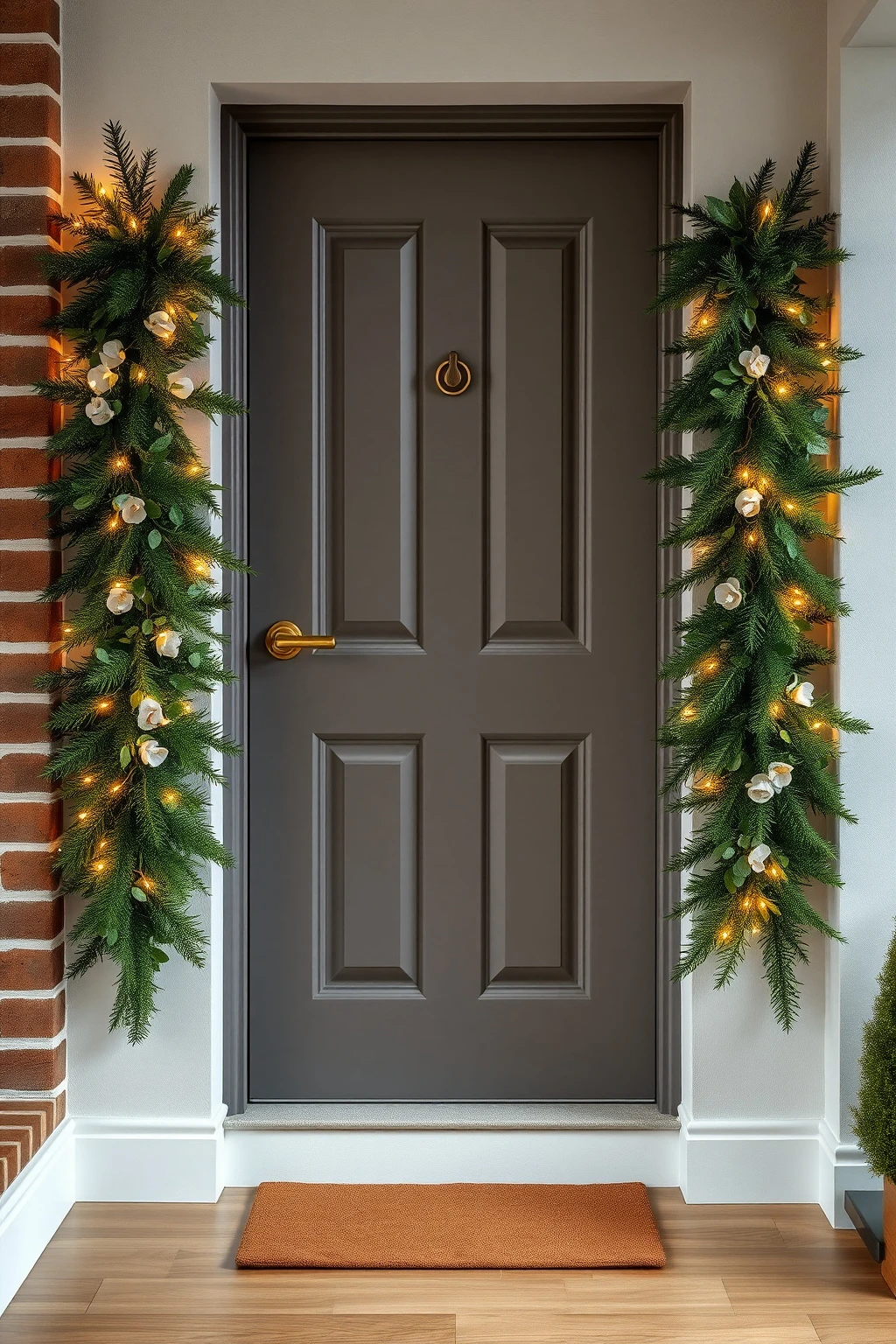
If your front door has limited space or you can’t drill into trim, you still deserve a full look. The trick is to layer two lighter garlands so they frame the door without heavy weight. You get volume and shape without overloading hooks.
Hang one garland on the upper half at the sides, then add a second garland lower on the frame. Use suction cup hooks rated for outdoor use or removable adhesive hooks, but test them first on a discreet spot. Keep the garlands about 6, 8 inches apart so you can see depth instead of one flat sheet.
Match your wreath to your architecture: modern needs fewer accents
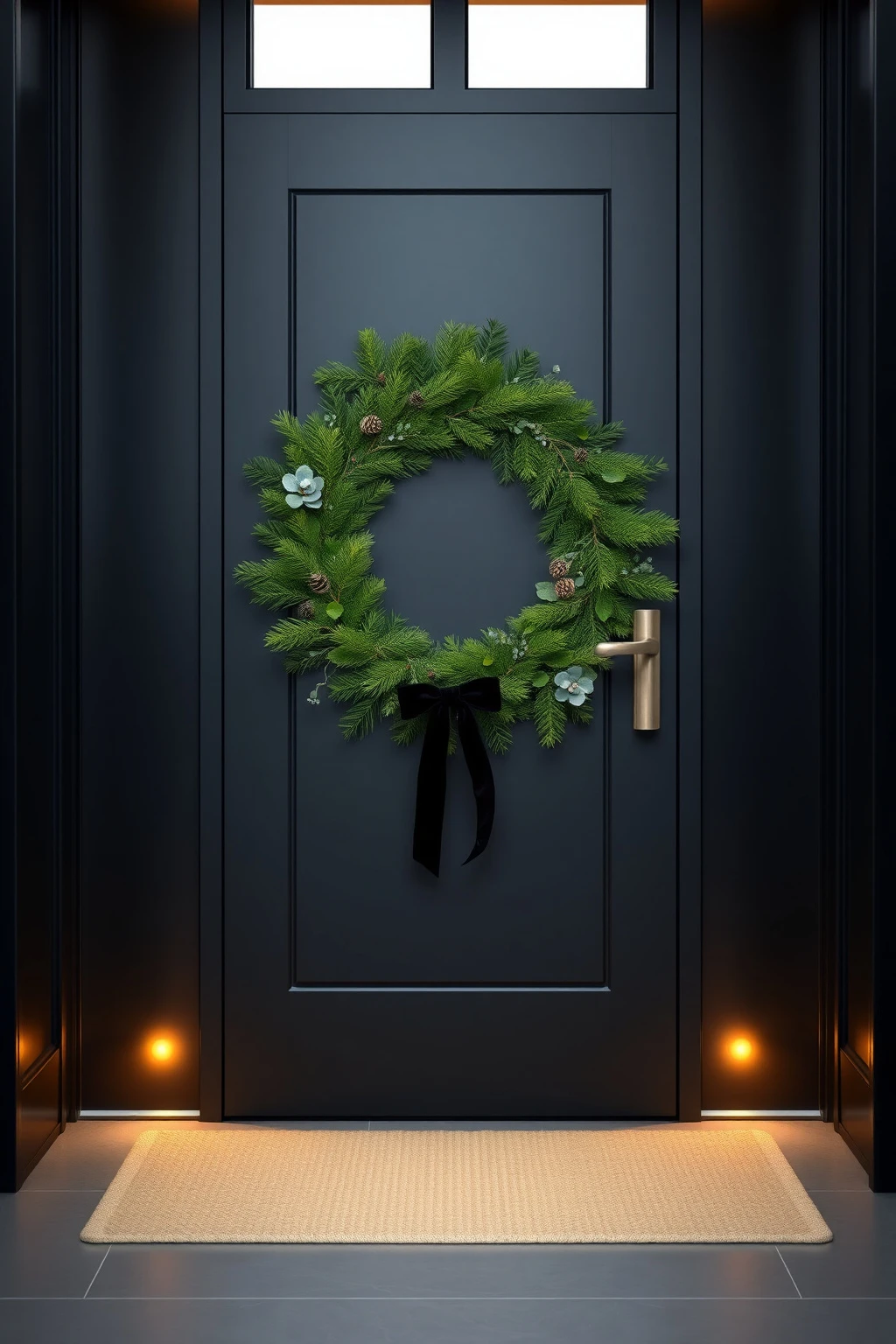
Traditional homes can handle lots of ornament picks, but modern facades read best with edited greenery. If you have clean lines, a minimalist wreath with fewer materials will look more expensive than a crowded one. Think proportion and negative space, not maximalism.
Build a modern wreath with one main element, like noble fir or holly, plus eucalyptus for light texture. Add only 3, 5 accents total, such as black velvet ribbon loops or two sculptural pinecone clusters. Keep the ribbon narrow, around 1 inch, and center the wreath so it feels symmetrical and calm against modern molding.
Use burlap sparingly: a 6-inch ribbon band around the wreath
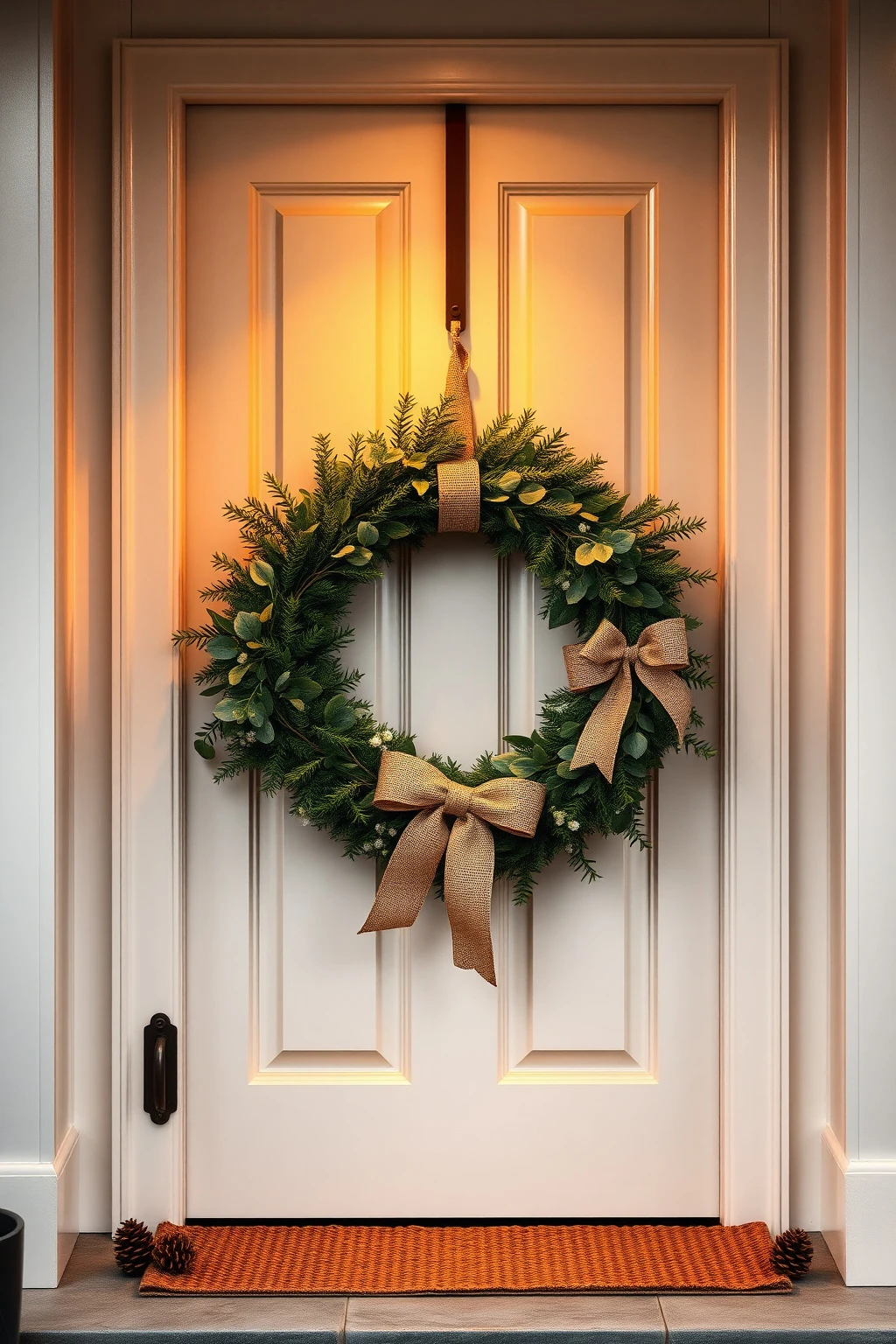
Burlap can look rustic in a good way, but if you wrap it thickly, it can swallow the greenery and feel dated. The smarter move is to use burlap as a small band accent where it adds texture without mass. You get that farmhouse charm while still letting the fresh greens lead.
Cut a burlap ribbon strip about 6 inches wide, then wrap it around the wreath in the middle third like a belt. Secure with floral wire hidden behind the branches, then add a short bow only on one side of the band. Keep the bow height about 5, 6 inches, so the wreath still reads balanced from the street.
Create a wreath “halo” with sparse lights, not full strands
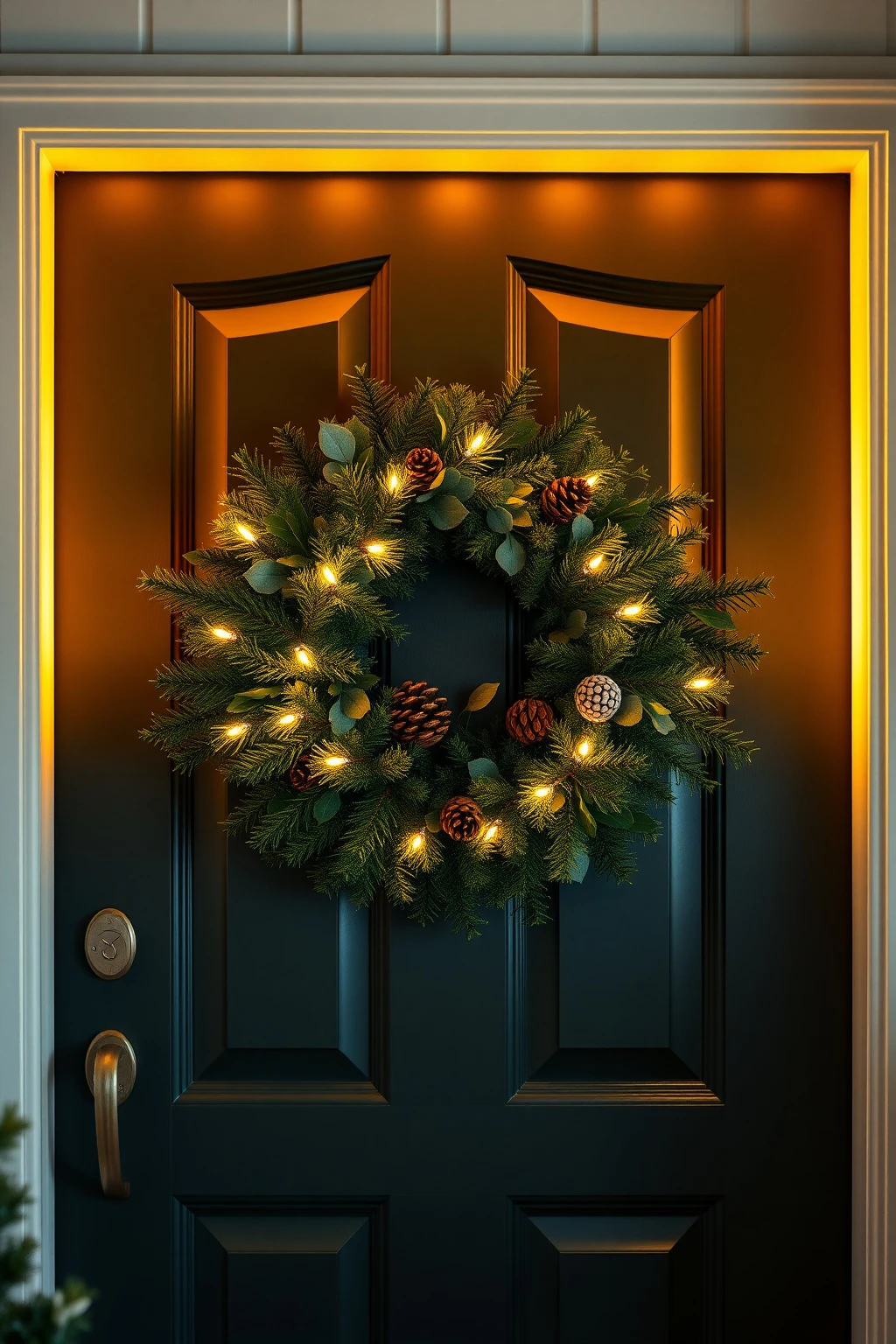
It’s tempting to cover every branch with lights, but that can look heavy and messy quickly. A wreath halo technique keeps the glow airy and upscale, because the lights skim the outer layer and create a frame effect. It’s also easier on the greenery, since you’re using less wiring.
Use a single string of warm-white lights and focus on a thin ring on the outer perimeter. Weave just enough branches to hide the wire, then stop and tuck the end at the back. Pair this with two textured elements like eucalyptus and pinecones, so the halo feels intentional even when lights are off.
If your door is glass, hang greenery where guests see it most
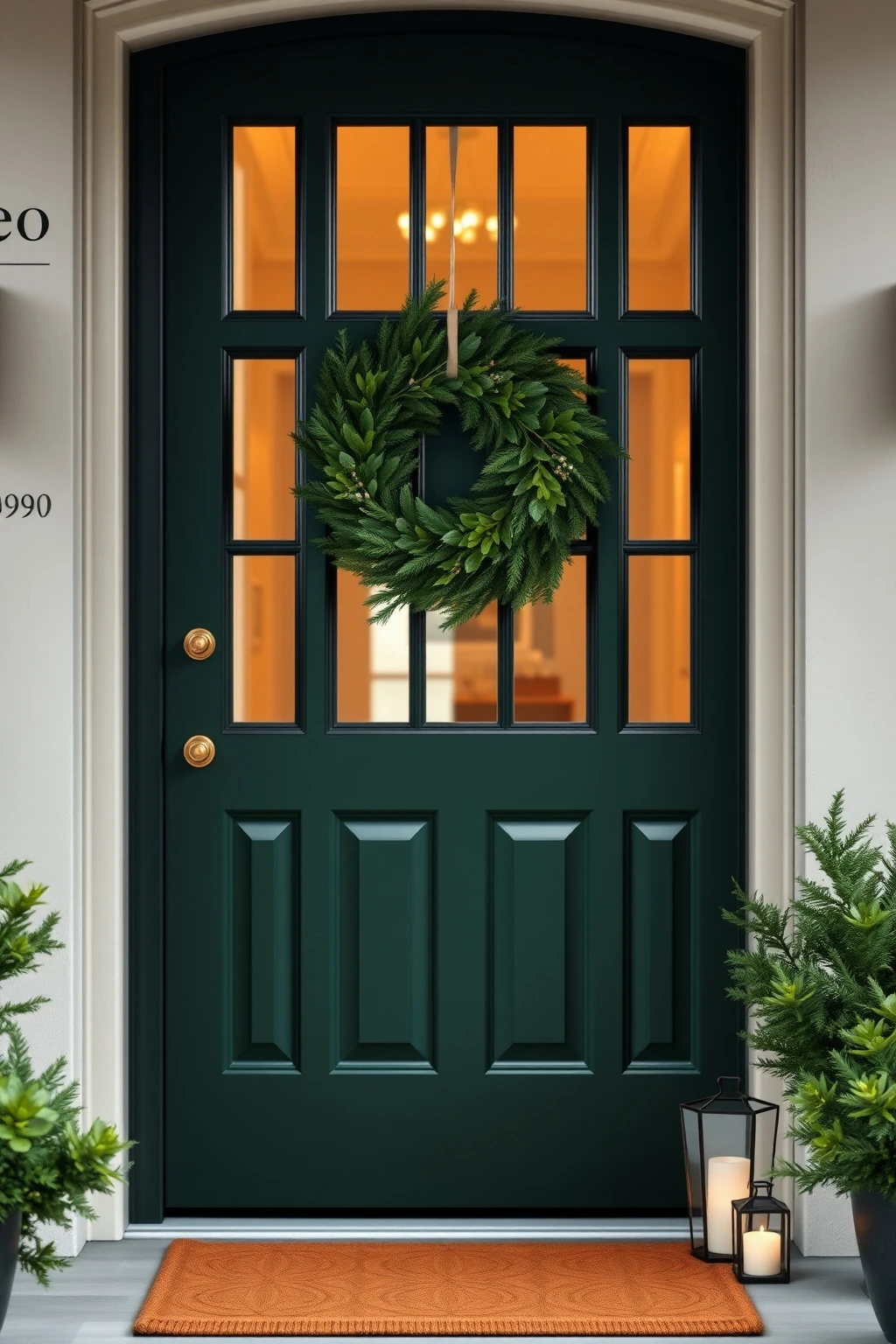
Glass-paneled doors can steal attention in winter because people focus on reflections instead of the wreath. You need to place greenery so it shows up from both outside and inside sightlines. Think of it like styling a window: position the focal elements at the line of sight.
Hang a smaller wreath centered, then add a thin garland strip on the outside of the door frame at eye level. Keep greenery pieces about 10, 12 inches apart so they don’t smear against the glass. If privacy is a concern, use denser fir in the center and lighter eucalyptus toward the edges to let light filter through.
Let evergreen spills tell the truth: trim for 4, 6 inch ‘tails’
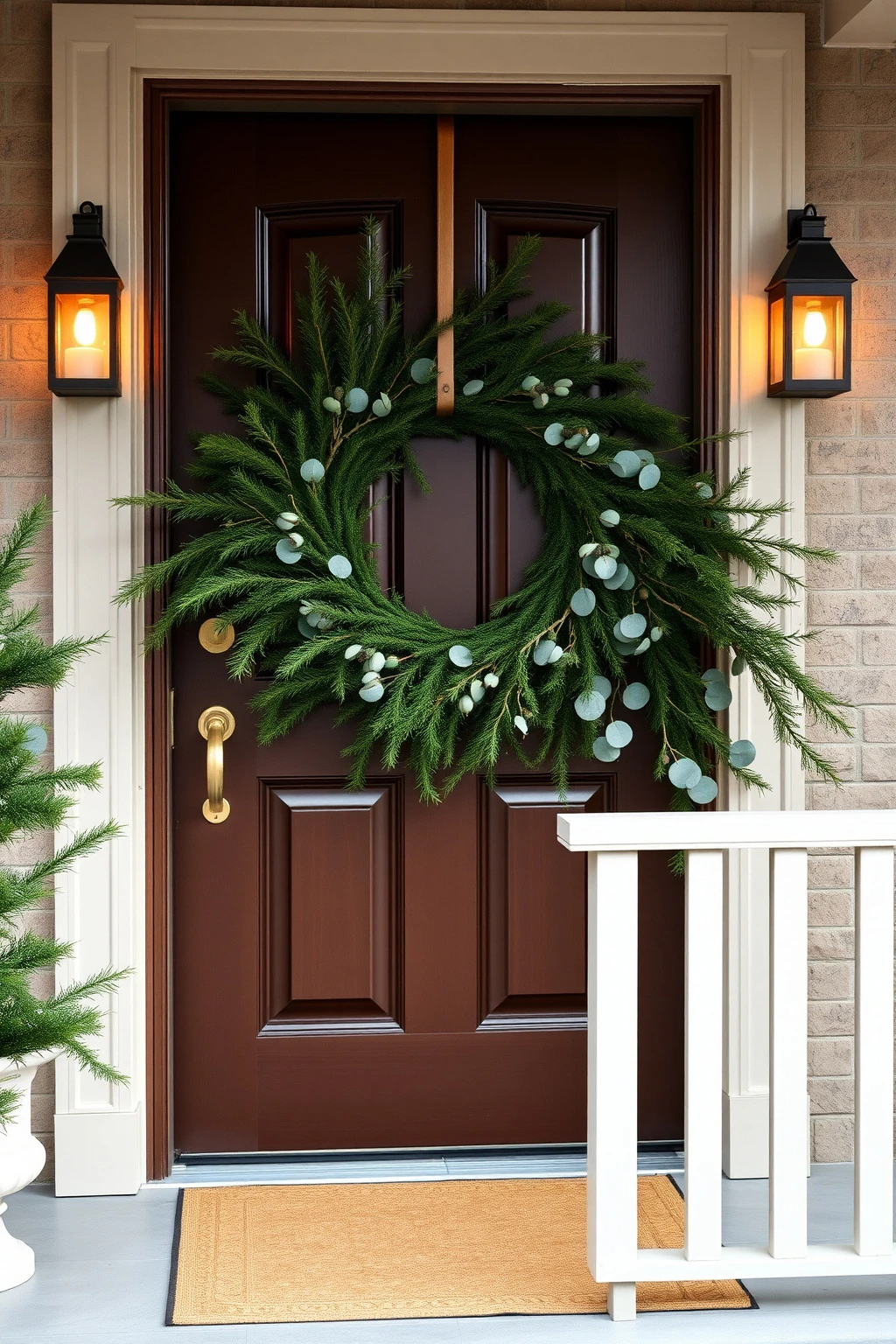
Fresh greenery looks most luxurious when you see natural movement, not perfect straight lines. The common mistake is cutting everything the same length, which makes it look manufactured. Controlled mess is the goal, and it shows up in the length of the tails.
After you attach greenery, trim only after you step back and check from the sidewalk. Keep visible tails at 4, 6 inches where the garland meets the vertical edge, especially near the door handle side. Fan out the tips slightly by hand so the ends show different directions, which reads more organic in photos.
Create a ‘welcome lane’ with a small garland runner on the steps
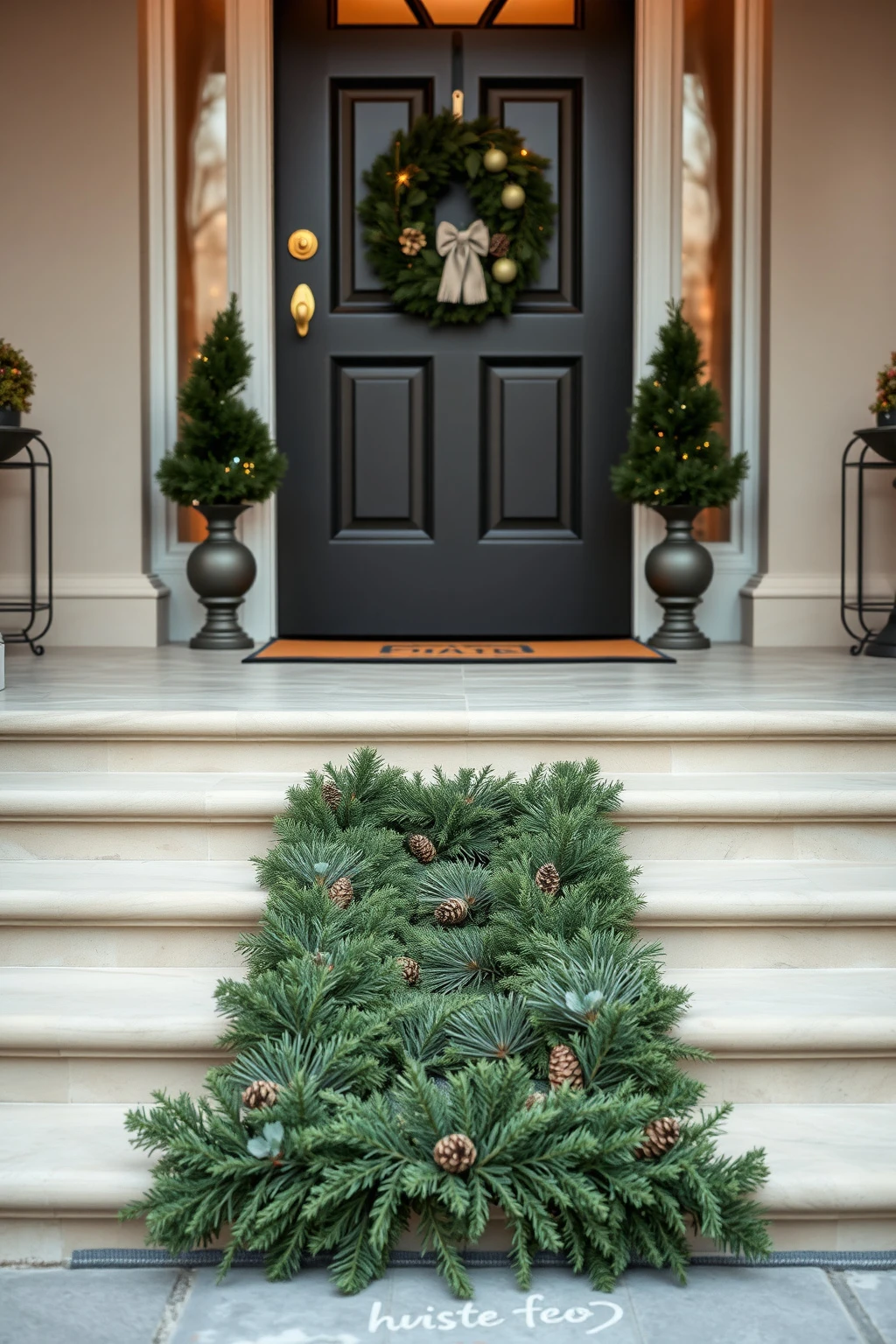
On houses with steps, your decor can disappear at ankle level, which is where visitors actually walk. A small runner garland guides people toward the door without needing more volume on the frame. This is one of those design details that feels high-end because it respects traffic flow.
Lay a slim garland across the first step or landing, anchored with discreet floral wire into the railing or step edge. Keep the runner length about 24, 36 inches, centered on the path to the door. Add just one repeating element, like two pinecones at either end, so it doesn’t look like random greenery clippings.
Add texture with seeded eucalyptus heads (instead of ornaments)
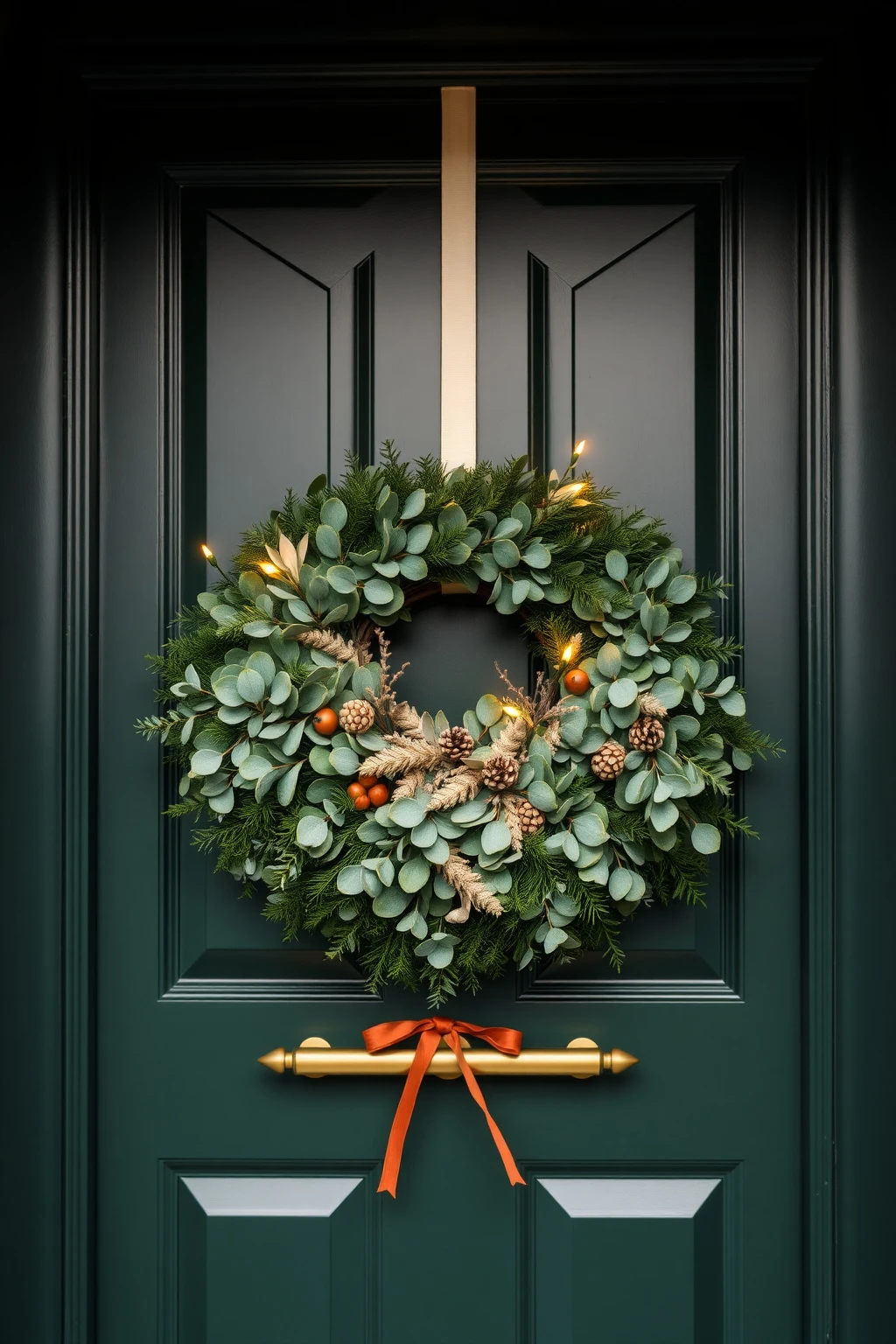
If you’re decorating on a budget or you want a more organic look, seeded eucalyptus gives you visual interest without traditional ornaments. It also fills space in a way that looks intentional, especially on wreath edges where you’d otherwise add small decorations. Plus, it photographs beautifully because of the fine, peppery texture.
Tuck seeded eucalyptus heads into the wreath perimeter every 6 inches, alternating with plain eucalyptus leaves. Keep the heads near the outer third of the wreath so they show when someone stands across the street. For a punch of color, use one tiny accent: a single cranberry pick per side or a small terracotta ribbon knot.
For wide doors, use two smaller wreaths instead of one giant
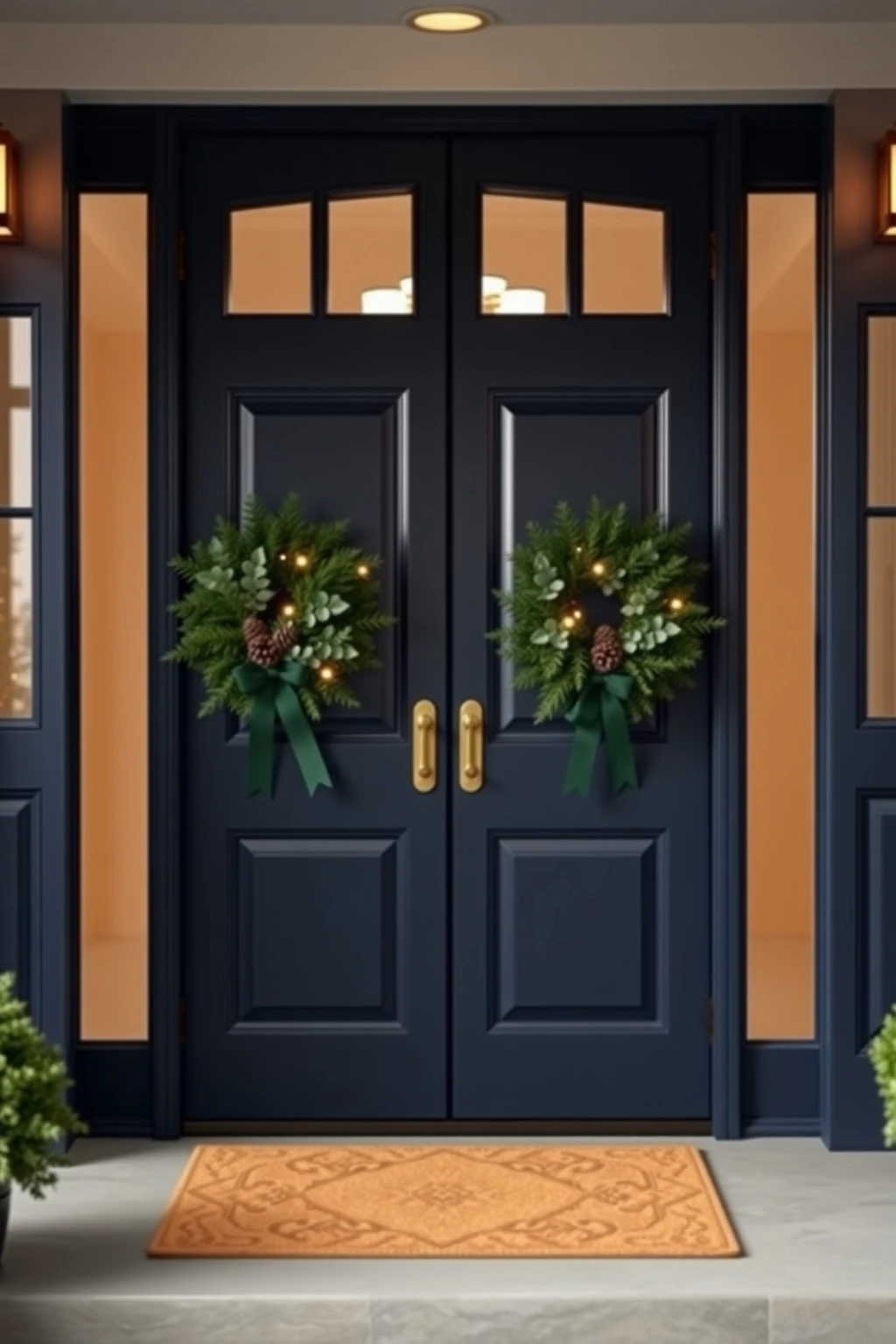
One huge wreath can look disproportionate on wide doors, especially if the door has divided panels or sidelights. Two smaller wreaths create a balanced symmetry and keep the look from feeling overwhelming. It’s also easier to adjust if your mounting points are limited.
Choose two wreaths about 14, 18 inches in diameter and place them on either side of a tall panel or at equal distances from the door center. Keep the gap between wreath edges around 6, 10 inches so it still reads cohesive. Use the same ribbon color on both wreaths, then add a single shared element, like a long pinecone pick, that visually connects them.
Make it last: refresh greenery with misting and bay leaf perks
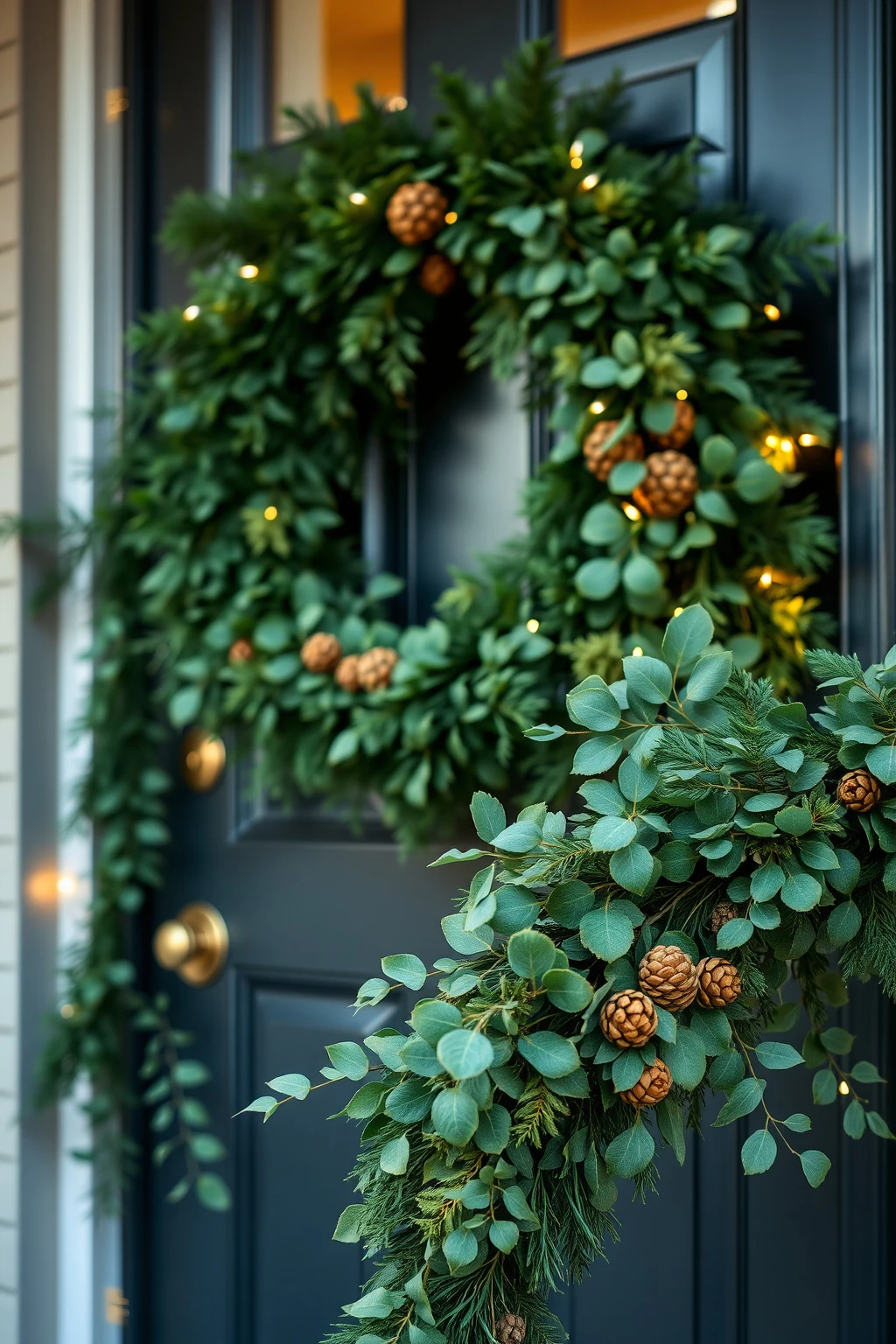
Fresh greenery can dry out faster if it’s exposed to wind and direct heat from an entry light. That doesn’t mean you have to settle for sad-looking decorations. A small care routine can keep greens looking supple longer and helps you avoid that brittle, crunchy stage.
Mist your greenery lightly with water in the morning, then again after windy days. If you want a subtle aroma boost, tuck a few bay leaves into the wreath interior where they won’t crumble everywhere. Avoid spraying heavily at night, since moisture can freeze and discolor leaves. Replace only the worst-dried picks, keeping the rest of your structure intact.
Conclusion
Fresh greenery decorations win when you treat the door like a focal point with a plan: one strong green base, a repeated accent, and placement that respects sightlines and foot traffic. Once you nail those basics, the rest is just your personal style showing through.
If you remember one thing, make it this: build texture first, then add color like punctuation. Your front door will look polished, cozy, and unmistakably seasonal without turning into an overload of holiday clutter.

Mush Decor
Writes about accessible, timeless interior styling for readers worldwide.
More about Mush DecorRelated articles
 Christmas Ideas
23 Classy Outdoor Christmas Lights (No Inflatables)
From warm-wreath porch lighting to architectural uplights, here are 23 classy outdoor Christmas light ideas that skip inflatables and stay elegant.
Read More Christmas Ideas
23 Whimsical Christmas Decor Ideas for the Whole House
Get playful Christmas styling across your whole home: whimsical wreaths, garlands, table ideas, mantel details, and lighting tips.
Read More Christmas Ideas
24 Victorian Vintage Christmas Decorating Ideas
Get Victorian vintage Christmas style with practical tips: velvet trees, gingerbread trays, mercury glass, garlands, and more.
Read More