
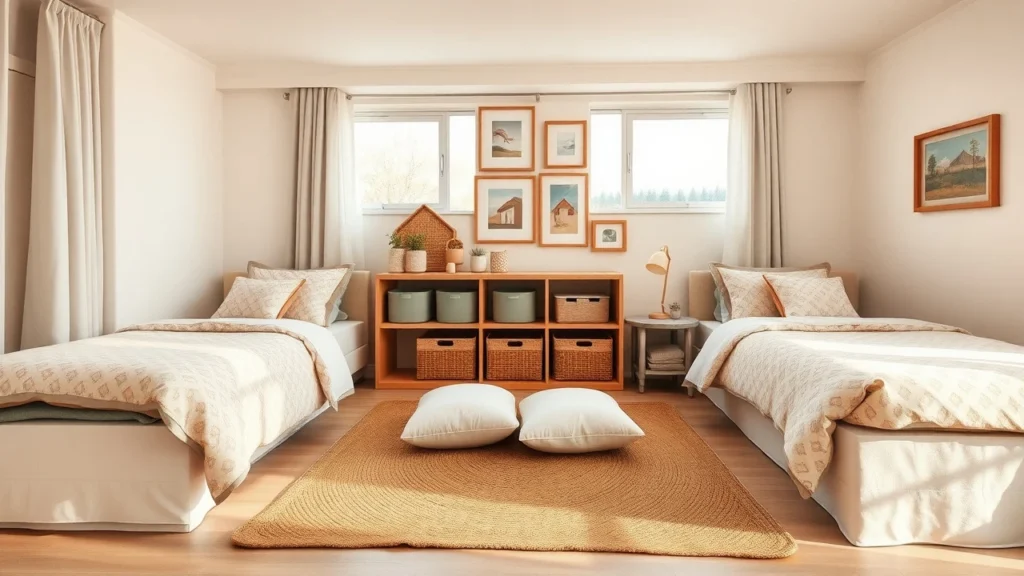
The laundry hamper is overflowing again, and somehow every shared bedroom still looks a little chaotic by 7 p.m. If you have two kids in one room, you already know the real challenge is not just storage, it is creating order without making the space feel like a staging area.
What you want is that lived-in, cozy feeling that still works on weekdays. In this guide, you will find shared kids bedroom ideas that focus on comfort, traffic flow, and smart design moves you can actually do, even in a smaller room.
From dividing the room without adding walls to choosing bedding that can take daily wear and tear, these tips are built around what families run into: growing bodies, changing interests, and the need for a bedroom that can handle both play and rest.
Divide the space with a “soft boundary” rug zone
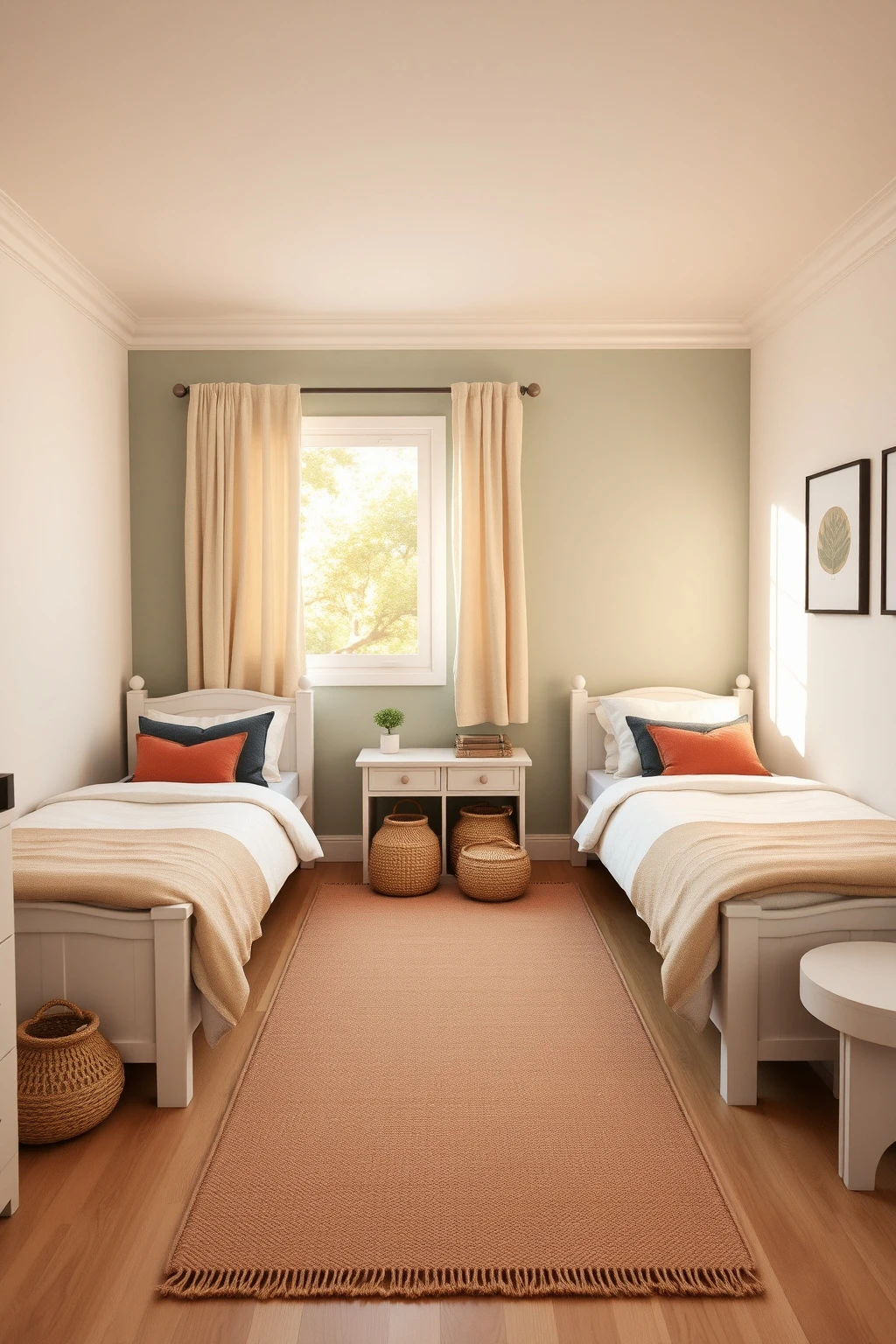
If your shared room feels like one big pile of stuff, start by thinking about boundaries. A single rug can make two sleeping areas feel separate even when you cannot move walls, and it helps kids learn where “home base” is for reading, building, or winding down.
Lay down a rug large enough that each child has at least the front legs of their bed on the rug edge. If space is tight, use two smaller rugs with a tiny overlap in the hallway path, and keep them in the same color family so the room still feels cohesive. Vacuum-dry and spot-clean friendly materials like wool-blend or low-pile flatweave are worth it when juice boxes and marker mishaps happen.
Use staggered headboards to keep circulation clear
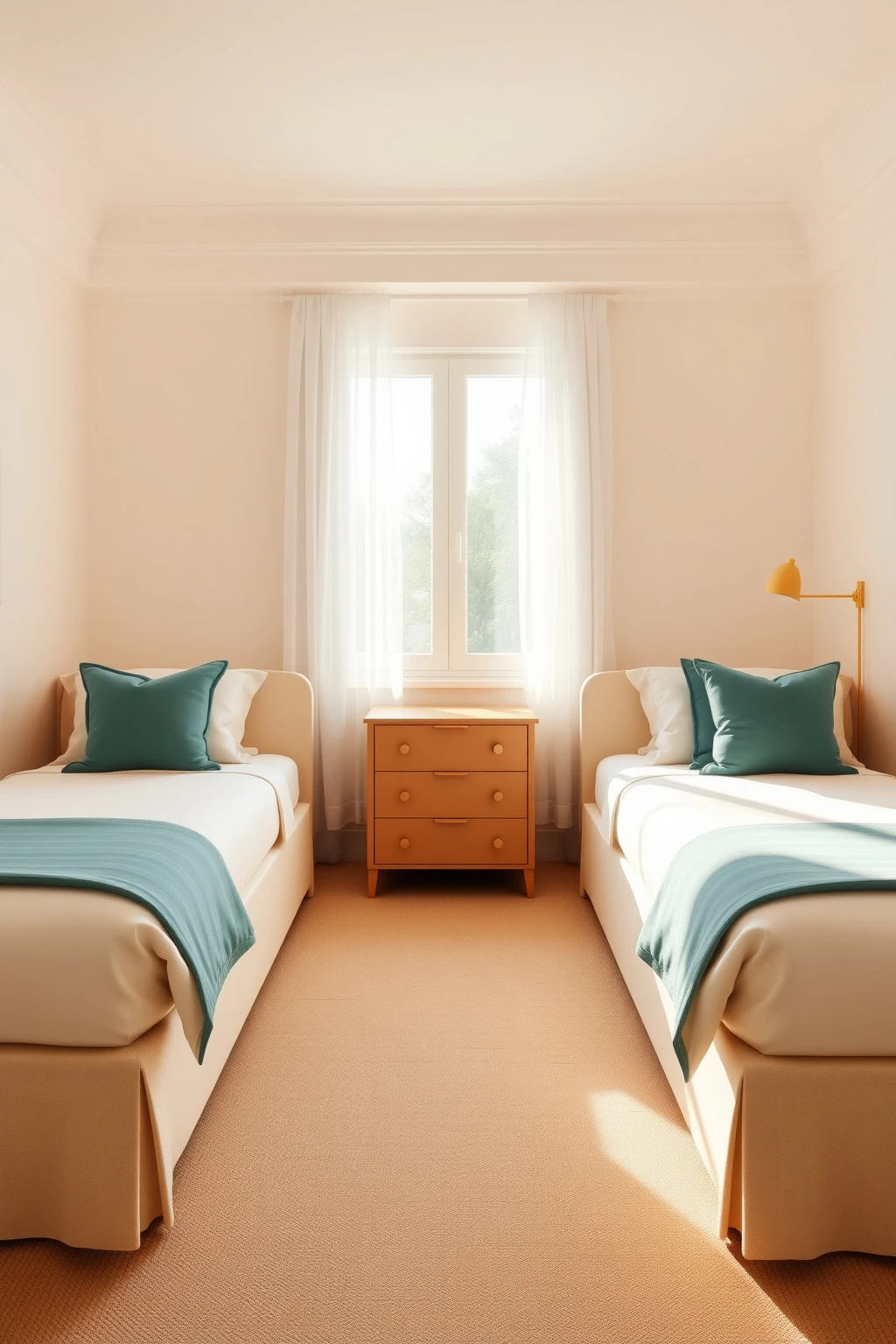
In many shared rooms, the beds block the path, so you get the constant feeling that everyone is stepping over someone else’s life. Staggering bed fronts and using wall-side headboards creates a visual rhythm and improves circulation without needing new furniture.
Try placing one bed with its headboard flush to the long wall and the other slightly offset by 8 to 14 inches, leaving a clear lane between the beds. Keep nightstands shallow, ideally 10 to 14 inches deep, so opening drawers does not collide. If the room is narrow, choose beds with open bases or low-profile storage options so the floor feels lighter.
Anchor everything with a calm palette, then split accents
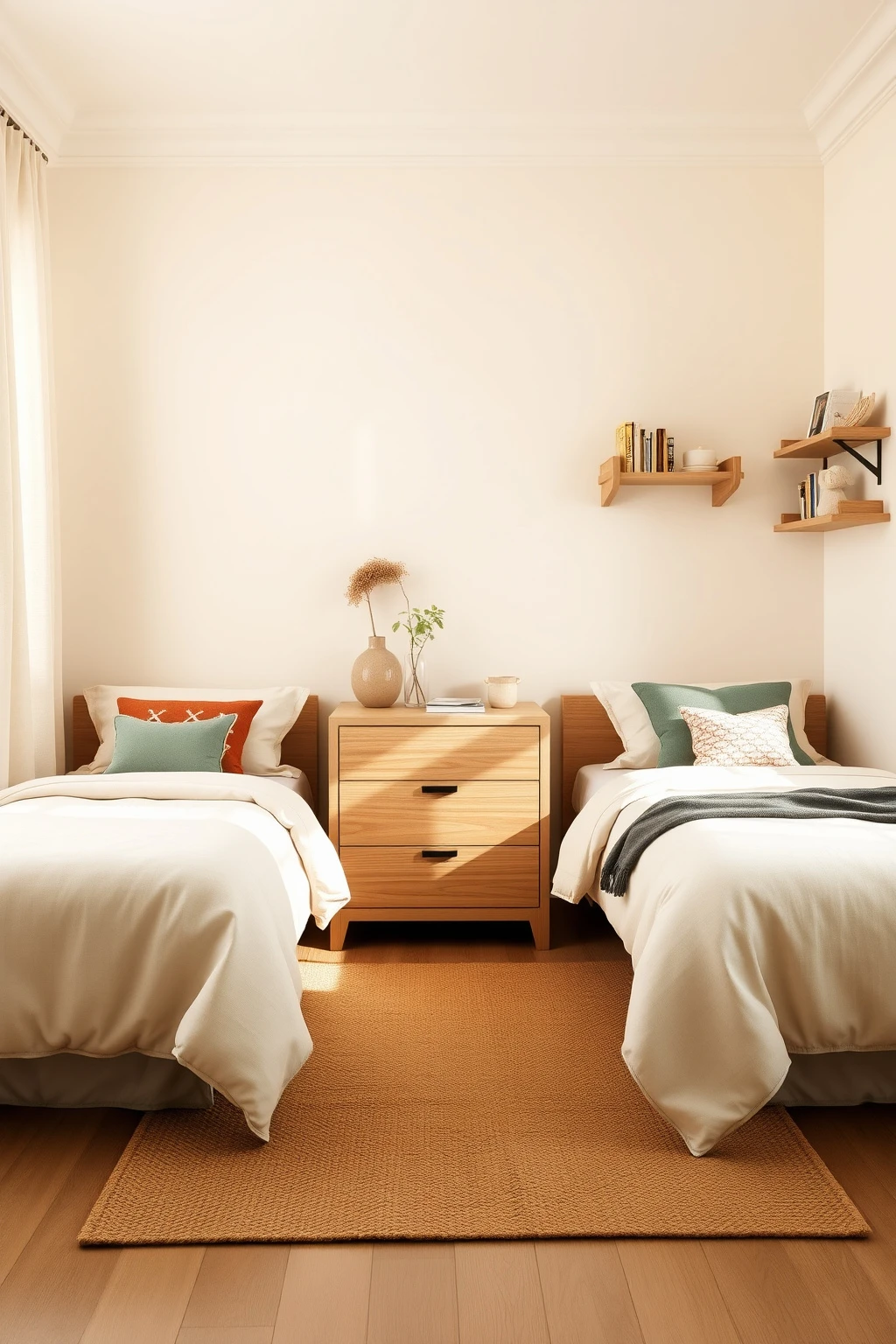
One of the easiest ways to stop shared bedrooms from looking cluttered is to reduce the number of “competing” colors. A calm base color gives you a peaceful backdrop, and then you can let each kid express personality through accents rather than full-on theme chaos.
Pick one main wall color like warm ivory or a soft greige, then choose two accent colors, one per kid, such as terracotta for one and sage for the other. Use those accent colors only in smaller elements: pillow covers, a bedside lamp shade, or a framed print. Keep shared pieces consistent, like the duvet fabric style and the curtains, so the room reads as intentional instead of random.
Swap nightstands for floating shelves when floor space is precious
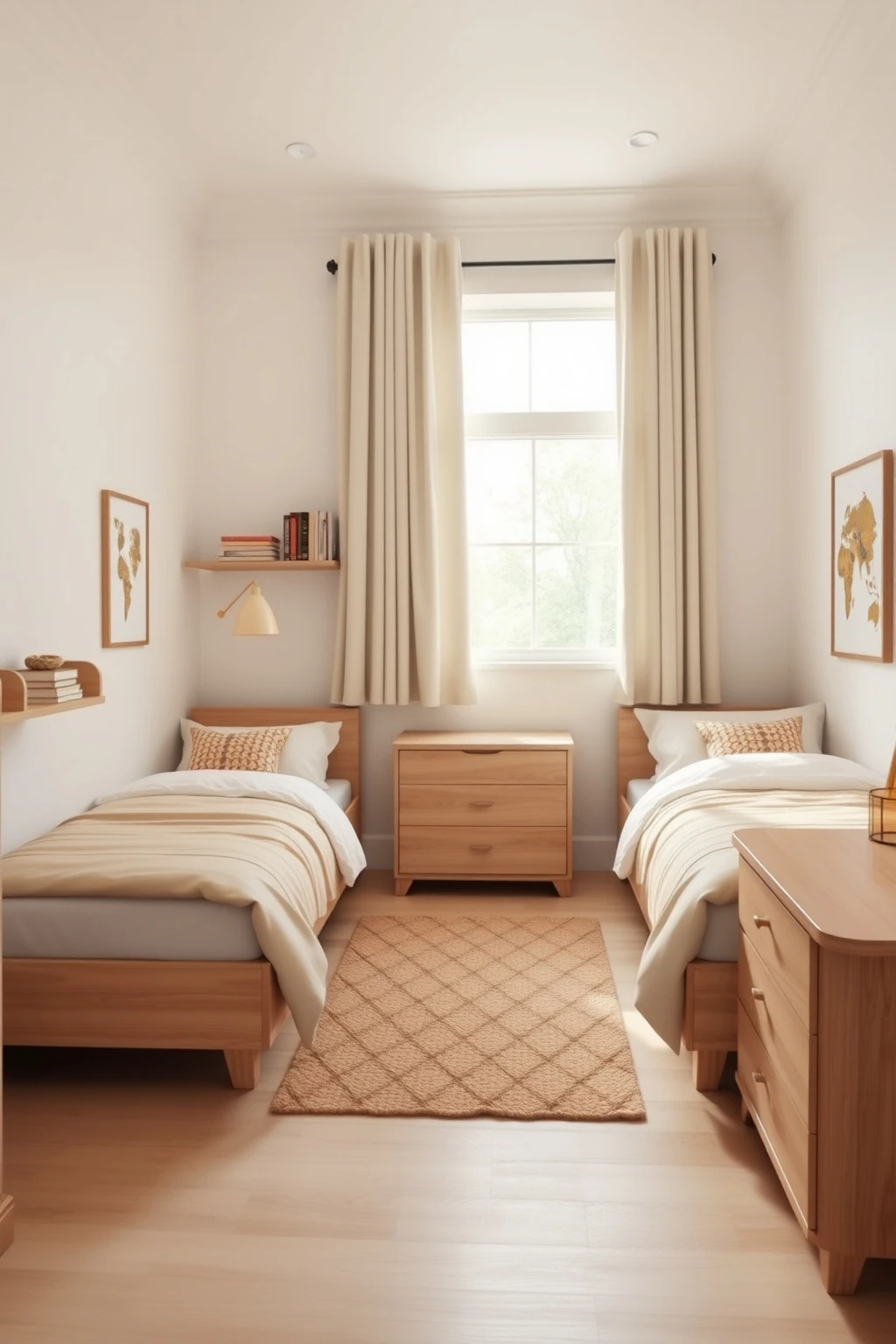
If you are working with a smaller room, bulky nightstands steal the very floor you need for play. Floating shelves keep essentials at arm’s reach without chewing up clearance, and they also reduce the visual clutter that comes from too many surfaces.
Install shelves 38 to 42 inches from the floor, so kids can access books and a small lamp safely. Set each shelf with a clear “kid kit” basket for everyday items, like headphones or a nighttime story stack. Choose a material that matches the room, such as powder-coated matte white brackets or light oak shelves, and use one consistent shelf depth for both kids.
Build “read and reset” storage inside a window-seat bench
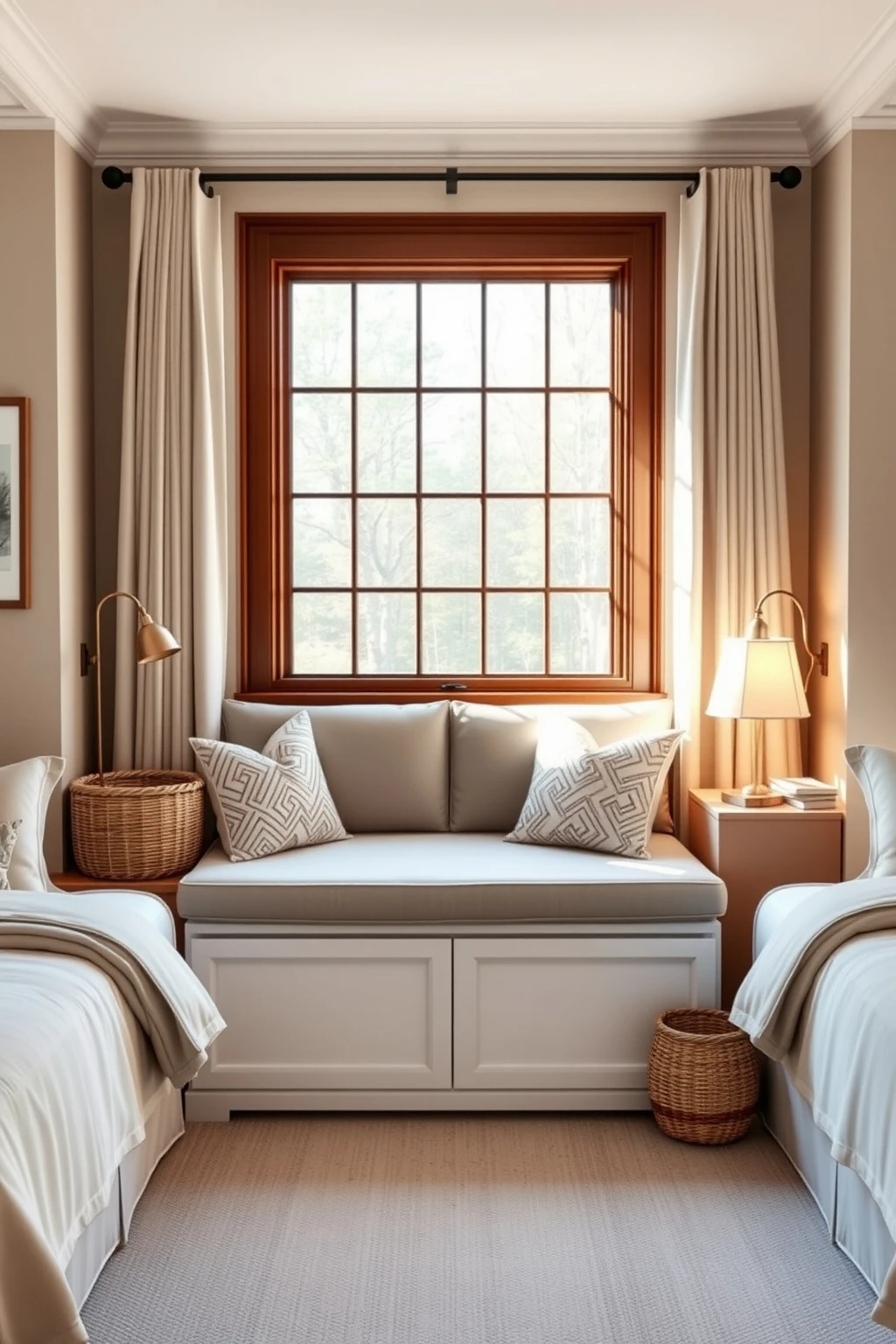
Books and toys do not disappear by good intentions, and shared rooms need storage that feels like part of the furniture. A bench seat with lift-up storage supports both the cozy vibe and the daily reset, because kids can tuck items away without opening a complicated system.
Look for a bench with internal volume sized around 2 to 4 toy bins or rotating activity sets. Place the bench under a window if you can, then add a washable cushion in a durable weave like cotton canvas. Keep the front edge 16 to 18 inches from the nearest bed corner to avoid traffic jams when kids stand up to grab a book.
Create two “bed identities” with mirrored styling rules
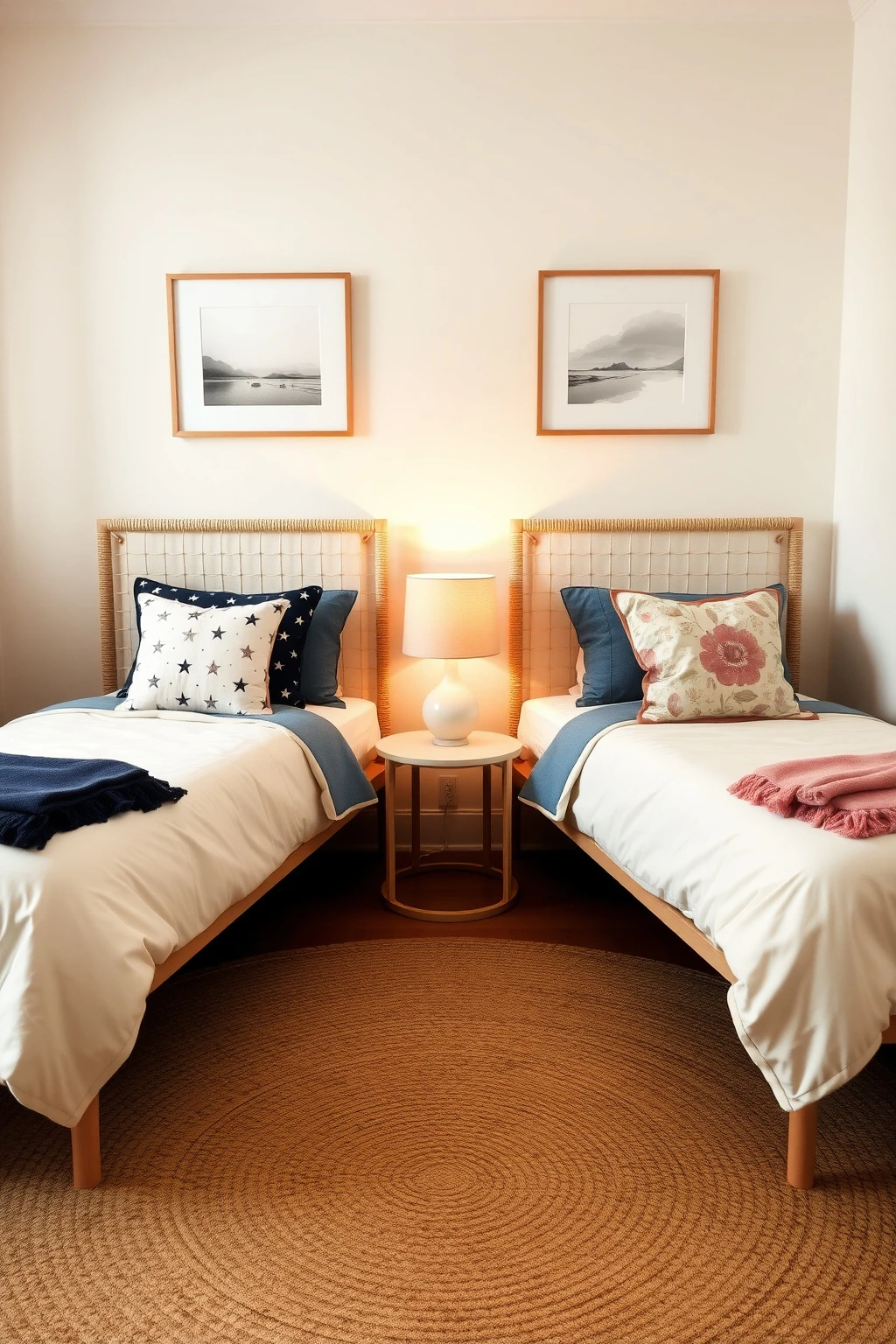
When both kids like different things, the room can feel like a negotiation, and the compromise often shows as messy mismatch. A smart trick is to keep the overall structure the same, then mirror styling decisions so each bed feels distinct without turning the room into a collage.
For both beds, use the same duvet fabric type and size, then mirror layout choices: same number of throw pillows, same pillow height, and a similar blanket fold. Swap only the color stories, such as one kid with a navy and star motif and the other with a blush and floral motif, using the same base neutral. This keeps the room balanced to the eye and also makes bedtime faster because the setup looks familiar.
Hang art at child height using a 57-inch guideline
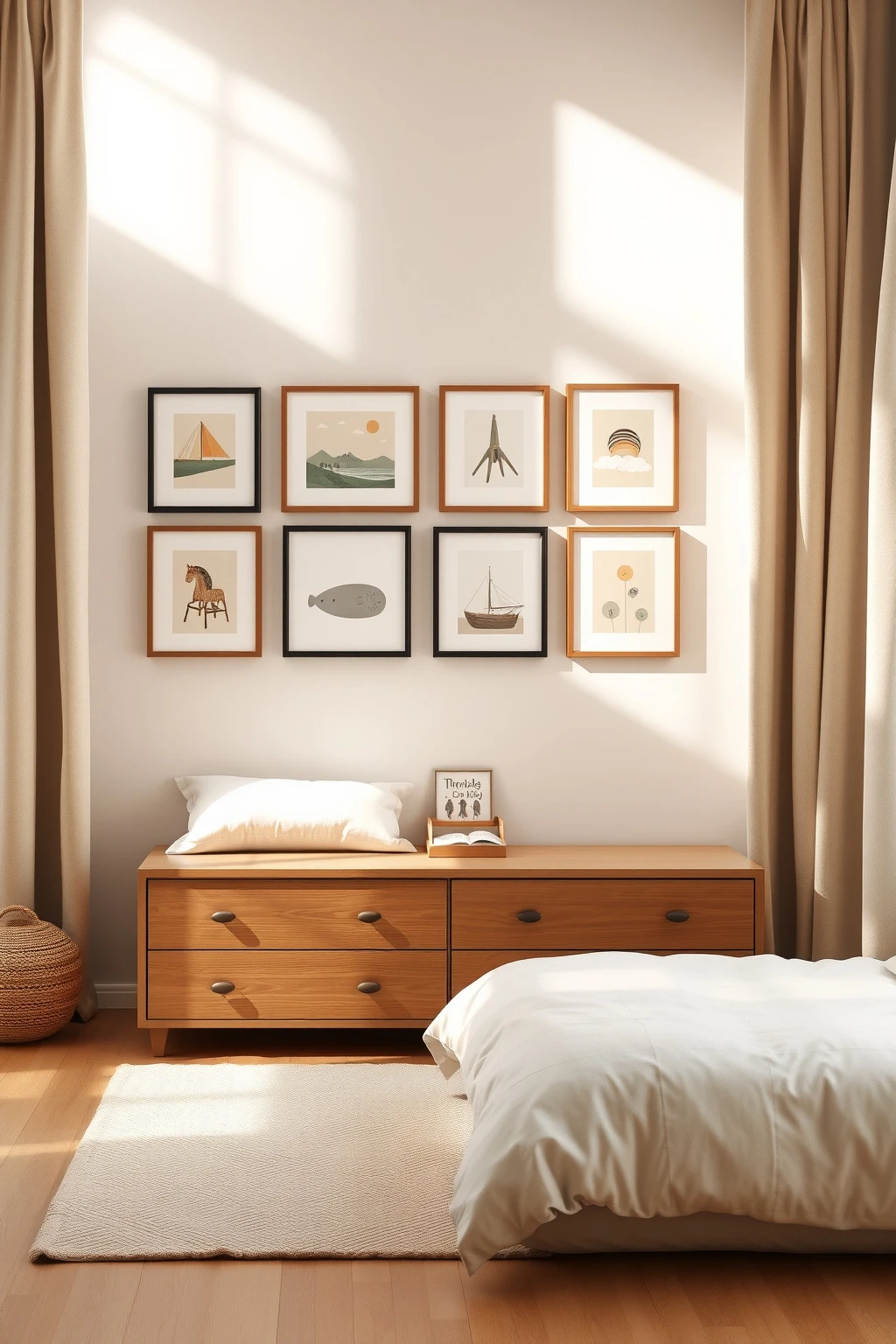
Art can make shared rooms feel like home, but putting it too high turns it into decoration instead of something kids can enjoy. If you want the walls to support cozy daily life, use child-friendly placement so they actually look at what you hang.
Use a simple guideline: the center of each frame should sit around 57 inches from the floor for kids to view comfortably. If you are mixing frame sizes, keep the top edges within 8 inches of each other so the gallery looks intentional. For safety, use picture ledges or sturdy wall anchors and keep heavier frames low enough that a “reach and tap” does not become a disaster.
Choose washable bedding and design for “marker-proof” spots
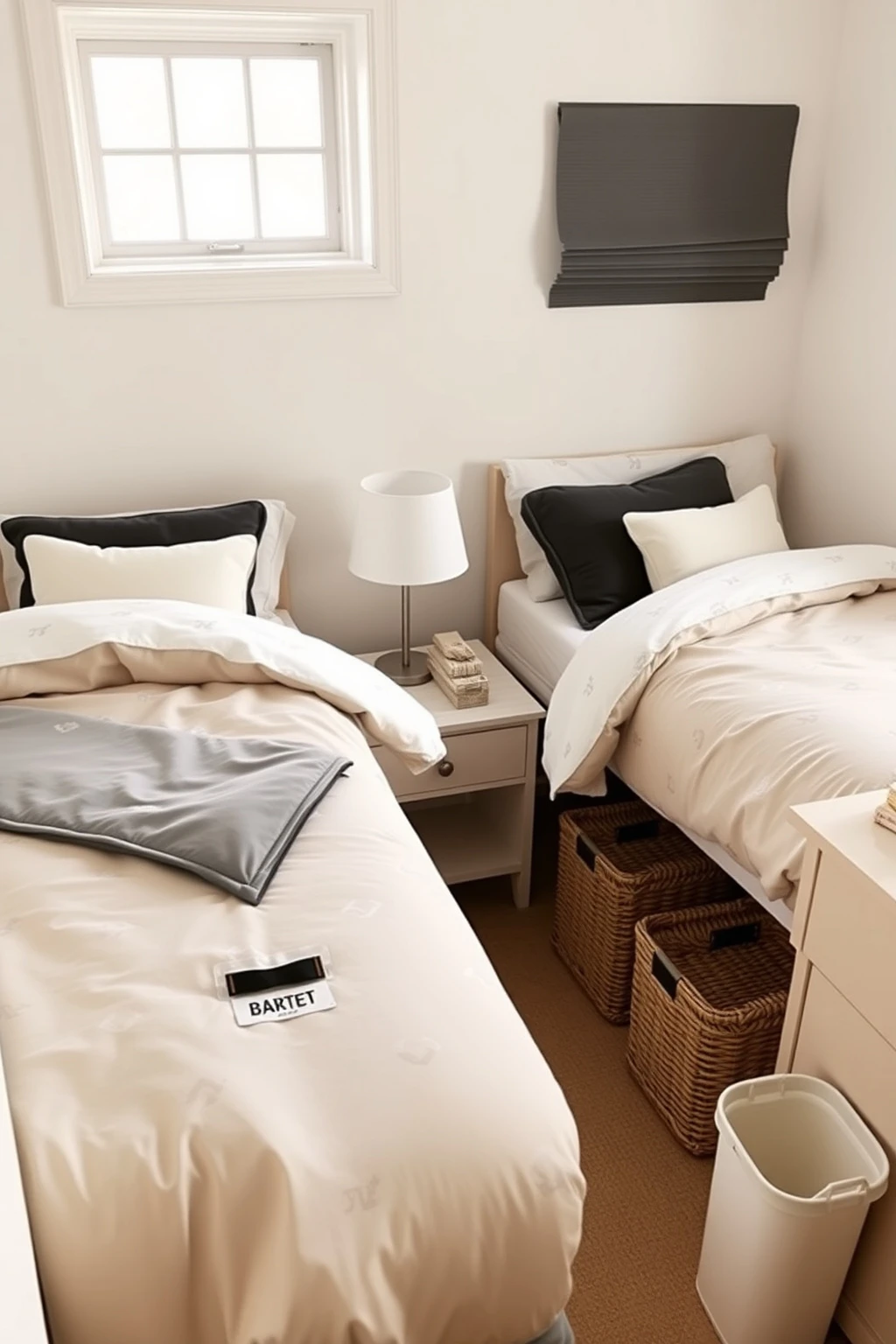
Cozy is not fragile, and kids’ bedrooms should survive real life. Instead of obsessing over matching perfection, choose bedding that you can actually wash often, and design around the most common mess zones like pillowcases and duvet edges.
Pick cotton sateen or percale in solid colors or tight small patterns, then treat the high-touch spots with removable pillow covers. Keep a backup set in a labeled zip tote under the bed, so a sudden spill does not turn into a full-week delay. For dyes and color, start with warm ivory, dusty blue, or soft charcoal, because they hide stains better than bright white.
Use a two-level toy strategy: bins for now, bins for later
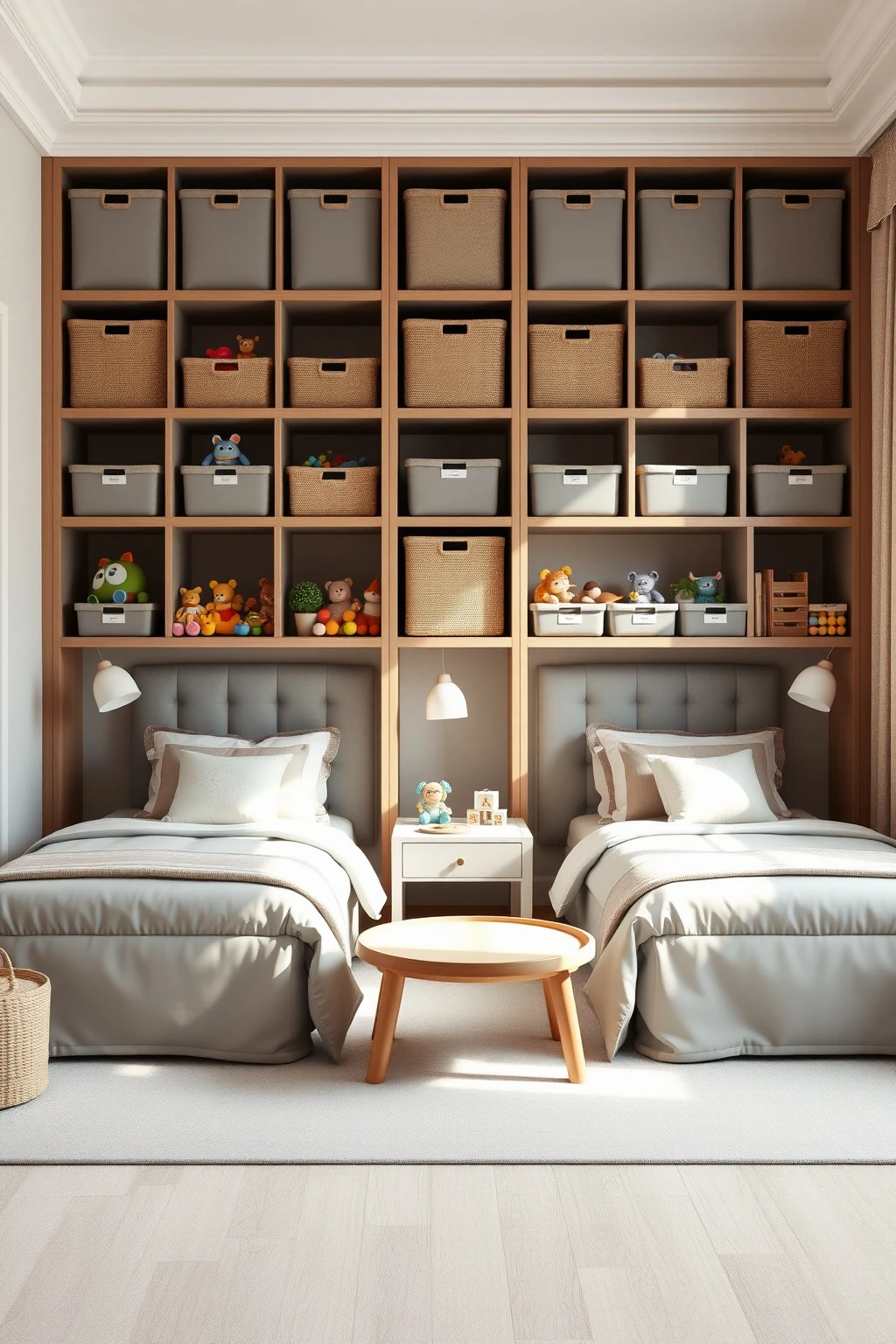
If every toy is always “on display,” shared rooms get busy fast and bedtime feels harder. The cozy solution is a two-level approach: accessible toys for the day, and a smaller set in rotation that feels special instead of constant.
Store the easy-reach bins at kid height, around 12 to 30 inches, using stackable cube organizers in matching colors like light gray and natural fiber. Put the “later” bins on higher shelves or the top of a closet, then rotate weekly or every two weeks. When you style the room, keep only 3 to 5 toys visible at a time in a tray or basket to avoid visual noise.
Add a slim desk “landing pad” instead of fighting for a full-size study
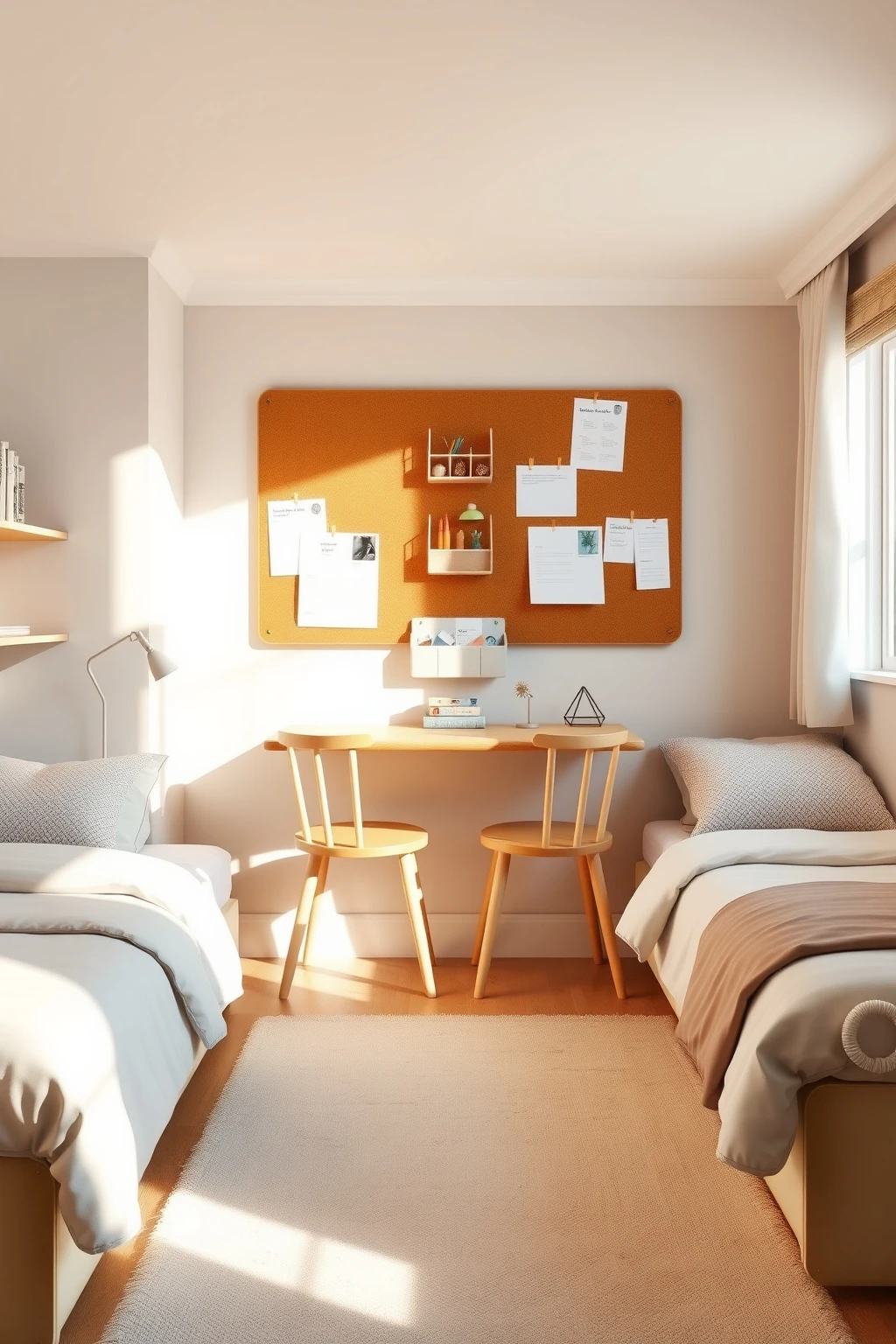
Most shared rooms do not have space for two full desks, and that is okay. A slim desk system with one shared “landing pad” keeps homework organized without turning the room into a tiny office disaster.
Choose a wall-mounted or narrow desk 30 to 36 inches deep, then place one rolling chair for each child and use hooks or a vertical organizer for supplies. Put a shared desk lamp and a small calendar tray at the center, then assign each kid a clear color-coded folder. For a cozy touch, add a warm oak bulletin board behind the desk so new projects feel contained and not scattered.
Go for matching lamps, different shades to reduce bedtime conflict

Bedtime arguments often start with tiny issues, like who gets the brighter light. A smart design move is to keep the lamp layout identical but change the shades or bulb temperatures so each kid’s needs feel considered.
Install the same style of plug-in or corded lamp for both beds, then choose shades in different colors, like one parchment linen and one soft slate fabric. If you want a cozy glow, use warm bulbs around 2700K to keep the room calm instead of harsh. To prevent wriggling chaos, run cords behind baseboards or use cord covers painted to match the wall.
Try bunk beds only if you add a privacy and safety plan
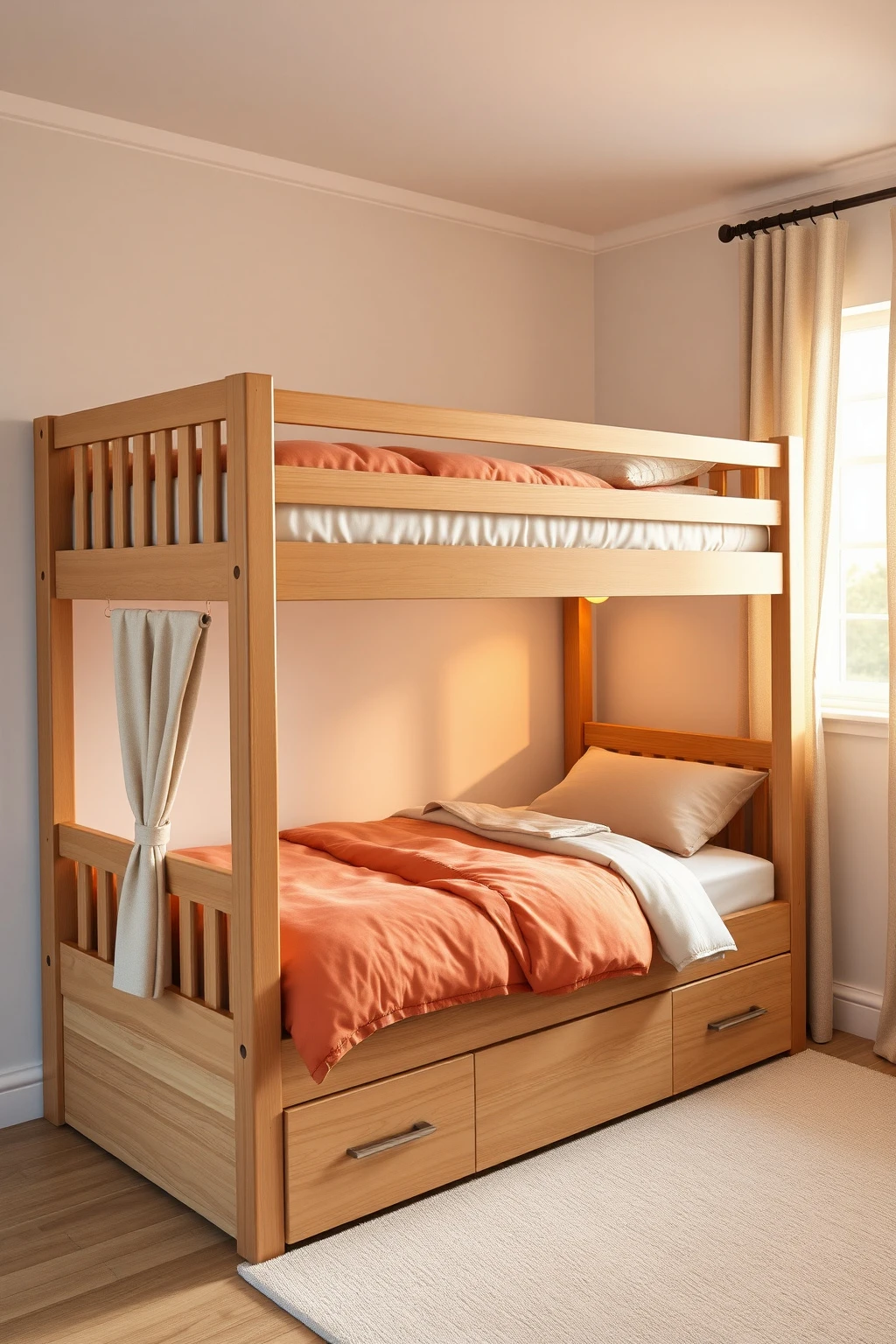
Bunk beds can be a beautiful use of vertical space, but they can also feel cramped if you skip the “comfort layer.” The win with bunking is more floor for play and a clearer storage footprint, as long as the design supports rest.
If you use bunks, add soft ceiling-to-bed curtains or a simple fabric divider at one side to create a little personal space. Use guardrails that fully cover the mattress area and choose a ladder placement that does not block a doorway path. For coziness, line the top bunk with a warmer-toned duvet and add a night light near the lower bed so kids can move safely without turning on the harsh overhead light.
Use a mirror carefully: place it to bounce window light, not reflect clutter
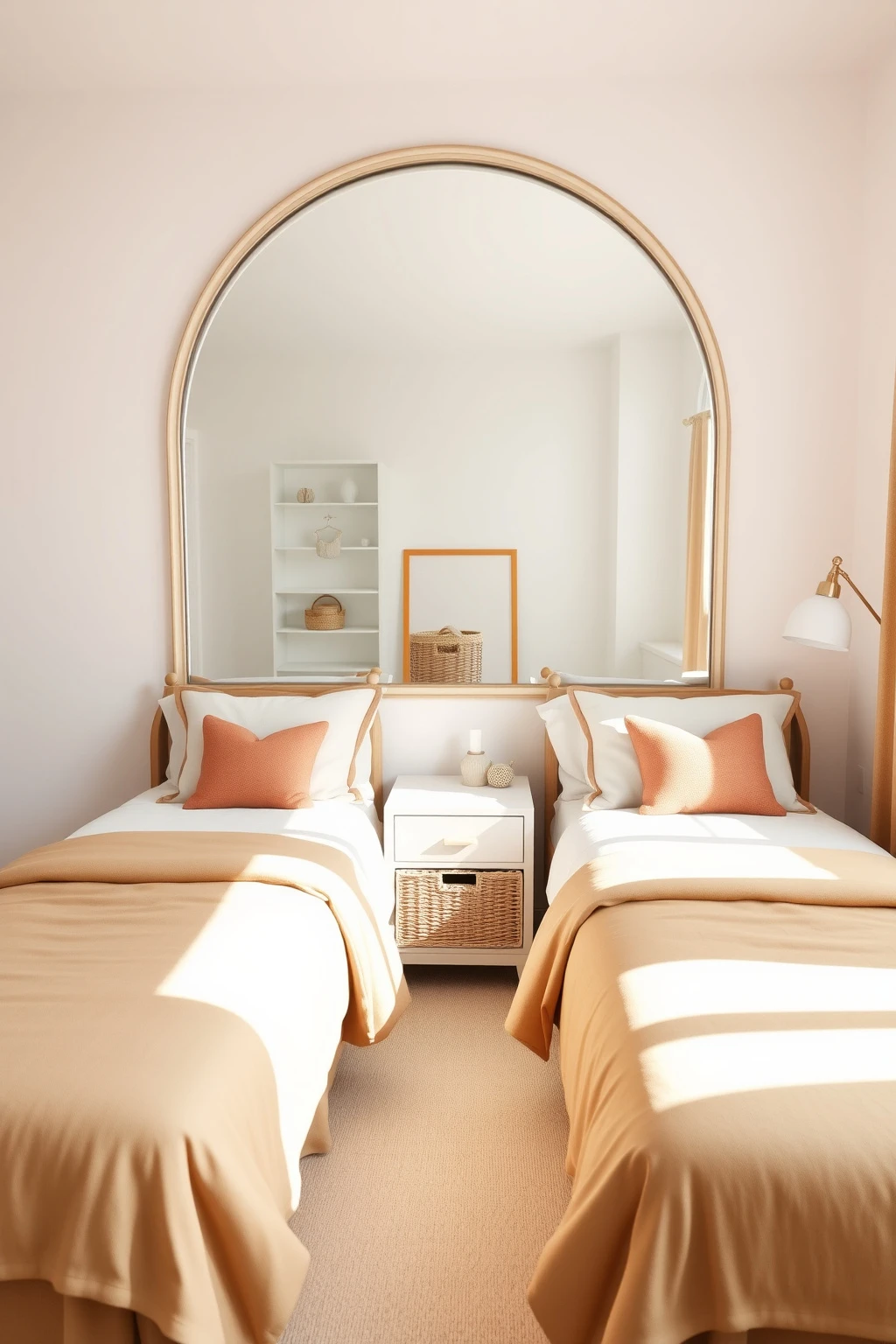
Mirrors can make shared rooms brighter, but they can also amplify mess, which is the last thing you need after school. The goal is to bounce natural light into darker corners, so the room feels cozy and calm instead of busy.
Place a full-length or large wall mirror 6 to 10 feet opposite a window, where it will catch daylight and reflect open space, not toy piles. If you need storage, reflect a closed dresser with baskets rather than a messy shelf. For frames, choose materials that feel kid-friendly and durable, like a thin black metal frame with tempered look glass or a light wood frame that matches other furniture.
Make the closet do double duty with double hanging height
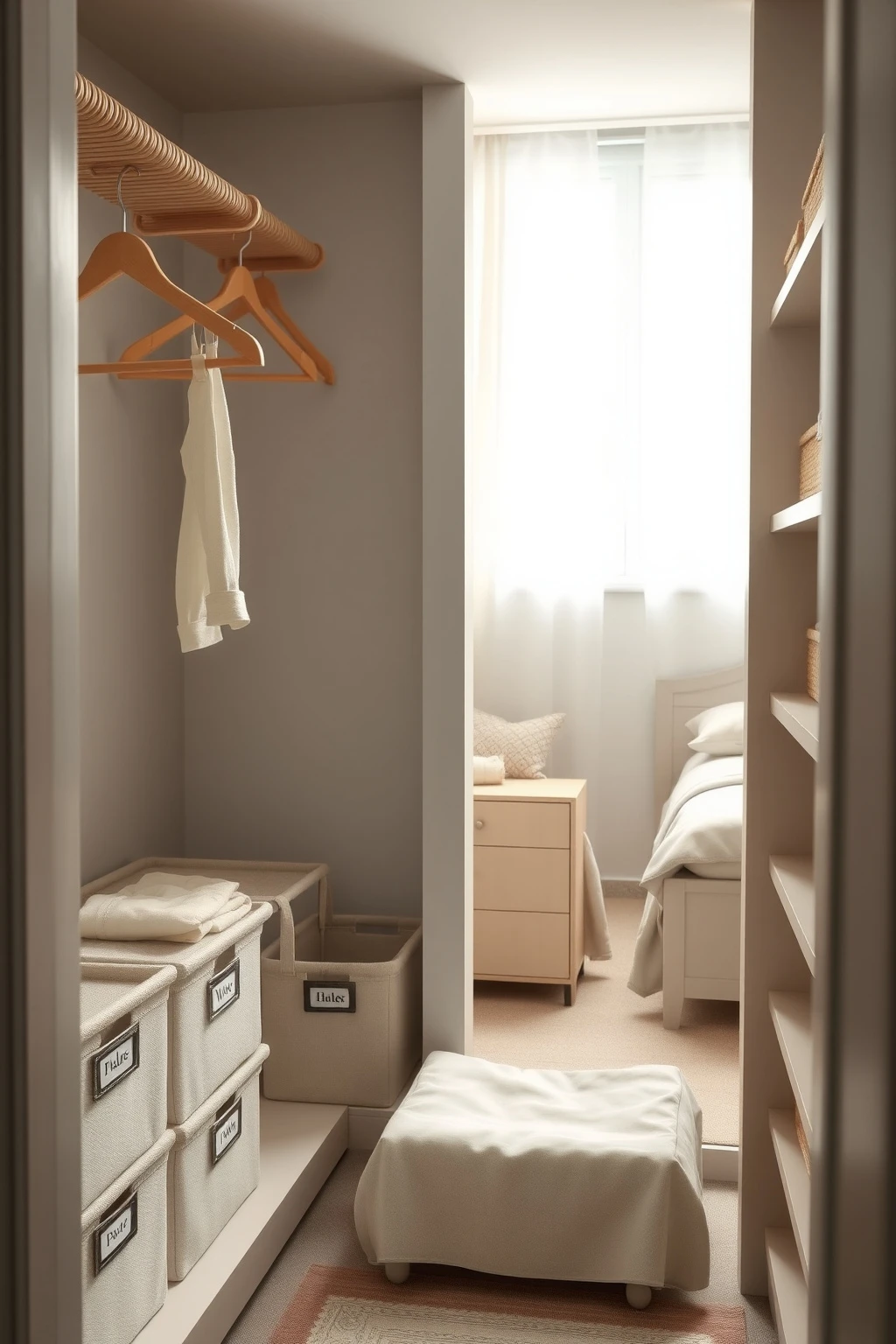
One shared-bedroom closet often becomes a battlefield, because everything ends up on the floor when there is not a clear organization system. You can fix this with a design that works with how kids actually dress: double hanging and labeled shelves.
Install a second hanging rod 24 to 30 inches above the lower rod so shorter kids have access without climbing. Add 2 to 3 shelf sections for folded basics and use clear bins for seasonal items. Labeling matters, but keep labels small and tucked so they do not look like a storage warehouse. Use hanging dividers so two kids share the space without their clothes mixing.
Create a shared wall for climbing, not chaos: a peg rail plus bins
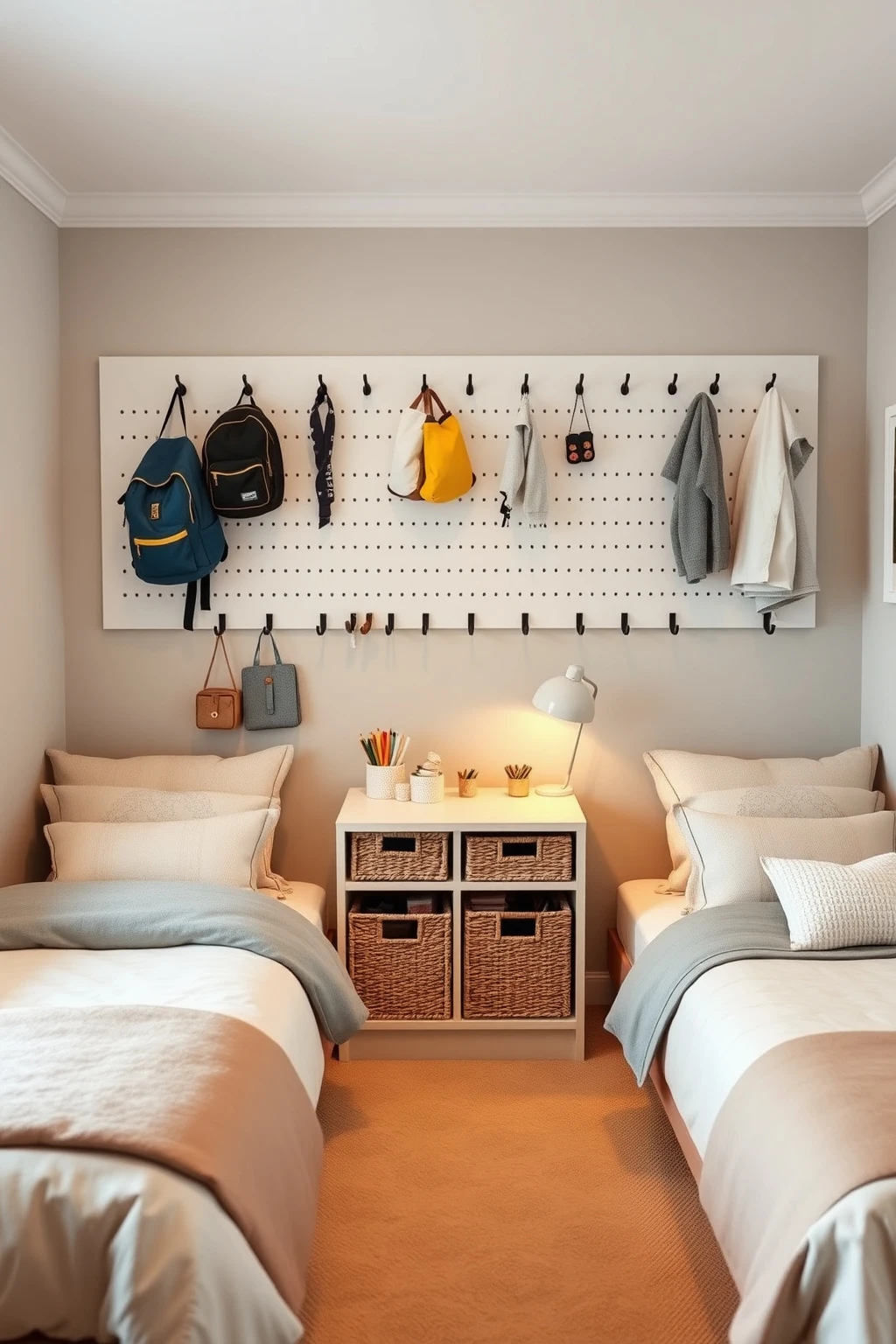
If your kids’ “favorite activities” keep migrating to the walls, give them a purpose-built outlet. A peg rail with hooks for backpacks, plus a basket system for art supplies, keeps the bedroom functional instead of turning into a clutter magnet.
Mount a peg rail at about 48 inches from the floor and add hooks sized for book bags and small jackets. Under the rail, place two low baskets for art tools that can be carried to the craft table. This design reduces the common mistake of cramming everything into one drawer, where the mess gets bigger every day.
Use vertical storage for small rooms: cubes up high, baskets below
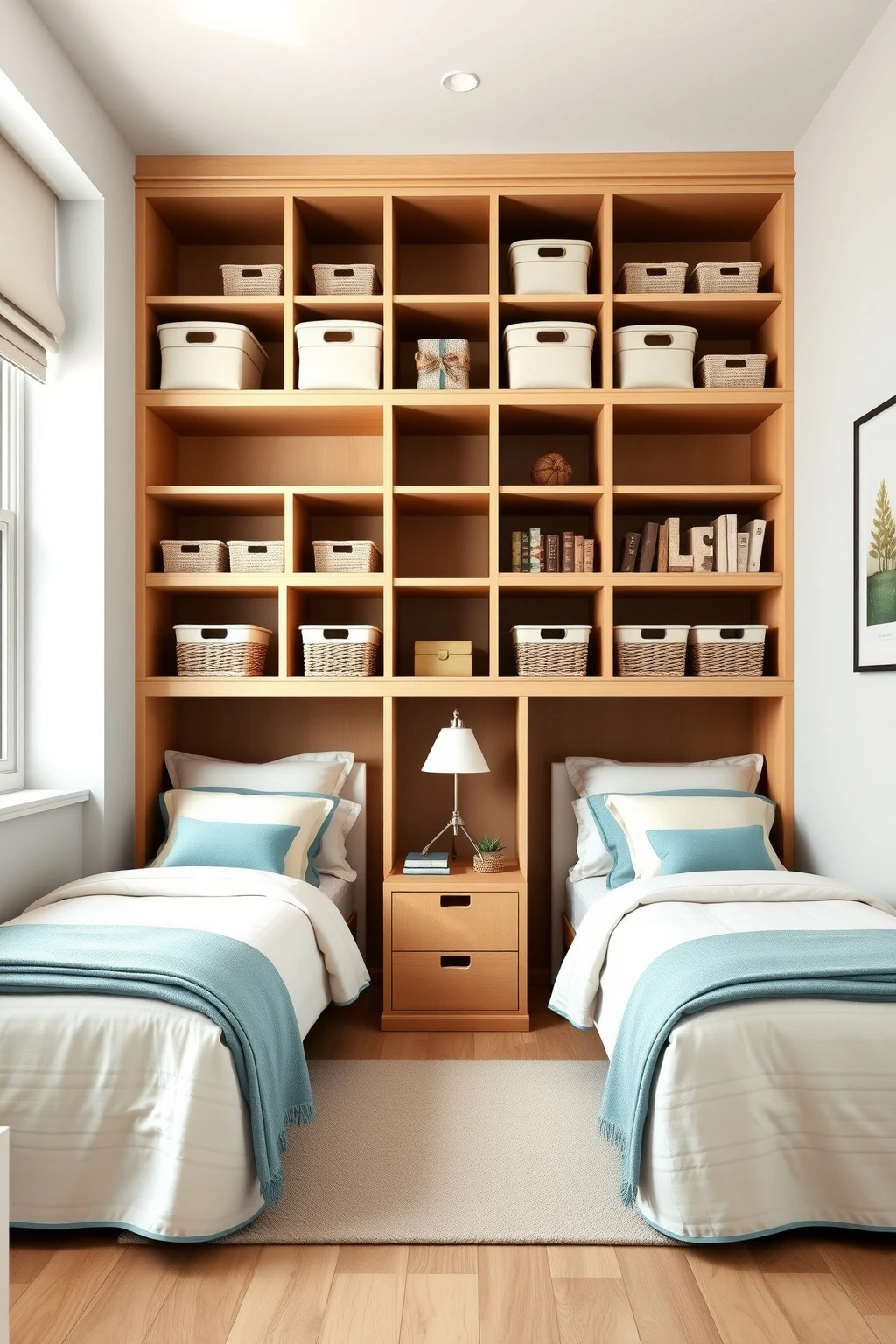
When floor space is limited, horizontal storage becomes a problem because it creates bumps and dead zones. Vertical storage is more forgiving, and it lets you keep the room walkable for play without sacrificing the “everything has a home” feeling.
Style a bookcase or storage tower that is tall enough to reach 70 to 84 inches, with heavier bins on the middle shelves and lighter baskets on top. Keep daily items in lower baskets so kids can access them after school, ideally 12 to 24 inches from the floor. For a cozy, not dorm-like look, choose matching cube sizes and cover the shelves with fabric bins in warm tones like oatmeal, clay, or sage.
Choose a low daybed so the room works as both bedroom and hangout
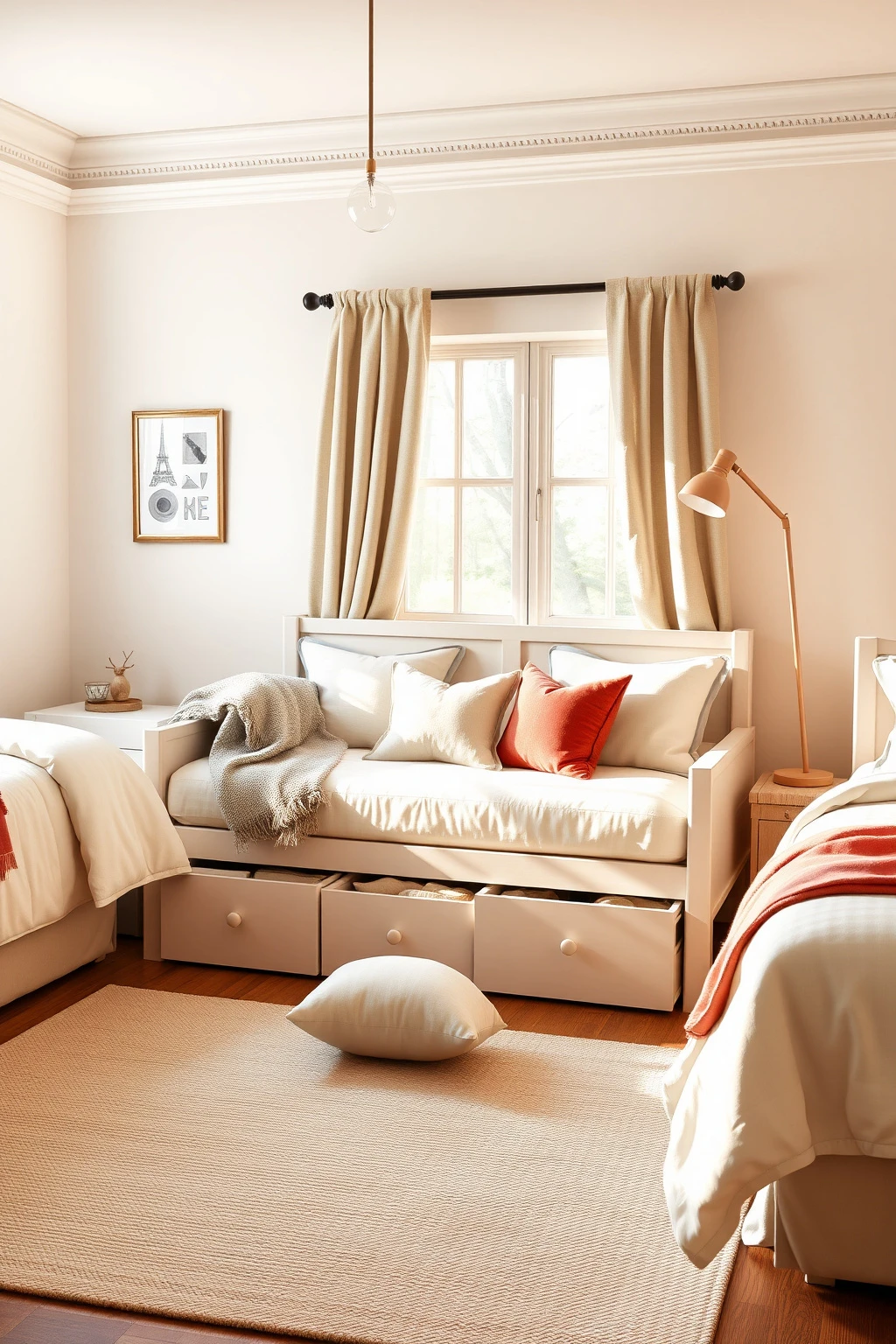
If your shared room doubles as the post-school hangout spot, a low daybed gives you flexibility without clutter. It also adds an extra seating-friendly surface so bedtime can be calmer and mornings can be smoother.
Pick a daybed in a simple wood finish like white-washed oak or natural ash, and dress it with the same bedding palette as the twins for visual calm. Use a trundle or two pullout drawers for extra blankets, stuffed animals, or quiet-time activities. Keep a small upholstered bench or two floor cushions nearby, so the room has a dedicated “sit and read” spot rather than kids scattering across the beds.
Add blackout curtains for shared sleep schedules that actually stick
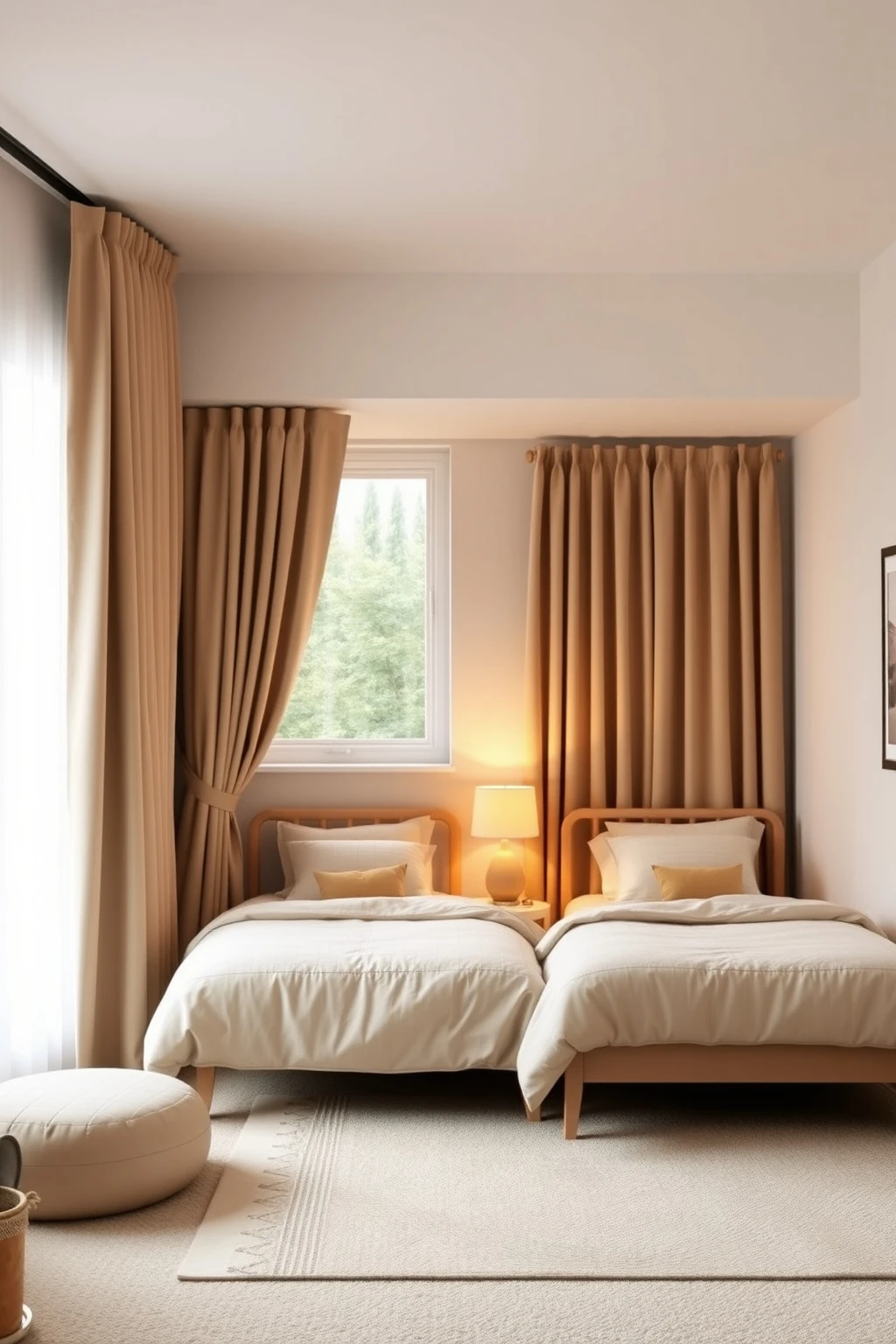
Shared bedrooms often struggle with inconsistent wake-ups, even when one child wakes earlier. Light control is the quiet hero here, because kids who sleep in softer light tend to wake more often and earlier.
Use blackout curtains with a wide header, ideally 4 to 6 inches wider than the window on each side, so the light gap is minimized. Hang them so the bottom just skims the floor or meets the rug edge. If you want a cozy look, choose colors like warm ivory, dusty taupe, or soft charcoal rather than flat black, so the room still feels inviting during the day.
Layer curtains and privacy with café-style panels for one kid’s zone
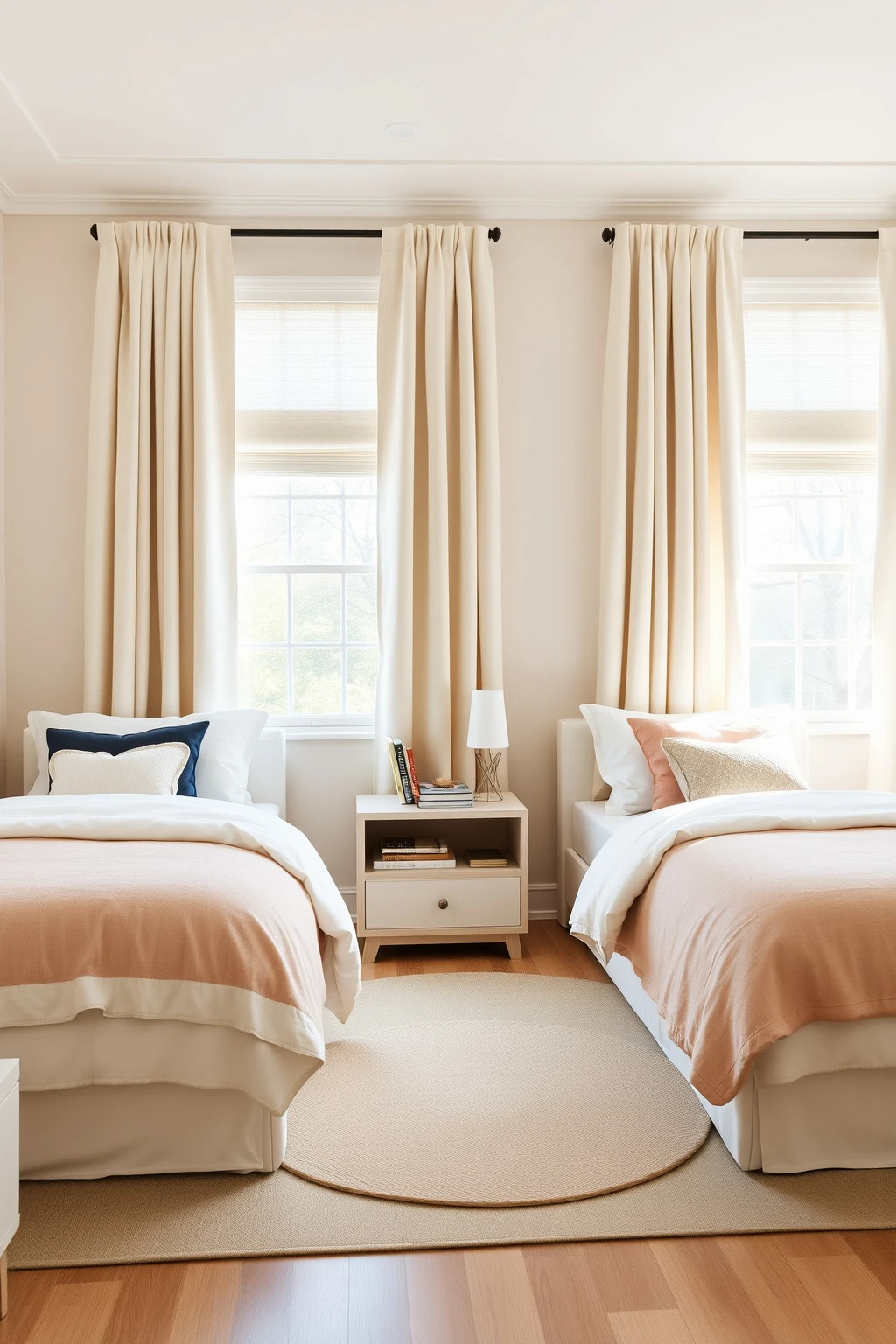
Privacy is underrated in shared rooms, especially when one child needs calmer mornings or quieter after-school downtime. A full-height curtain can feel dramatic, but café-style panels or half-height privacy can give one bed a gentle “edge” without making the room feel boxed in.
Try hanging café-style curtains at the inner edge of one bed zone, keeping them at curtain-rod height that sits around 50 to 60 inches, then pair with sheer panels elsewhere. Choose a fabric like linen-cotton blend in a soft cream so it looks cozy, not institutional. This helps one child feel protected while still letting you share natural light and keep the room feeling open.
Pin a fabric pinboard above each desk for art you can actually manage
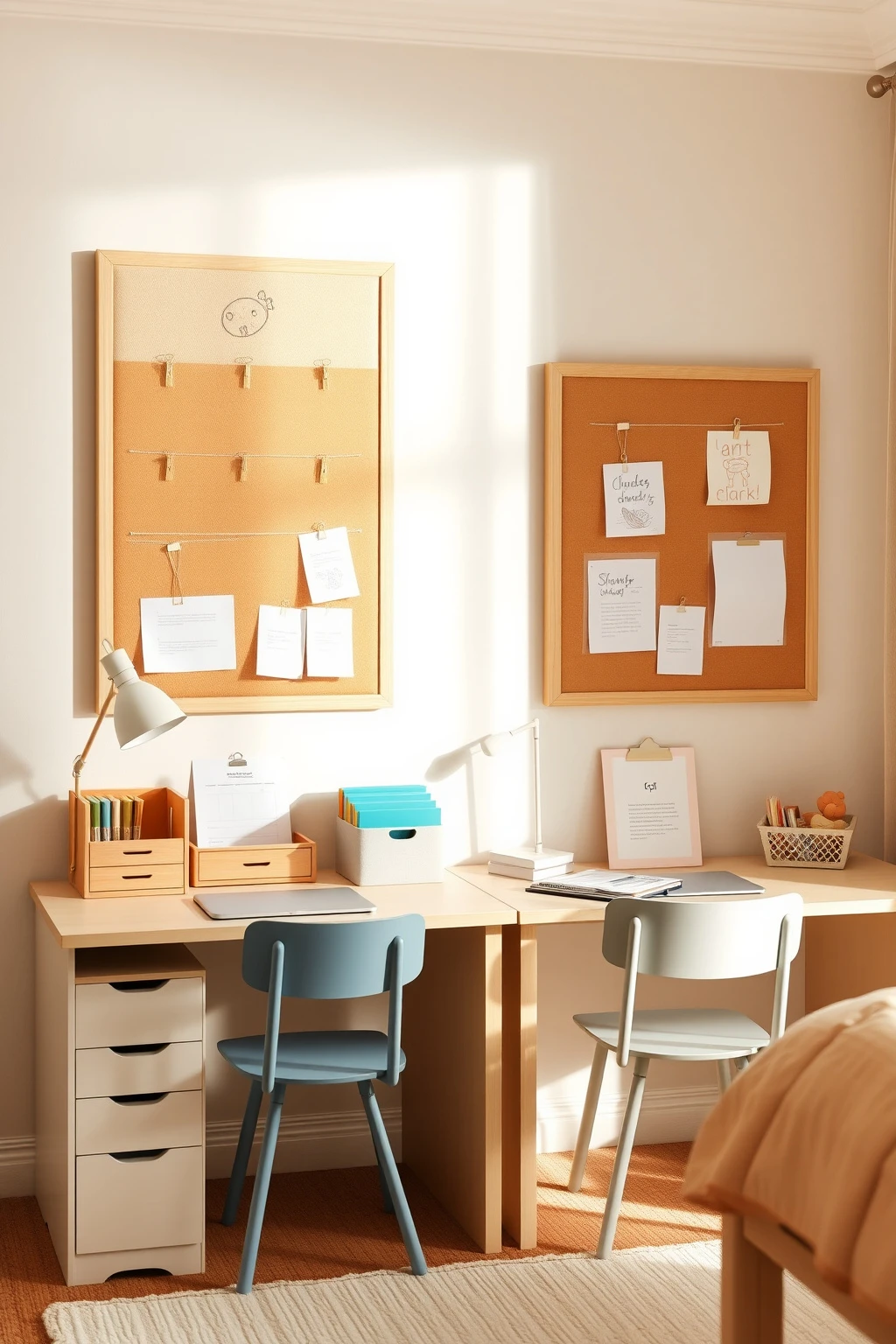
If art keeps landing on the floor, it is usually because your display system is too temporary to count. A fabric pinboard gives you a controlled place for drawings and school projects that can be swapped weekly, and it looks warmer than bare cork.
Hang two smaller boards, or one long board split visually by using two colors of ribbon, positioned so the bottom edge sits around 50 inches from the floor. Frame them in a slim wood frame in a finish like light oak or walnut, then add removable clips or tacks for quick changes. The practical benefit: you avoid the common mistake of showing everything at once, which leads to clutter and missing favorites.
Use a day-to-night blanket strategy for less laundry stress
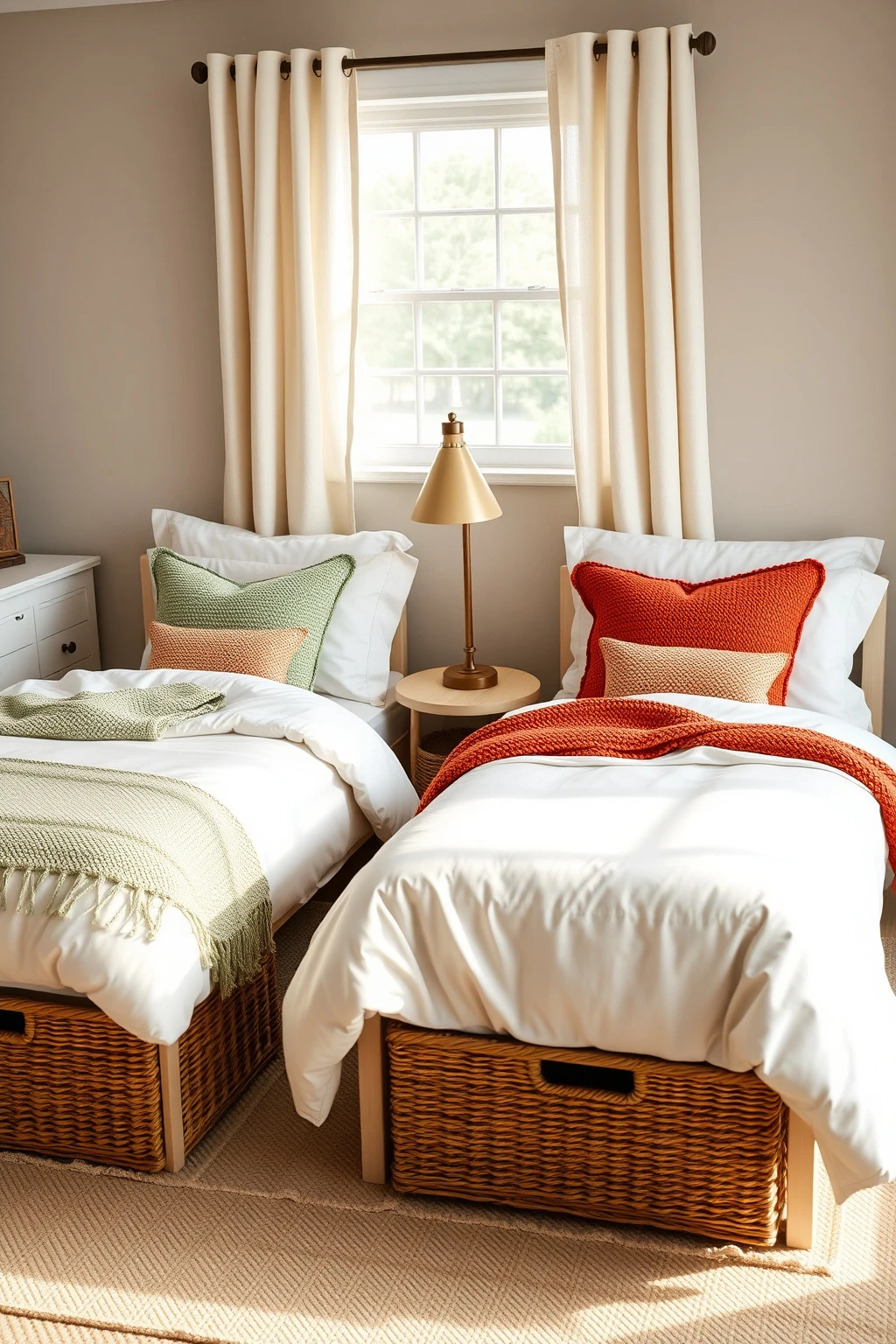
Shared bedrooms can mean double bedding changes, which piles laundry into the next week. A simple blanket strategy keeps the beds cozy without needing a full sheet change every time there is a spill.
Choose a duvet cover that stays clean most days, then add a lighter “day blanket” like a washable cotton throw or a textured knit in warm cream. When accidents happen, you can swap the throw quickly while the main duvet cover stays on. Store spare throws in a woven basket at each bed base so kids grab their own, and you reduce the common mistake of hiding backups in hard-to-reach drawers.
Conclusion
The coziest shared kids bedroom is the one that feels calm at 7 p.m., not just pretty on a good lighting day. When you build clear zones, choose washable comfort, and keep storage at the right heights, the room starts working like a team with your family instead of against it.
If you take just one step, make it this: pick a single organizing “rule” you will keep for both kids, like matching bedding structure or a mirrored toy display. Consistency is what makes the room look designed, and it is what makes everyday living feel easier.

Mush Decor
Writes about accessible, timeless interior styling for readers worldwide.
More about Mush DecorRelated articles
 Bedroom
24 Bedroom Screen Ideas for Privacy & Style
Discover 24 stylish bedroom screen ideas for privacy, zoning, and flexible decor, from linen room dividers to DIY slat walls.
Read More Bedroom
23 Nancy Meyers Style Ideas for Your Home
Get the cozy, polished Nancy Meyers vibe at home with 23 practical styling ideas: lighting, textiles, color, and layout tips.
Read More