
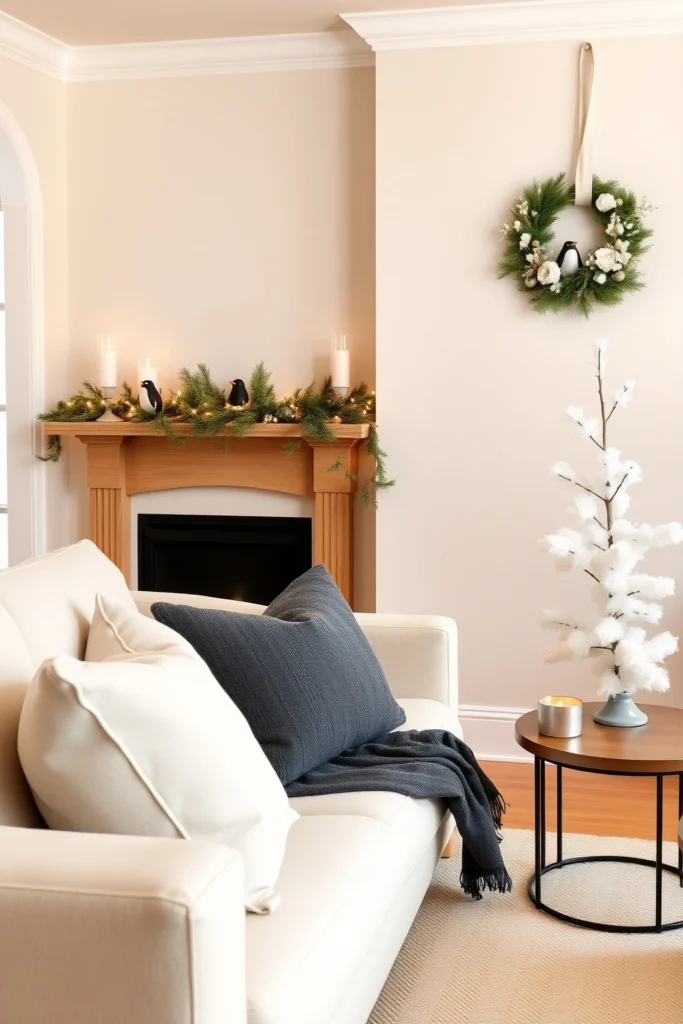
The cutest part of indoor penguin Christmas décor isn’t the penguins—it’s how quickly they make a home feel like a winter story instead of just “a tree and some tinsel.” I’ve styled a lot of holiday spaces, and the trick is always the same: penguin details work best when you treat them like real design elements (scale, color, and lighting), not like random collectibles.
In the ideas below, you’ll find decorating moves you can actually execute—everything from figuring out where penguin artwork should sit on a wall, to how to keep a penguin-themed mantle from looking childish. I’ll also share common mistakes to avoid (yes, there are a few) and plenty of ways to make the look feel tailored to your specific space.
Style a Penguin Mantel Like a Gallery Shelf (Not a Toy Box)
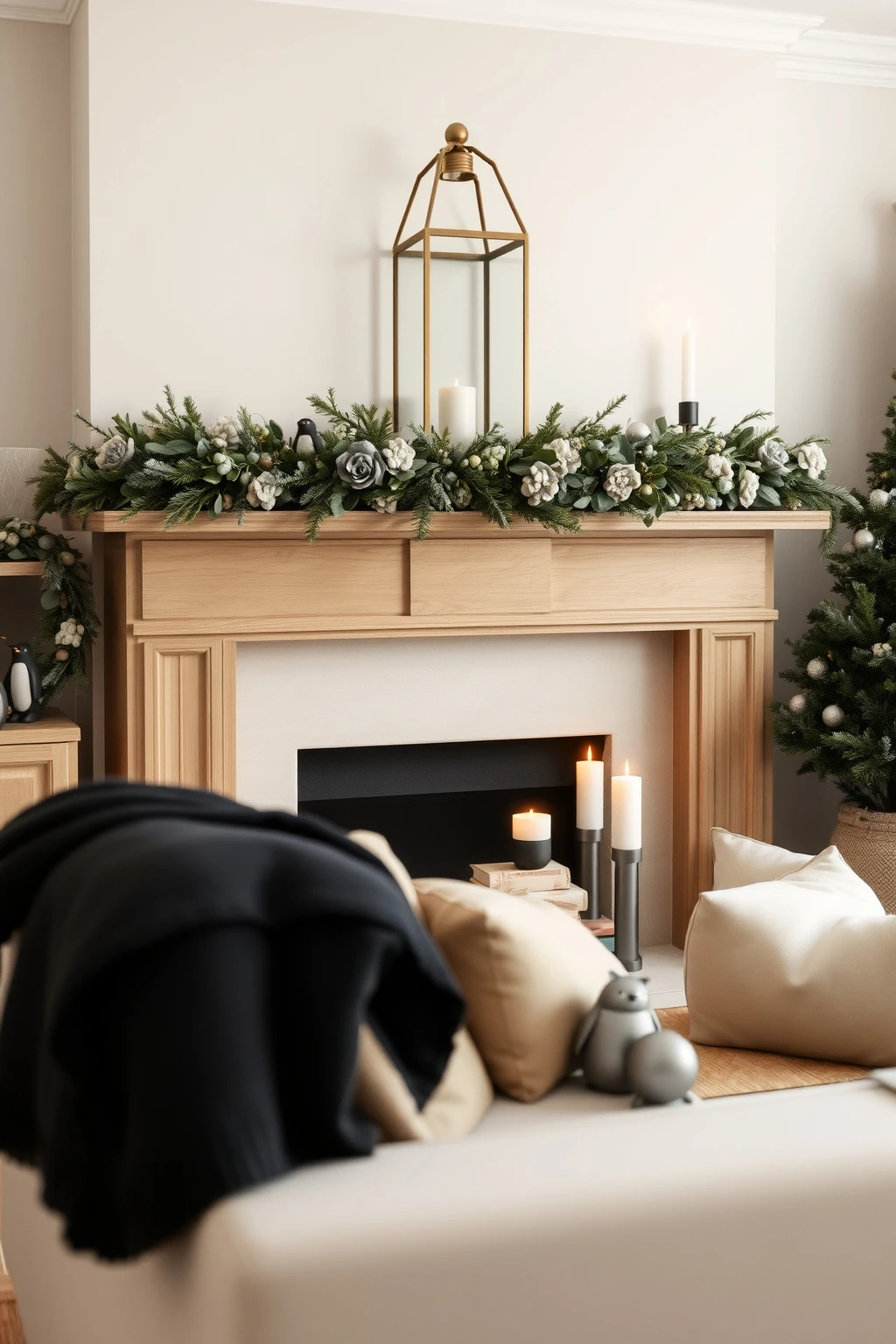
A mantel is a visual runway, so penguins look most expensive when they’re grouped the way you’d group framed art: intentional spacing, consistent heights, and a clear foreground. This is the part people usually miss—too many penguins at one level makes the whole display feel cluttered, even if everything is adorable.
Start by marking your mantel’s centerline and build in three height tiers: 1 tall anchor (a pine branch spray or lantern), 2 medium pieces (two penguin figurines on risers), and 3 small accents (a handful of mini ornaments or pine cones). Keep the outer edges slightly lower than the center—aim for about 2–3 inches of drop from left and right—so your eye naturally settles in the middle. If you’re using figurines, choose matte finishes (matte black, warm ivory, or lightly speckled ceramic) so the whites read as “snow,” not “plastic.” Finish with a pair of candles in mercury glass or frosted hurricane holders for glow that flatters the black and white contrast.
Make Penguin Ornaments Feel Grown-Up With the Right Color Mix

Penguin décor can tip into “kids’ room” fast if the ornament palette is too bright or too glossy. The win is contrast with restraint: matte black and warm ivory look crisp, while a muted third color adds warmth without turning candy-colored.
Choose a three-color system: matte charcoal/black, warm ivory, and one grounded neutral like sage or oatmeal. Use 70% neutral ornaments (snowflake discs, simple baubles in warm white), 20% black accents (penguin faces, tiny silhouettes), and only 10% your third color (like sage ribbon or a single set of dusty rose glass baubles). Hang penguins deeper into the tree by placing them on branches that sit 6–10 inches from the trunk—so the penguin shape reads from a distance. If your tree is pre-lit, avoid putting white penguins where the lights directly hit them; instead, position them slightly off-center to prevent glare.
Use a Vertical Color Ladder for Penguin Wall Art
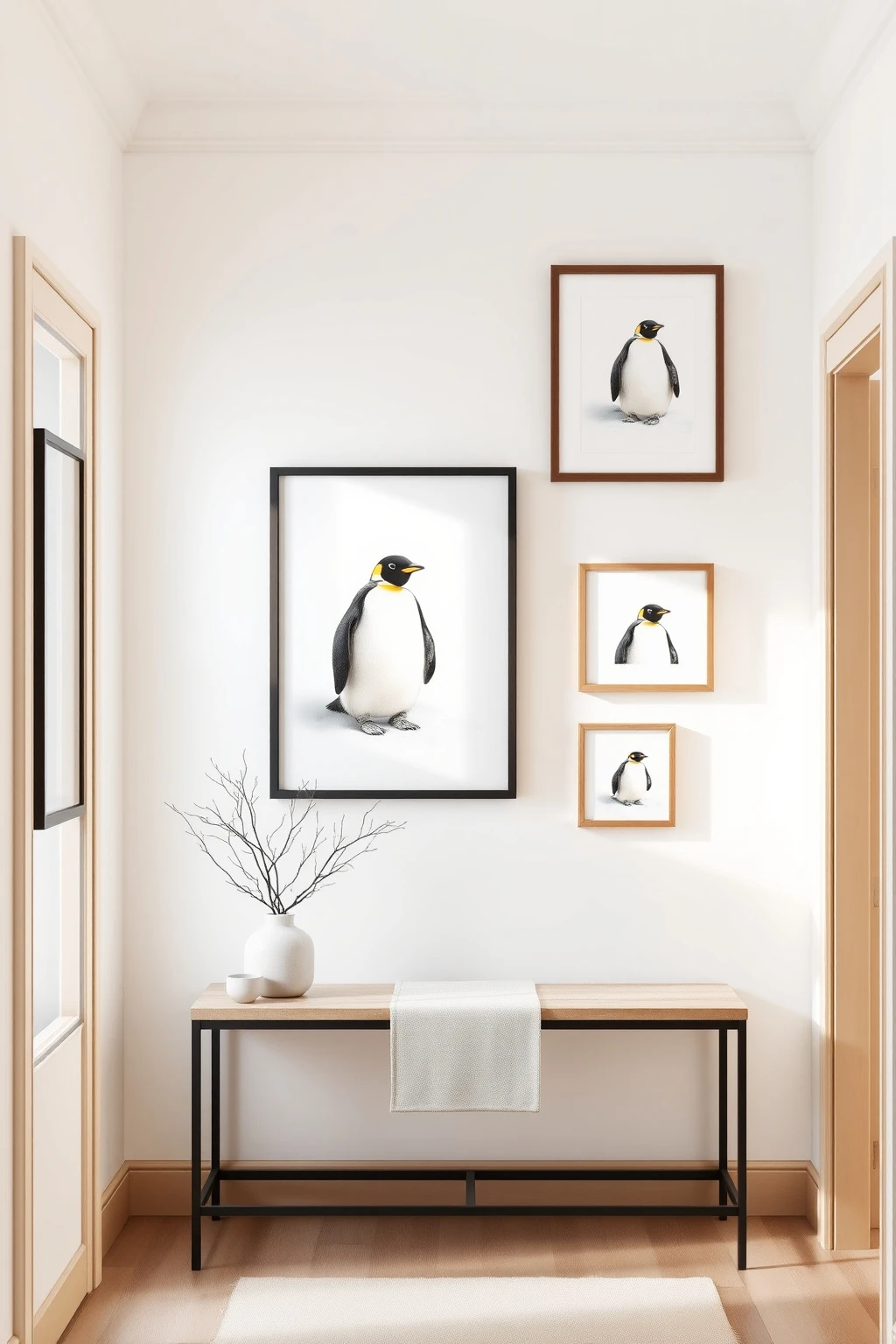
If your penguin wall art looks “stuck on,” it’s usually because the sizes don’t graduate and the spacing is random. Wall décor reads best like a lighting gradient: bigger to smaller, with consistent margins so the composition feels designed, not tacked up.
Pick three pieces (or frame sizes) that create a ladder: for example, an 18×24-inch print as the anchor, a 12×16-inch companion, and a small 8×10-inch accent. Hang the center of the largest piece at about 57–60 inches from the floor (fine-tune to your furniture height). Maintain 2–3 inches of spacing between frames, and keep them aligned even if the frames differ—alignment is what makes the penguin theme feel intentional. Want a softer look? Swap glossy frames for brushed black metal or warm wood finishes like oak or walnut so the black penguins feel softer against the wall.
Hang a Penguin Wreath Over a Door With a Hang-Height Rule
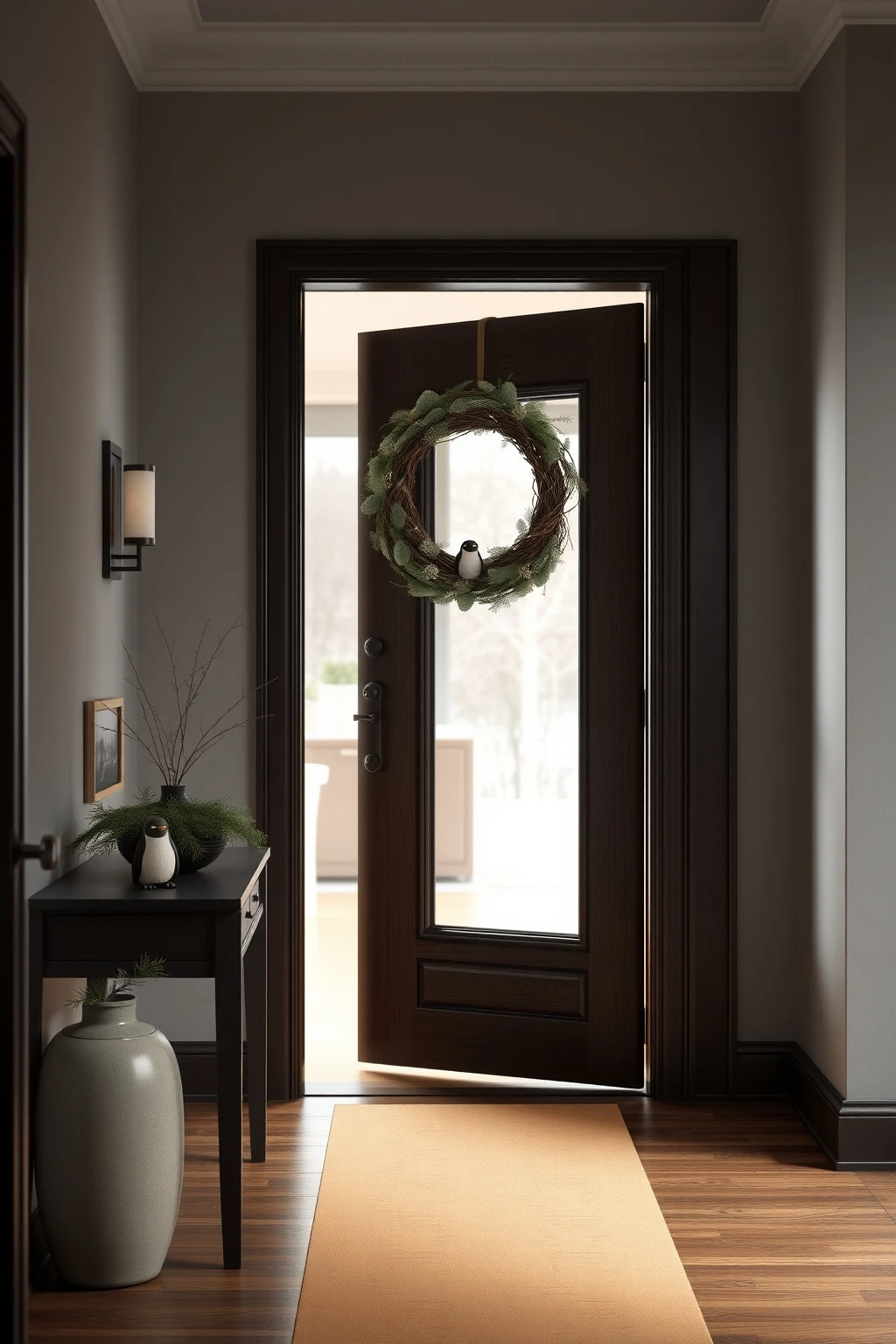
Wreaths look best when they respect sightlines. If you hang a penguin wreath too high, it turns into ceiling décor; too low, and it competes with coats and entryway clutter.
Measure your door height and keep the wreath’s center around 60–66 inches from the floor (most standard doors land perfectly with this range). Choose a wreath base first—grapevine, felt, or a slim pine ring—and then place penguin accents sparsely: three to five figurines or small felt penguin cutouts is plenty. For a tailored look, anchor penguin details with one repeated element like matte black berries or frosted pine picks so they don’t feel random. If your entryway gets harsh light, use felt or fabric wreath textures; they soften reflections and make the penguin silhouettes look cozy instead of shiny.
Create a “Penguin Path” With Battery Lanterns and Pine Cones
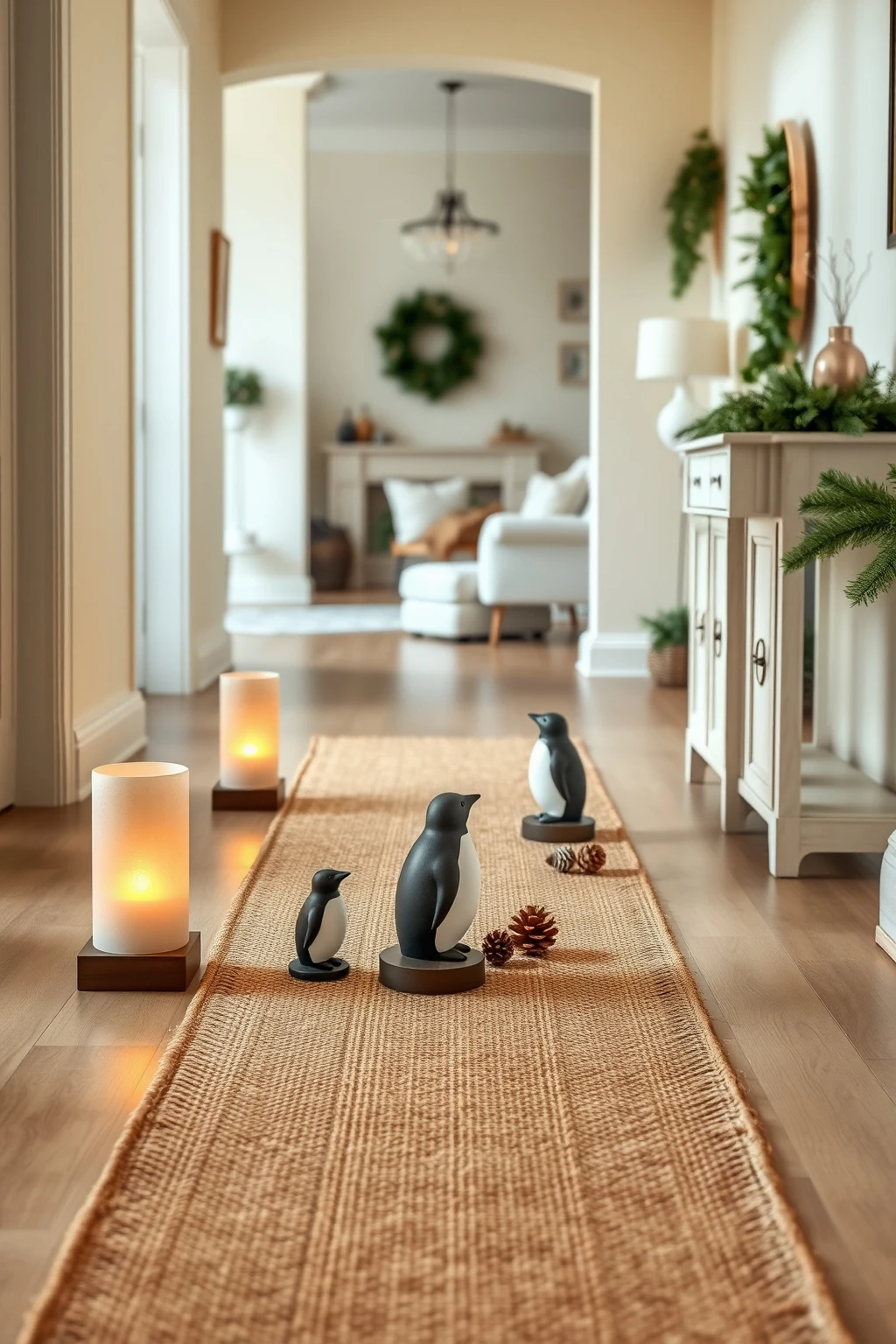
Instead of scattering decorations, guide people through your space. A penguin path works because it uses light as a navigation tool—your guests’ eyes follow the glow, and the penguin theme becomes part of the journey.
Use 6–10 small battery lanterns or frosted pillar candles along a runner: keep them about 8–12 inches apart so the path reads as continuous. Add three “penguin moments” spaced evenly—place one penguin figurine between two lanterns at the widest part of the walkway. Ground the arrangement with real texture: pine cones, a few dark walnut branches, or jute ribbon tucked at the base. Common mistake: using only bright white lights—go for warm white lanterns so the black penguin faces look crisp rather than harsh under cool lighting.
Turn a Small Coffee Table Into a Winter Centerpiece
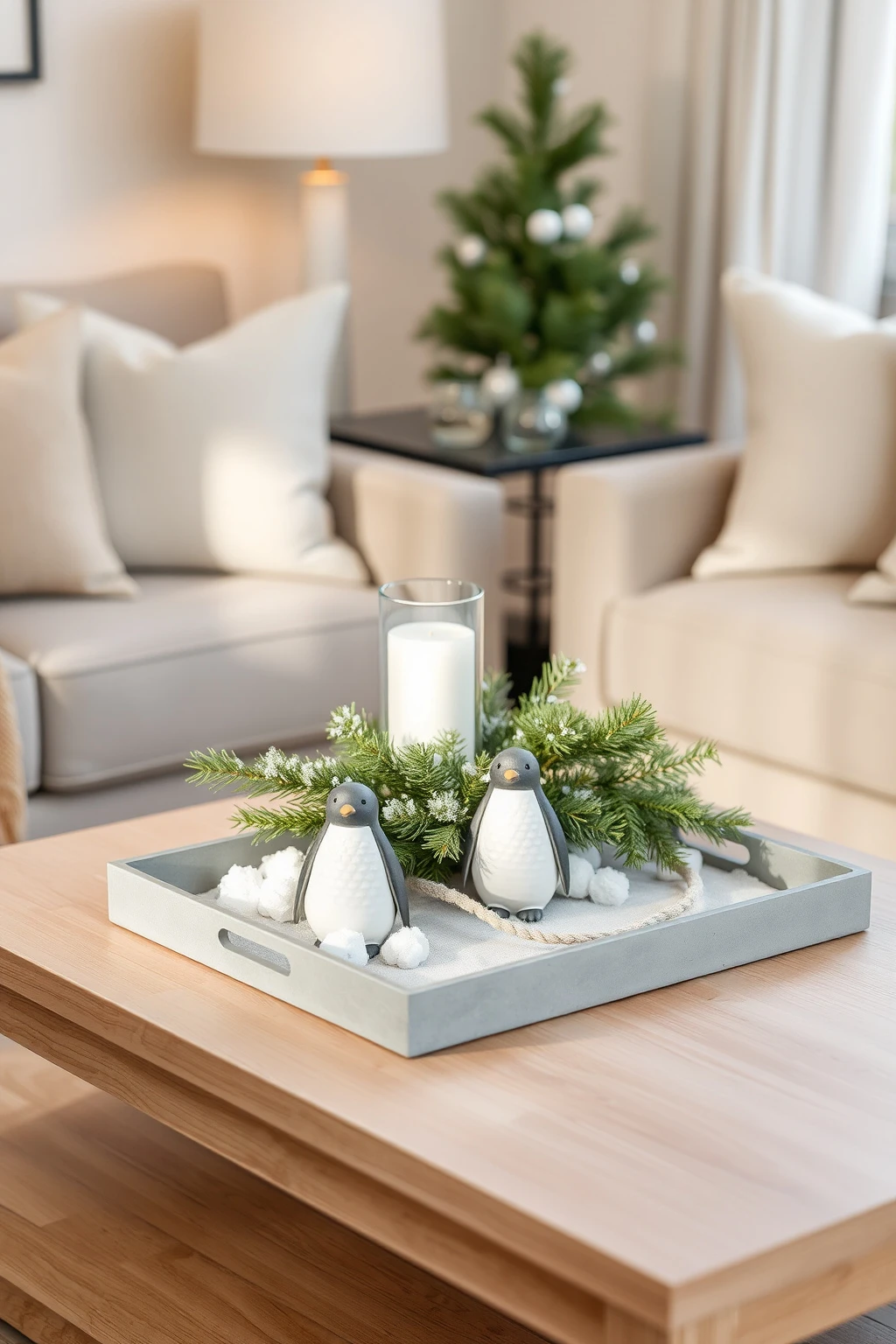
On compact surfaces, the rule is proportion: one hero piece, one supporting line, and one textured “hover” element. Penguin décor can overwhelm a tiny table, but you can keep it elegant by using fewer items with clearer heights.
Try a layered build: place a low tray (about 18–24 inches wide) on the table, then set a single snow-dusted evergreen spray in the back third. Add two penguin figurines at the front corners—keep at least 4 inches between them so they don’t look stacked. Finish with a scattering of faux snow clumps (small, not chunky) and a short strand of clear bead garland in the center to mimic icicles. If you’re worried about clutter, skip extra ornaments and instead use one tall candle inside a frosted glass cylinder as the centerpiece glow.
Make an Under-Stairs Nook Feel Like an Ice Cave
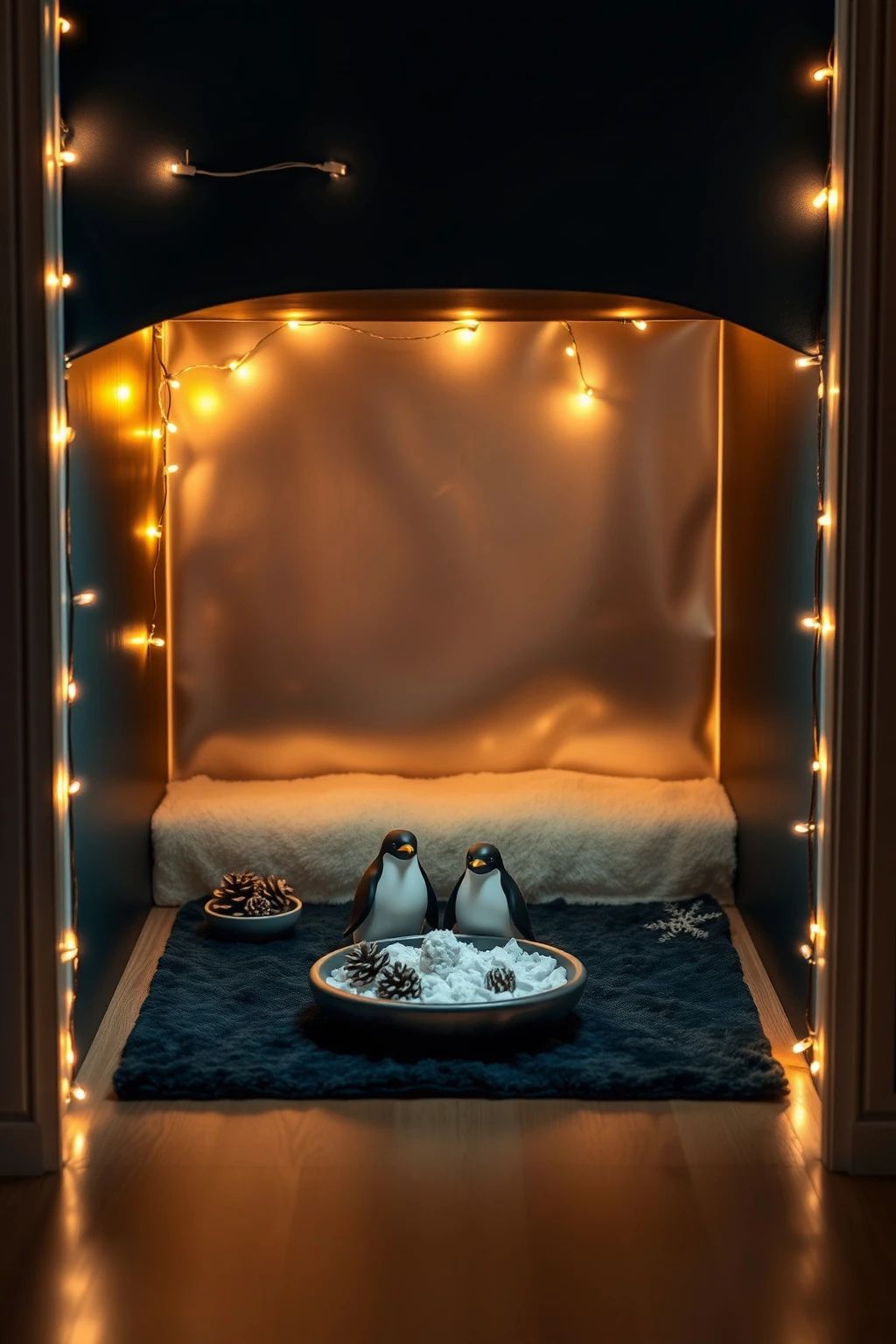
Nooks are where themed décor gets to be fun, because you control the sightline. An under-stairs area can feel oddly dark—so penguin décor works best when you treat it like a stage with reflective surfaces and layered textures.
Line the back of the niche with a sheet of white or silver-toned foil-contact paper (keeps it DIY-friendly) and add a thin strand of warm white fairy lights along the edges. Use a mix of materials: a charcoal felt runner on the floor, a couple of pine cone clusters, and two or three penguin figurines of different heights. For the “ice cave” effect, place a shallow bowl filled with faux snow (about 1–2 inches deep) at the front so it catches light. Avoid placing all penguins in a flat line—stagger them at least 4 inches in depth so the scene feels dimensional.
Drape a Penguin-Themed Stocking Set for a Clean Mantel Line
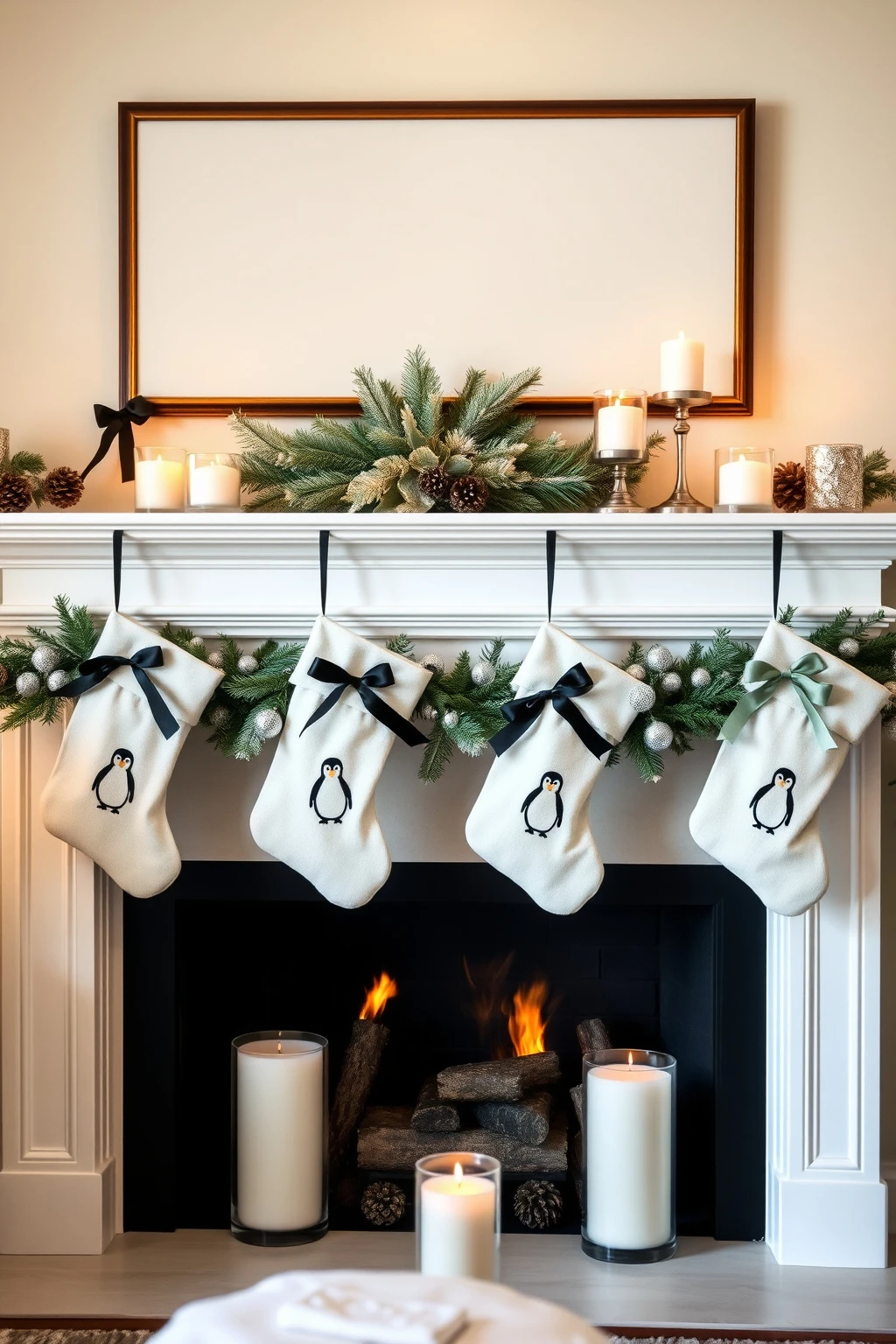
Stockings look messy when you hang them like laundry. For a polished penguin look, treat stockings as a repeat pattern—same spacing, same top line, and one consistent texture.
Use 4–5 stockings max above the mantel so the visual weight stays centered. Hang the top edges so they align within 1 inch of each other, typically 1–2 inches above the mantel shelf lip. Choose stockings in warm ivory linen with small black penguin embroidery, or go with textured boucle stockings for winter warmth. Then add a single “penguin ribbon” element at the top of each stocking: a black grosgrain bow or a sage velvet strip, repeated across all. This repeat makes the theme feel cohesive even if your penguins aren’t all identical.
Style a Penguin Tree Topper Using Height Math
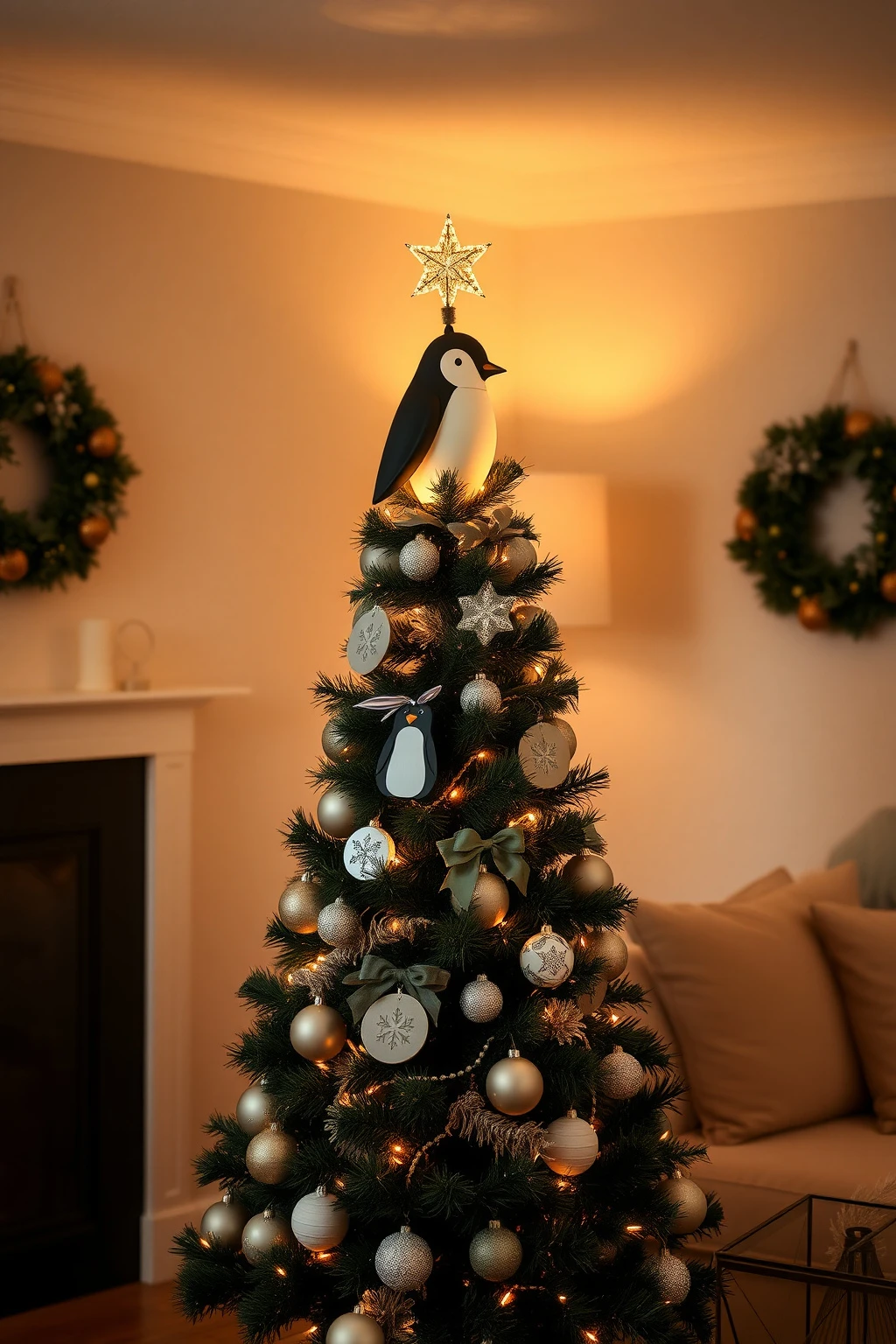
A topper can ruin the whole tree if it’s visually too heavy or too low. Penguins (or penguin-inspired toppers) look best when you calculate height so the topper reads from the room, not just from up close.
If your tree is 6 feet tall, aim for a topper height of about 10–14 inches from the top branch tip to the topper’s highest point. Place penguin toppers slightly forward so they don’t collide visually with the top lights—try adjusting the top section so the topper sits about 1–2 inches toward the side facing your main seating. For balance, add a small “echo” element: one penguin ornament on the opposite side at about eye level. Mistake to avoid: using only one focal penguin at the top—always repeat the motif somewhere else so the theme feels designed, not accidental.
Switch From Tinsel to Texture: Penguin “Snow” Garlands
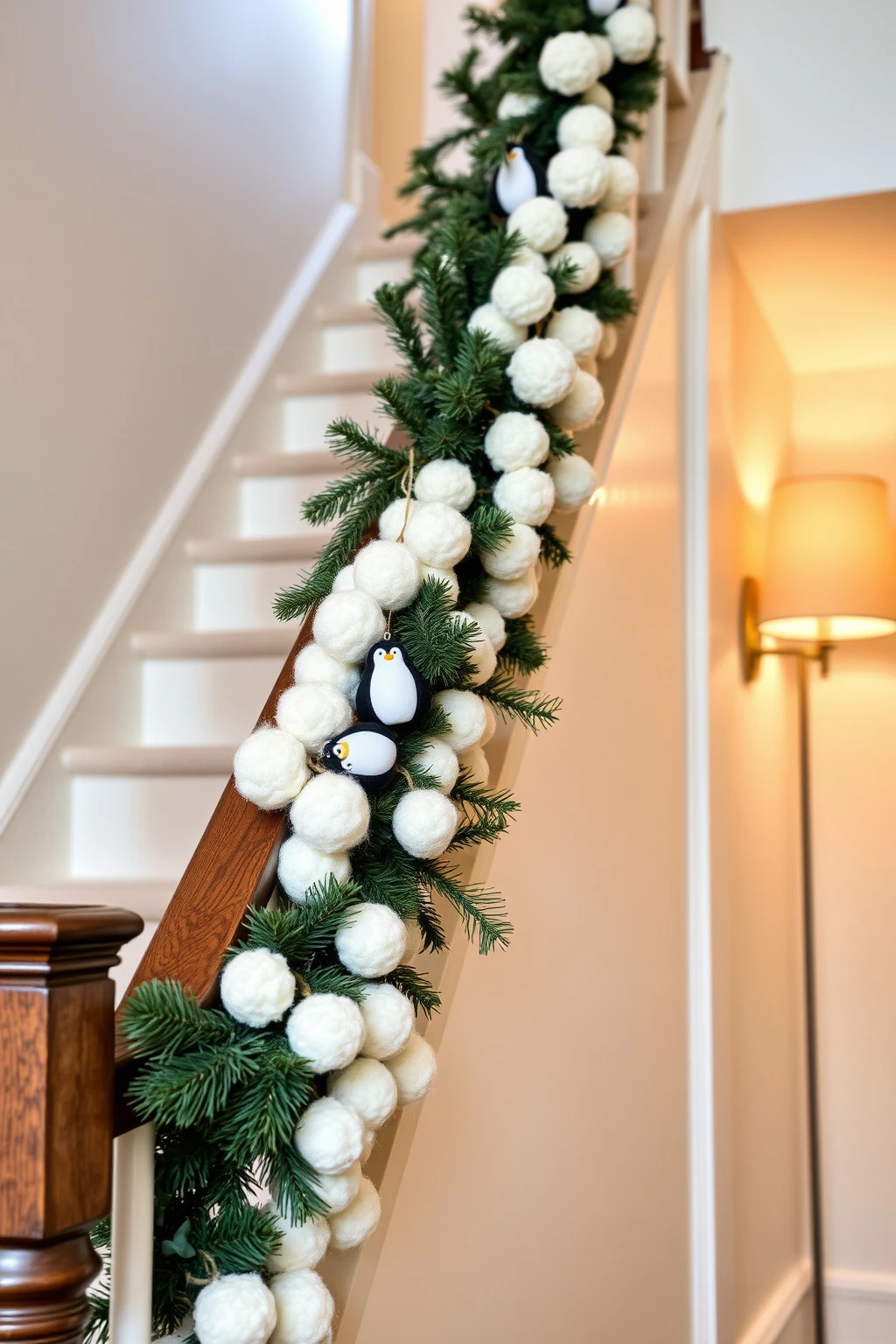
Tinsel is flashy, and penguin décor tends to need a calmer, wintery backdrop. If you swap glittery tinsel for texture, the black-and-white theme becomes crisp instead of chaotic.
Make your own faux-snow garland using yarn pom-poms or wool roving: create small clusters (about 2 inches wide) and tie them along thin twine every 4–6 inches. Drape the garland along a shelf or the banister, letting it sag naturally—tight lines can look costume-y. Add three penguin accents spaced evenly along the garland so the viewer reads a rhythm rather than a pile. If you’re styling near a staircase, keep the garland 2–3 inches away from handrail height so it won’t snag sleeves.
Use Penguin Place Cards for a Dining Table That Feels Intentional
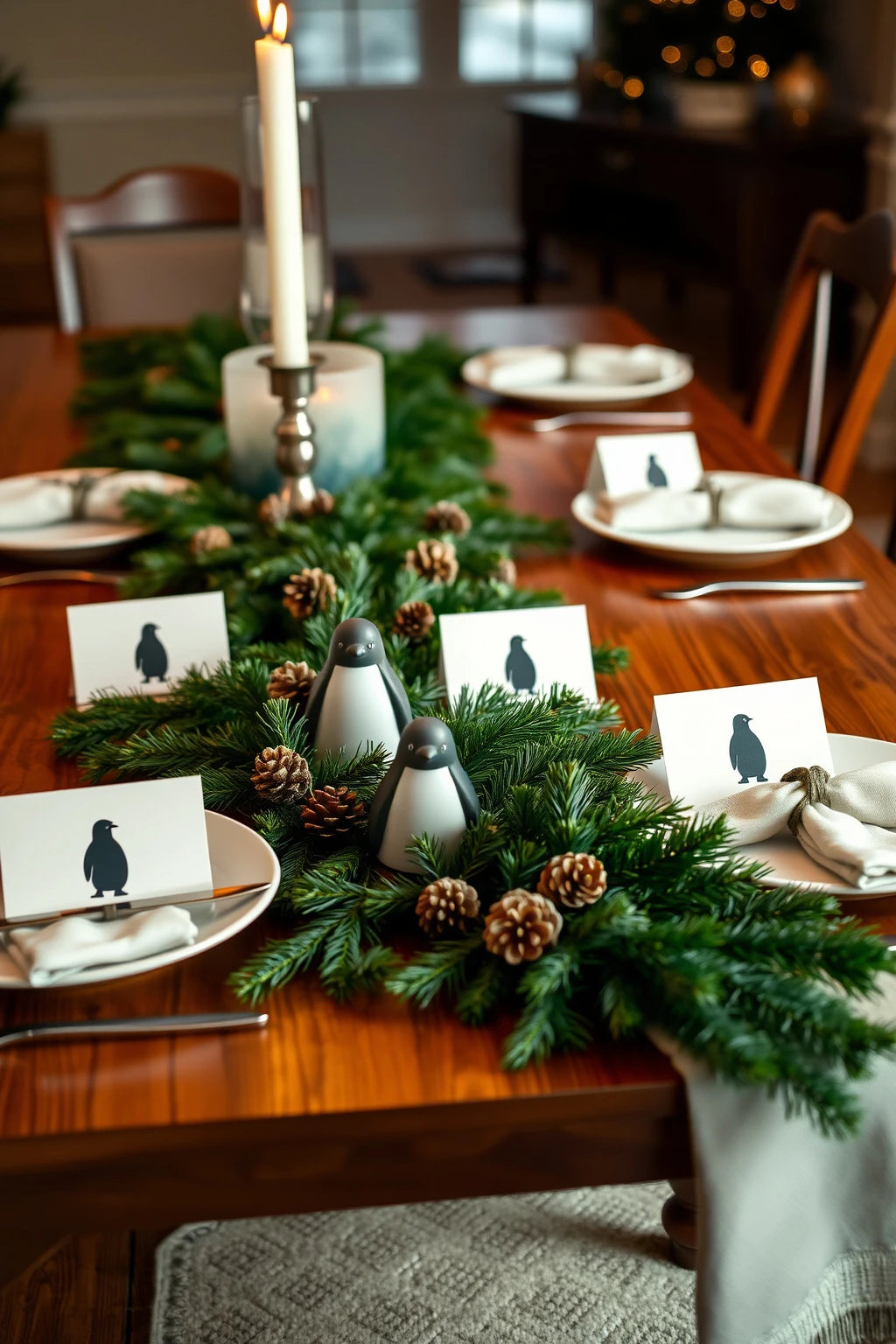
Table décor can get themed in a way that looks either thoughtful or gimmicky. Penguin place cards work because they invite the theme into a moment—your guests read them when they sit, so it feels charming rather than cluttered.
For a dining table, limit penguins to three places: place cards, a small centerpiece, and one napkin accent. Make place cards in thick card stock (ivory with charcoal penguin silhouettes) and position them 1–2 inches from the plate. In the centerpiece, use a long runner of evergreen with tiny pine cones, and hide 3–5 penguin miniatures at different depths under the greenery. Add a practical finishing touch: keep the centerpiece height under 12 inches so guests can talk without reaching. This keeps the penguin theme “functional,” not just decorative.
Create a “Penguin Nightstand” With One Lamp and One Scene
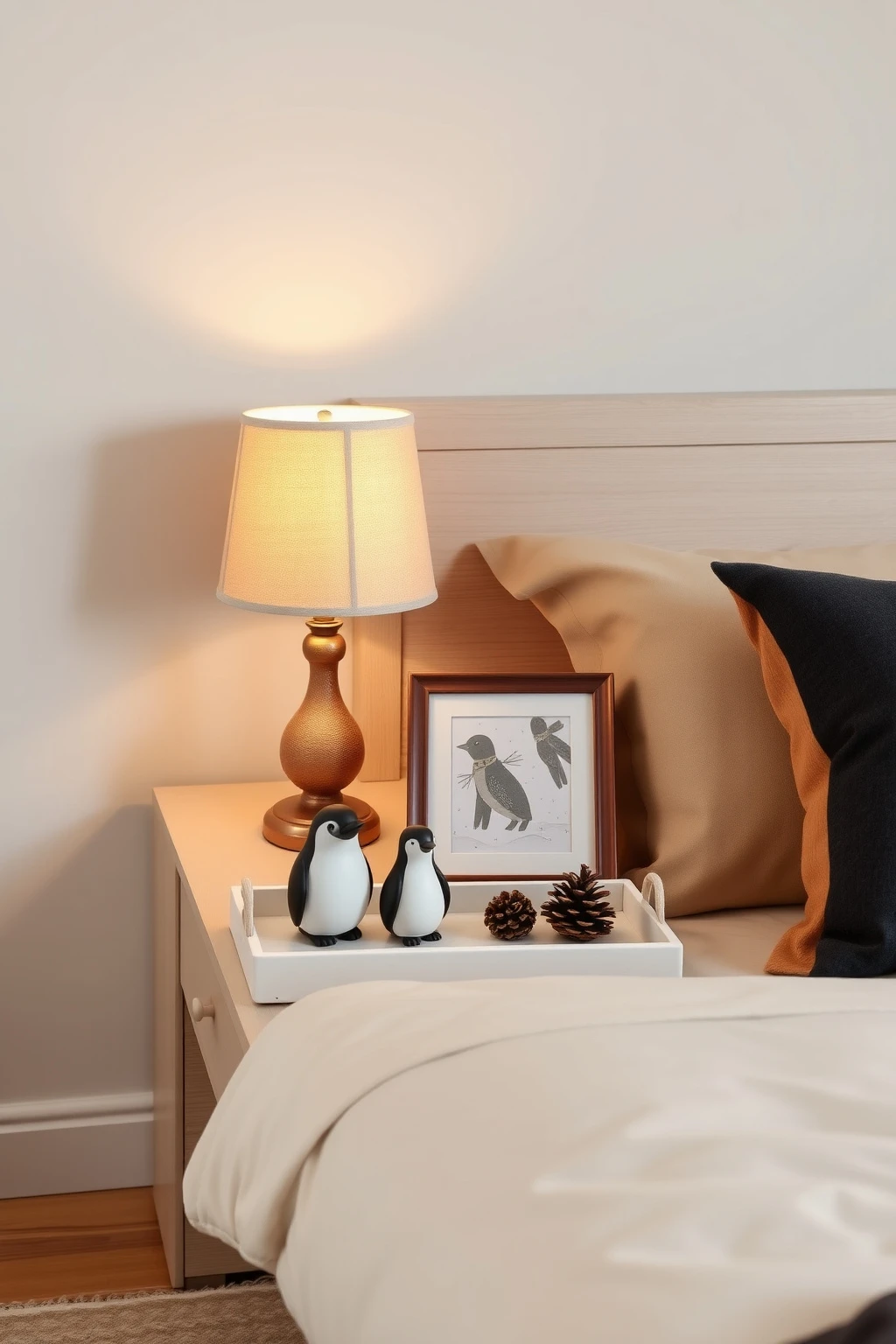
In bedrooms, holiday décor needs to be soothing, not busy. The easiest way to keep penguins from feeling like a daytime toy display is to scale them down and anchor everything with warm, indirect light.
Pick one penguin element per nightstand: a small framed print, a single penguin figurine, or a mini snow-dusted lantern—never all three. Pair it with a lamp that has a warm shade (linen or oatmeal) so the room glows golden at night. Place a small tray (about 8–10 inches wide) for accessories and keep the figurine centered; add 2–3 pine cones or a short cinnamon-scented twig bundle to create winter texture. Common mistake: using bright white LED string lights on bedside surfaces—they’ll flatten the penguin contrast and make the room feel cold. Warm white + matte textures solves it.
Frame a Penguin “Winter Window” Using Mirrors and Frosted Film
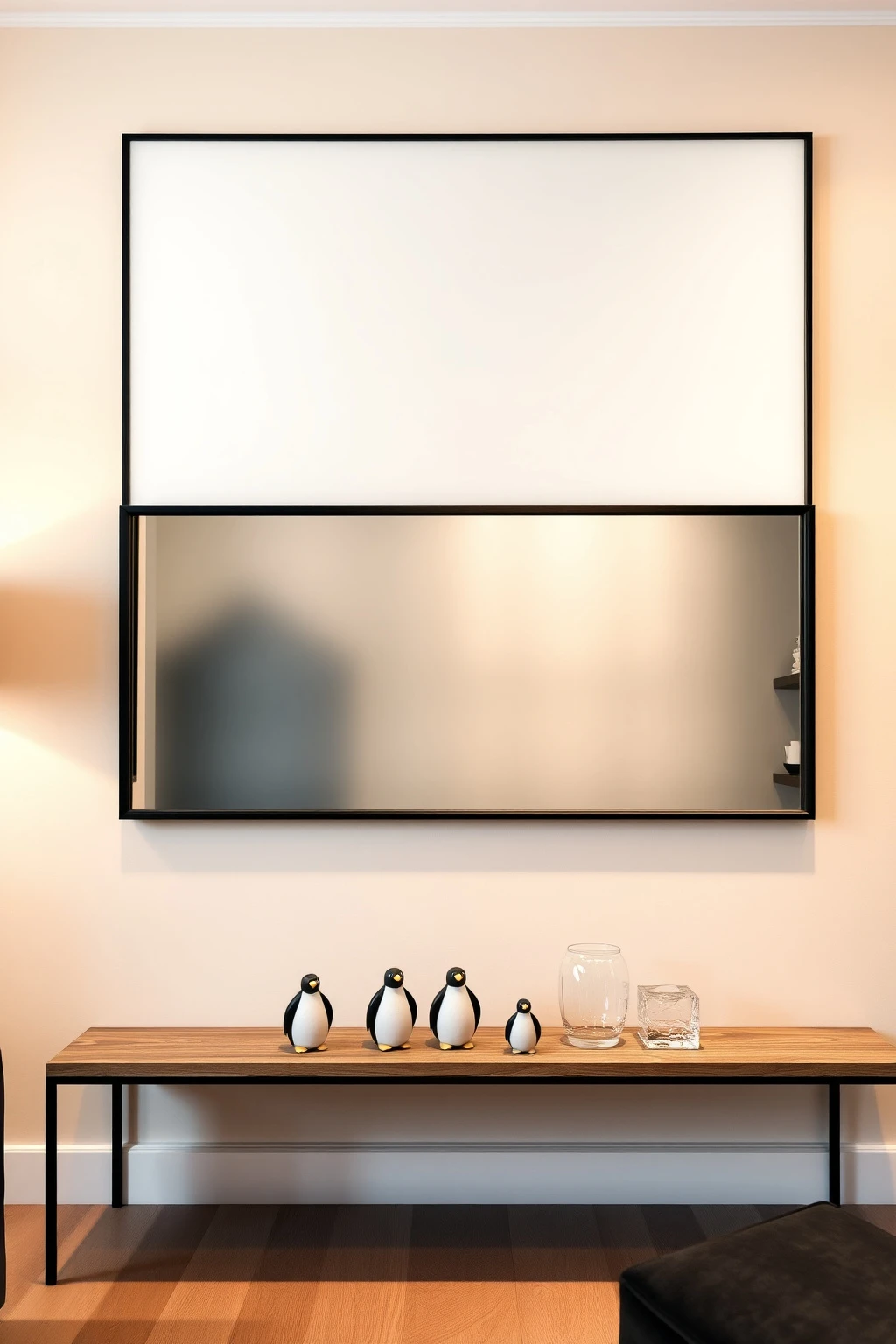
North-facing rooms can feel gray, and penguin décor can disappear in dim light. The trick is to use reflective surfaces to bounce warmth—mirrors plus subtle frosted texture make penguins pop without adding clutter.
Choose a rectangular mirror and apply removable frosted window film to the bottom third (about 8–10 inches tall). Then place a line of penguin ornaments along the mirror’s ledge or below it on a narrow console tray. Keep the penguins spaced 3–4 inches apart and mix one small clear-acrylic ice block (or a glass bowl filled with clear ornaments) to catch the light. Avoid heavy curtains or dark décor around the mirror; you want the reflective area to act like a secondary light source. This method makes the winter scene feel built-in, not pasted on.
Build a Penguin Corner Display Using One Riser and Two Levels
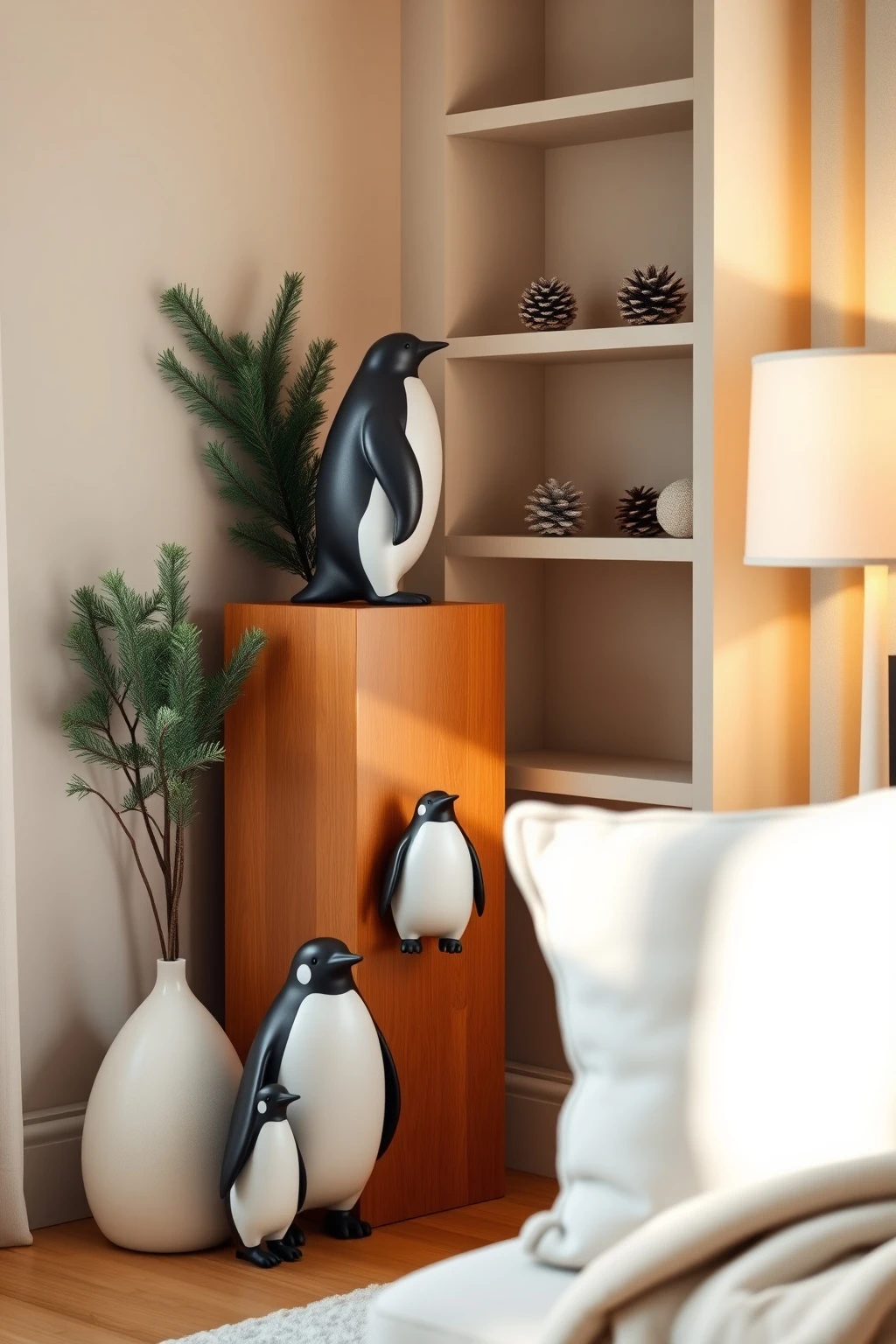
Corners are tricky because depth can get lost. Penguins shine in corners when you create a simple stacking system that gives them “standing room,” instead of treating them like flat props.
Place one riser (a wooden cake stand or a 10–12 inch-tall pedestal) near the corner and position the tallest penguin piece on top. Behind it, add a slim evergreen spray or a tall paper snowflake—keep the background color light so black penguins contrast. On the lower level, place two smaller penguins flanking the riser, at least 6 inches away from the wall so they cast believable shadows. If you’re styling in a rental and can’t drill, use a free-standing ladder shelf or a freestanding corner étagère with removable décor ties. The point is depth plus spacing, not more items.
Dress Your Entry Table With a Tray, Not Loose Décor
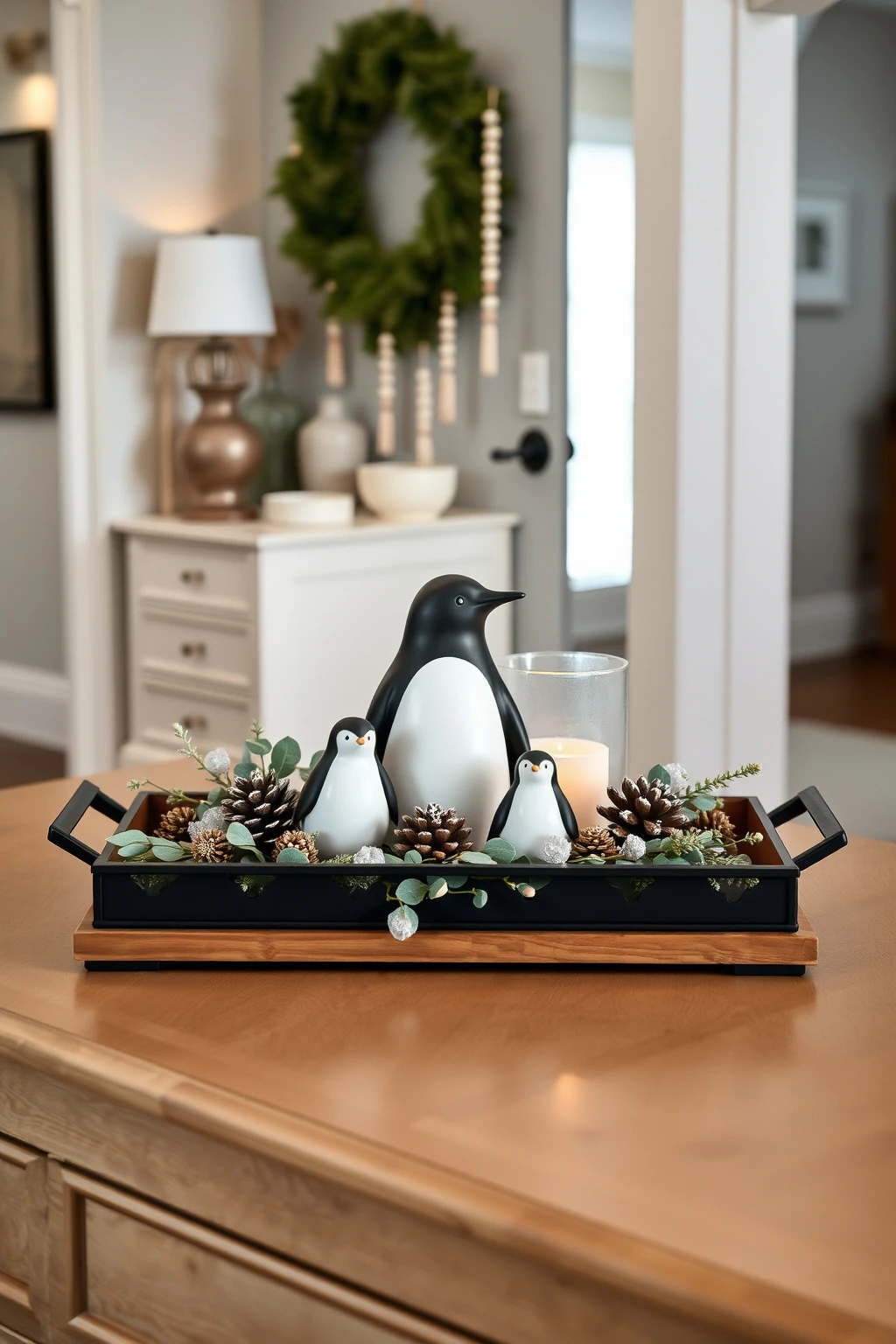
Loose décor on an entry table looks messy fast—shoes, mail, keys, and holiday trinkets all fight for space. A tray is your best friend because it creates boundaries, and penguin items feel curated when they’re contained.
Use one large tray (16–20 inches) and build it in a triangle: one penguin figurine at the back center, two smaller penguin accents at the front corners, and a winter filler in between (pine cones, eucalyptus stems, or a strand of faux pearl “icicles”). Leave the middle 3–4 inches relatively clear so you can still set down your wallet or gloves. Add a scented candle in frosted glass so the décor has a sensory cue, not just a look. Avoid mixing too many finishes; stick to matte ceramics and frosted glass, and skip shiny metallics if your wall paint is cool-toned.
Make a DIY Penguin Ornaments Display Board for Quick Swaps
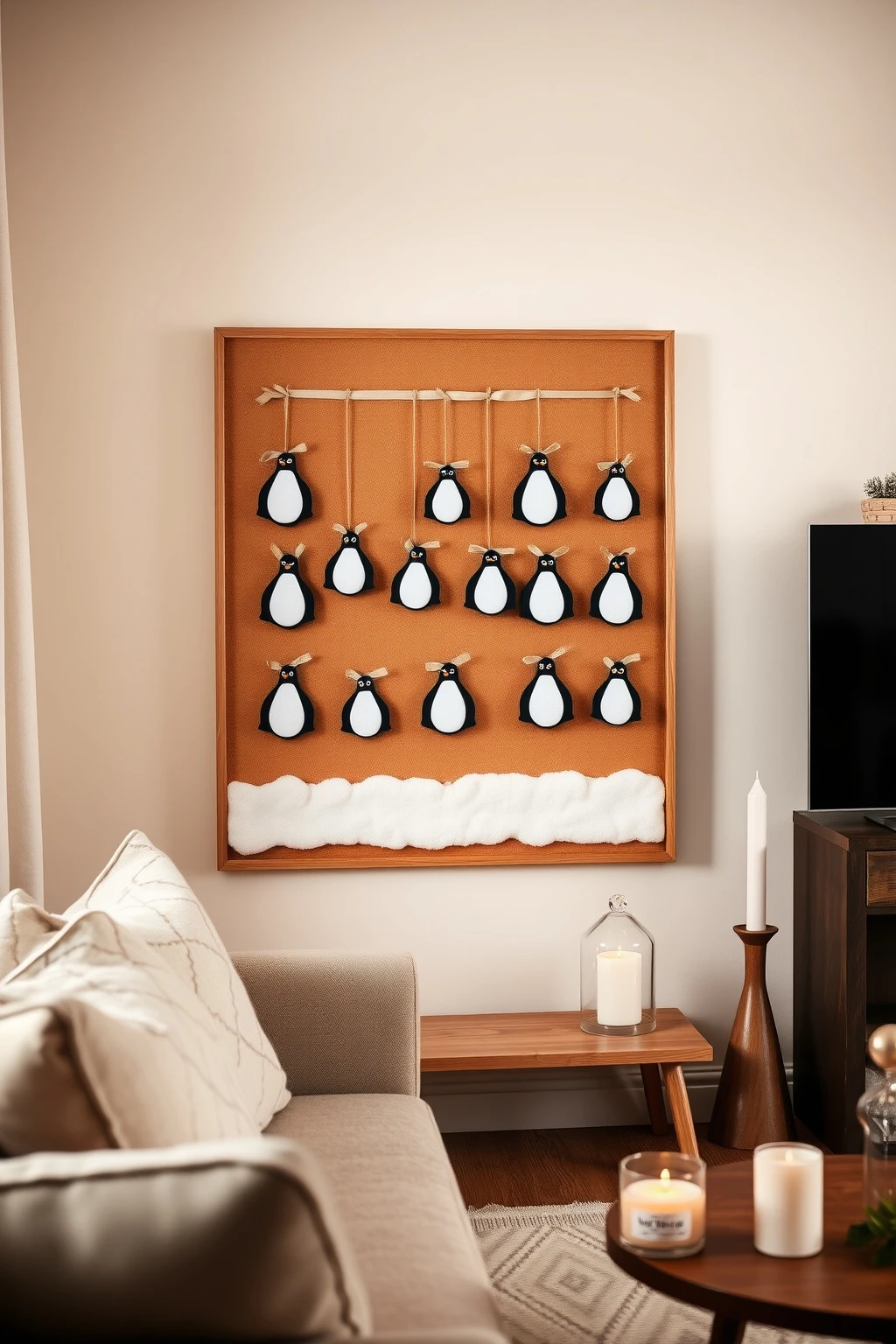
If you love changing décor mid-season, a display board beats a drawer full of ornaments. It also teaches your eye where each penguin should live—so your home stays styled instead of stuffed.
Use a cork board or a pegboard framed in white oak and cover it with a neutral fabric backing (linen or burlap). Hang your ornaments with thin ribbon loops so you can swap within minutes; place the largest penguin at the top center, medium ones in the middle, and smallest at the bottom. Keep at least 2 inches between hanging points to avoid a tangled look. Add a vertical “snow line” using faux snow paper or felt stripting at the bottom edge so everything visually anchors. Common mistake: cramming every ornament on day one—leave 15–20% empty space so it feels editorial and not chaotic.
Light Up Penguin Details With Candle-Style Warmth, Not Overhead Glare
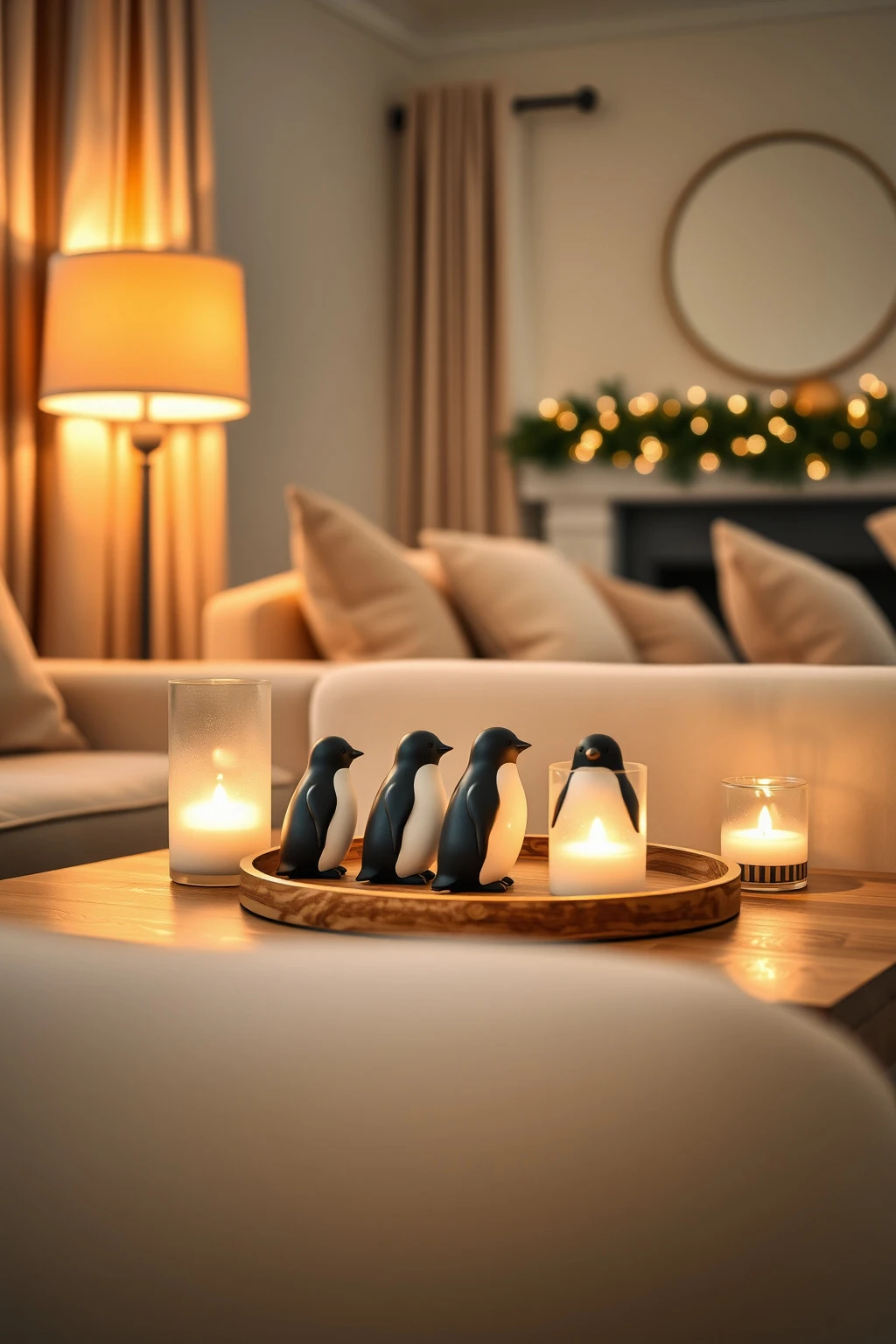
Penguin décor is all about contrast—black bodies and bright highlights. If the lighting is harsh, that contrast flattens and everything looks flat and dusty. The fix is simple: create small pools of warm light around your penguins.
Swap overhead brightness for candle-style illumination: place two small flameless candles (or real candles in hurricane holders) within 24 inches of your main penguin focal point. In a living room, set them on a console or end table—aim them so they light the penguin face, not the ceiling. Use warm white (around 2700K in LED terms) and prefer frosted glass to reduce glare. Avoid placing penguin figurines directly under a spotlight or bright ceiling fixture; if you must, angle the penguins slightly so you get shadow and depth rather than flat reflections.
Style a Bedroom Window Sill With Mini Penguins and Real Greenery
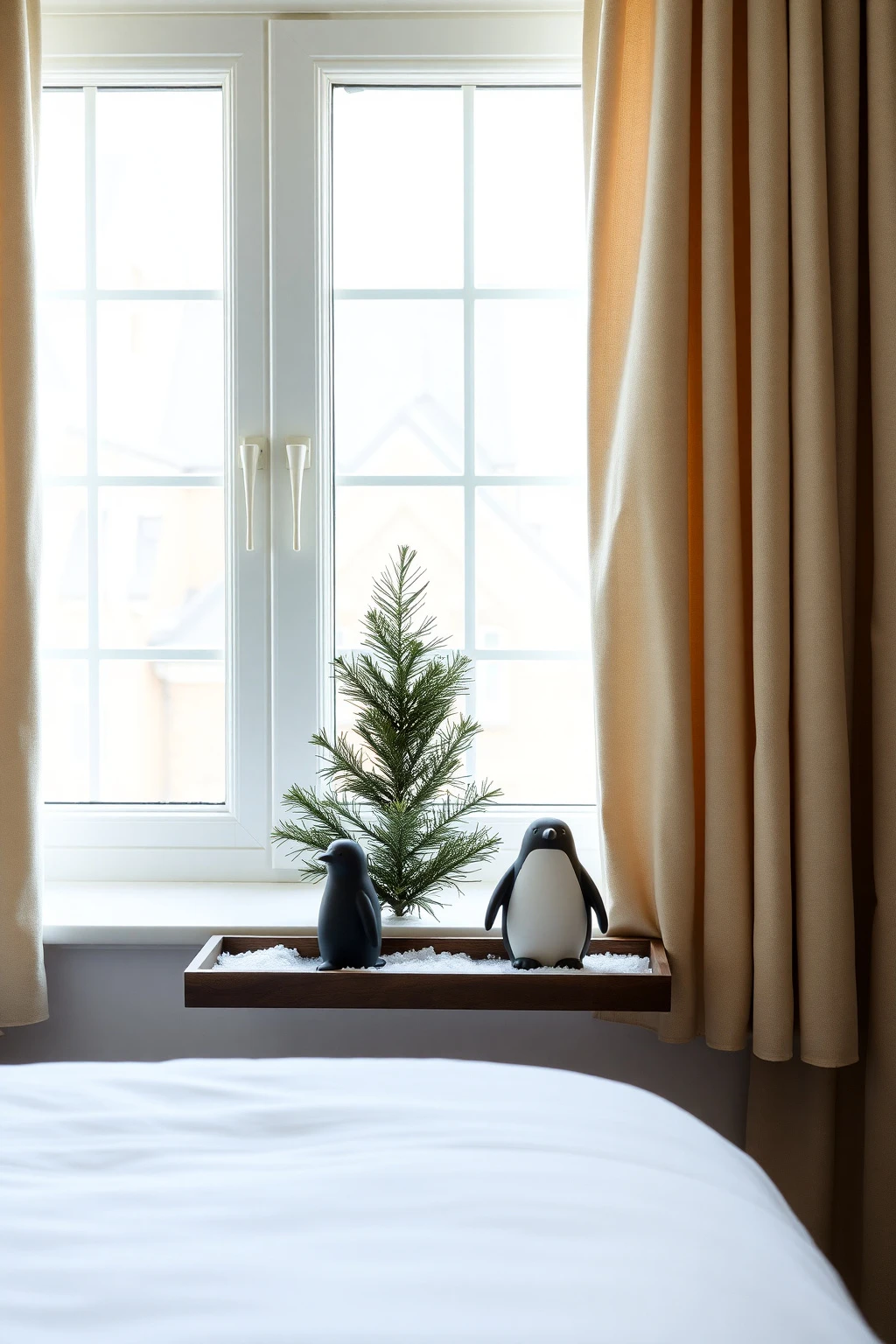
Window sills are prime real estate for holiday décor because the outdoors adds depth. Penguins look especially charming here when you pair them with real plant material—evergreen reads authentic, and it helps the penguin theme feel less costume-like.
Clean your sill and place a low tray (10–14 inches wide). Set one small evergreen cluster (fresh pine or a holly sprig) at the back and nestle two penguin figurines on either side, leaving a clear center so daylight still passes. If you don’t have pets or kids who might touch, sprinkle a thin layer of faux snow around the base of the figurines—keep it light, about 1/4 inch deep. For an extra design boost, match metal tones: choose matte black penguin accents that echo your window hardware or curtain rod. Avoid blocking the window entirely; you want winter light to frame the penguins.
Add Penguin Texture to Your Rug Runner Without Tackiness
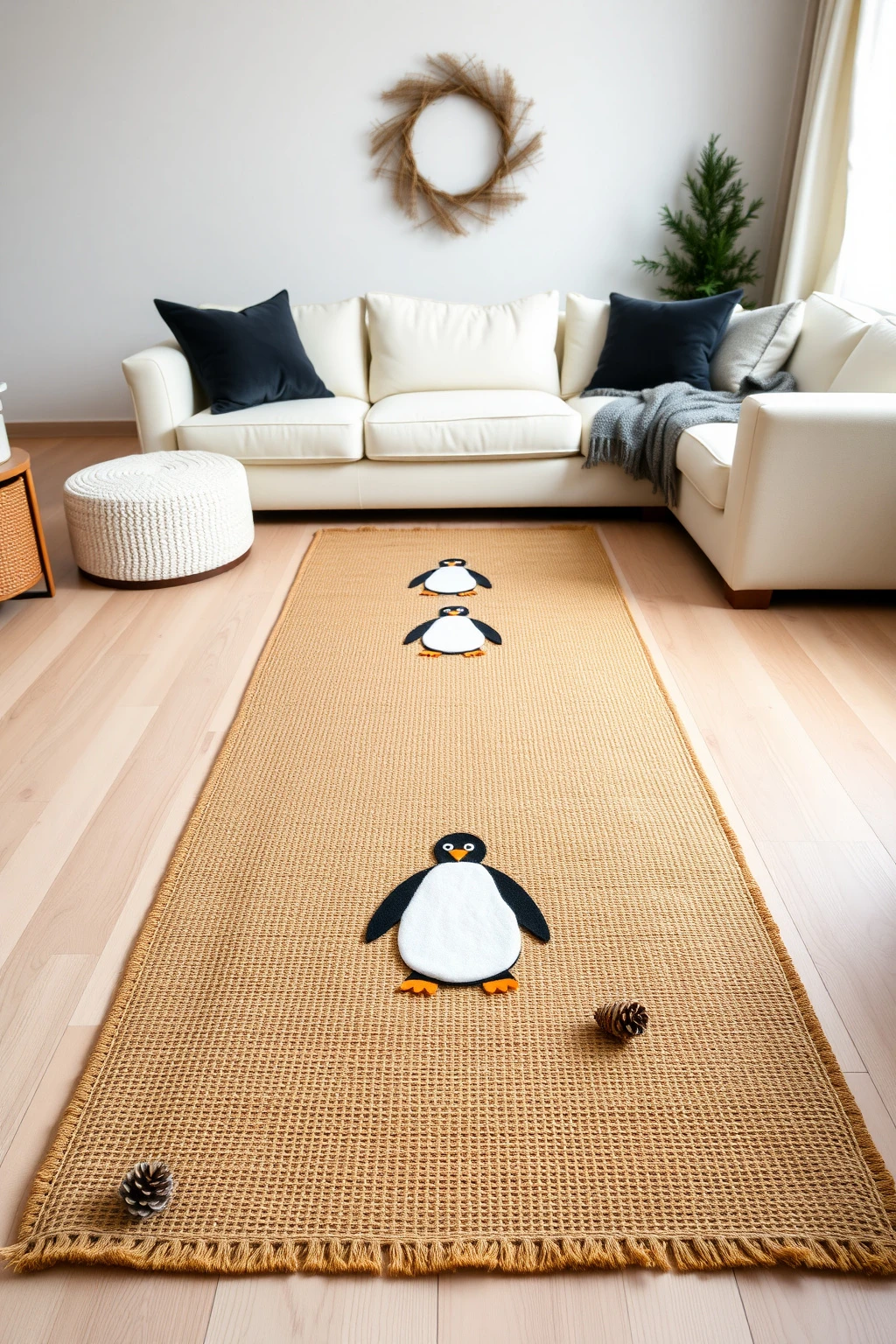
Holiday décor doesn’t have to be only objects—texture matters. If your living room is neutral and you’re scared penguins will look childish, use them through subtle surface styling that ties to the rest of your materials.
Choose a neutral runner (jute, flatweave wool, or natural linen) and add a single penguin-patterned accent piece instead of covering everything. For example, place a small felt penguin garland along the runner’s centerline and keep it within the middle 12–14 inches of the rug so it doesn’t spread into high-traffic areas. Anchor the edges with a couple of pine cone clusters at the far end only—this keeps your feet from feeling like they’re stepping into décor. Common mistake: placing slippery décor near the main walking path; if anything slides, you’ll constantly adjust it and it’ll look messy again by week two. Keep everything stable with clips or sewn ties.
Use a Black-and-White Penguin Theme to Refresh a Beige Bathroom
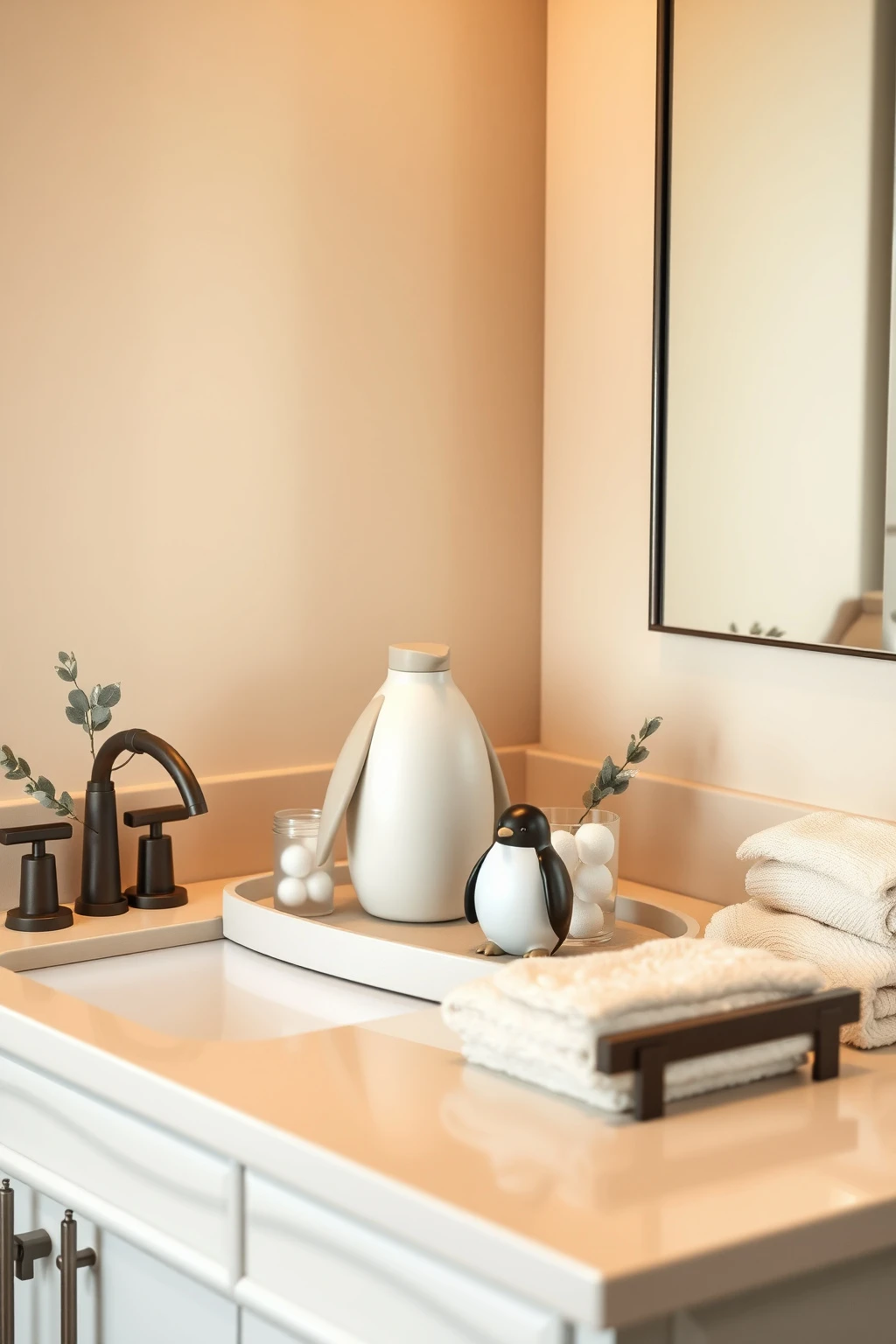
Bathrooms are small, and small spaces need a tight styling plan. A penguin theme works surprisingly well in a beige bathroom when you limit the décor to water-friendly elements and repeat the black-and-white palette for clarity.
Pick three bathroom-safe items: a penguin soap dispenser, a small towel with a penguin motif, and one penguin figurine placed on the vanity tray behind the towels. Keep the tray material consistent—matte ceramic or brushed metal—and leave at least one corner of the tray empty for daily use. Use a frosted glass jar for cotton rounds and add a thin eucalyptus sprig tucked into the jar or beside it; the green prevents the palette from feeling stark. Avoid placing fabric décor directly where it can get wet; if you can’t keep it dry, choose silicone or ceramic elements instead.
Budget-Friendly Penguin Snow Globes Using Glass Jars
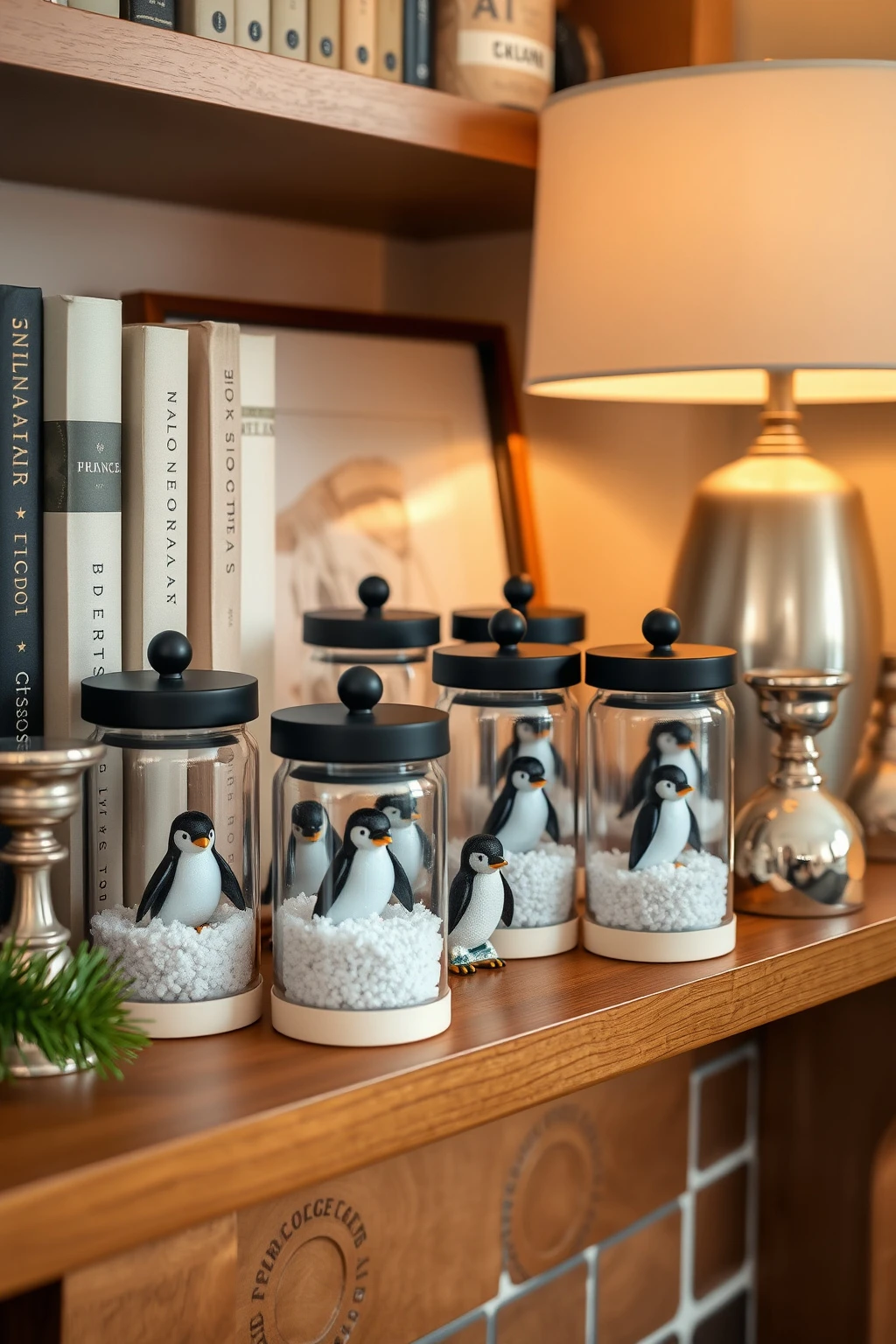
If you love the idea of snow globes but don’t want to spend on real ones, you can fake the look with glass jars and a little control over scale. This works because snow-globe styling is really about proportion—jar size, base texture, and a single focal character.
Choose jars in two sizes: one 6–8 inches tall for a side display and one 4–5 inches for smaller clusters. Drop in a mini penguin (ceramic or wood, secured with a hot-glue dot to the base), add faux “snow” (extra-fine white glitter or snow powder), then top with clear craft glue and a lid or cork. For a cleaner look, paint the jar lid matte black or warm ivory so it matches your décor. Mistake to avoid: using chunky snow that looks like craft glitter; keep the particle size fine so it reads like winter snow. Display the jars on a mantel or bookshelf where they’ll catch warm lamp light.
Conclusion
Penguin Christmas décor works when you treat it like interior design, not like a themed pile—pick a tight palette, give things breathing room, and light the accents the way you’d light art. If you remember just one thing, make it this: choose one main penguin moment per surface (mantel, table, corner, or shelf), then repeat the motif just enough to feel intentional.
Once you style with contrast, texture, and warm light, your home stops looking like “a holiday set” and starts feeling like yours—only cozier, with a little winter charm built in.

Mush Decor
Writes about accessible, timeless interior styling for readers worldwide.
More about Mush DecorRelated articles
 Christmas Ideas
23 Fresh Greenery Front Door Christmas Ideas
Fresh greenery front door Christmas decor ideas: wreaths, garlands, bows, lights, and styling tips with real materials and measurements.
Read More Christmas Ideas
23 Classy Outdoor Christmas Lights (No Inflatables)
From warm-wreath porch lighting to architectural uplights, here are 23 classy outdoor Christmas light ideas that skip inflatables and stay elegant.
Read More Christmas Ideas
23 Whimsical Christmas Decor Ideas for the Whole House
Get playful Christmas styling across your whole home: whimsical wreaths, garlands, table ideas, mantel details, and lighting tips.
Read More